

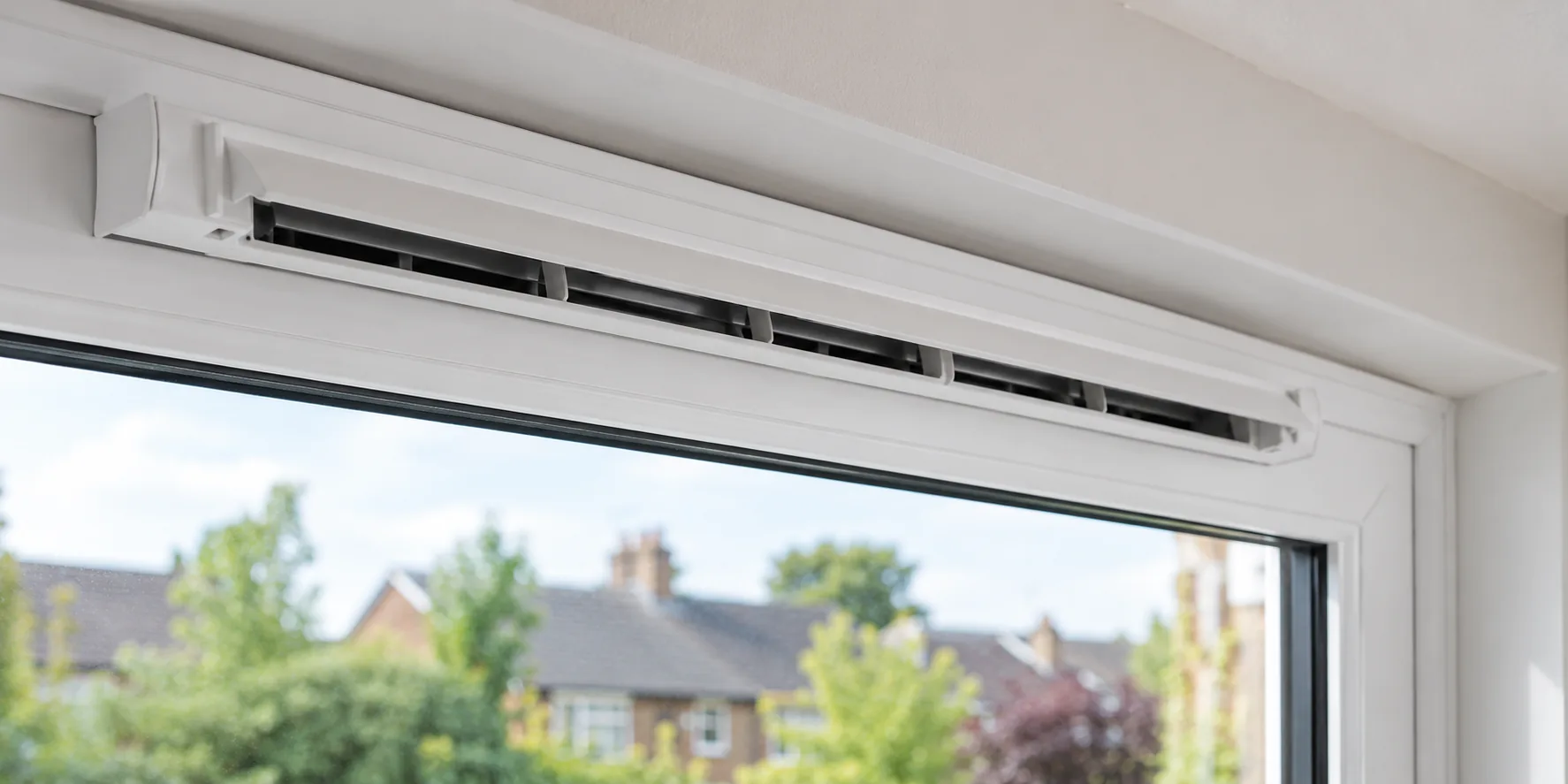
A trickle vent is a small opening fitted near the top of some window frames to admit controlled background air. Dust, insect debris and kitchen grease can collect around its grille. Clean the visible parts gently, but do not fill the opening with sealant, tape over it or wash water into the frame. The vent may be part of the property's ventilation design. If it is broken, unusually draughty or linked to persistent condensation, ask the installer or a ventilation professional to assess it.
Know what the vent is doing
Many vents have an indoor slider or flap and a weather-protected exterior hood. Opening the control allows background airflow without leaving the whole sash open. Its presence may relate to building ventilation requirements or a replacement-window specification. Closing it temporarily may be possible depending on the design, but permanently blocking it can reduce planned airflow and allow indoor moisture or pollutants to build up.
Before cleaning, identify whether the visible slot is a trickle vent or a separate drainage opening lower in the frame. The two serve different purposes. A drain should let water escape; a trickle vent admits air. Neither should be packed with cloth or sealant. Check the window paperwork if the layout is unfamiliar.
Notice whether the vent opens and closes smoothly, whether an insect screen is fitted and whether a cover appears loose. Photograph a damaged part rather than pulling it apart. Small clips can become brittle with age, and a replacement part may be easier to obtain from the window supplier than to repair after it snaps.
Remove surface dirt first
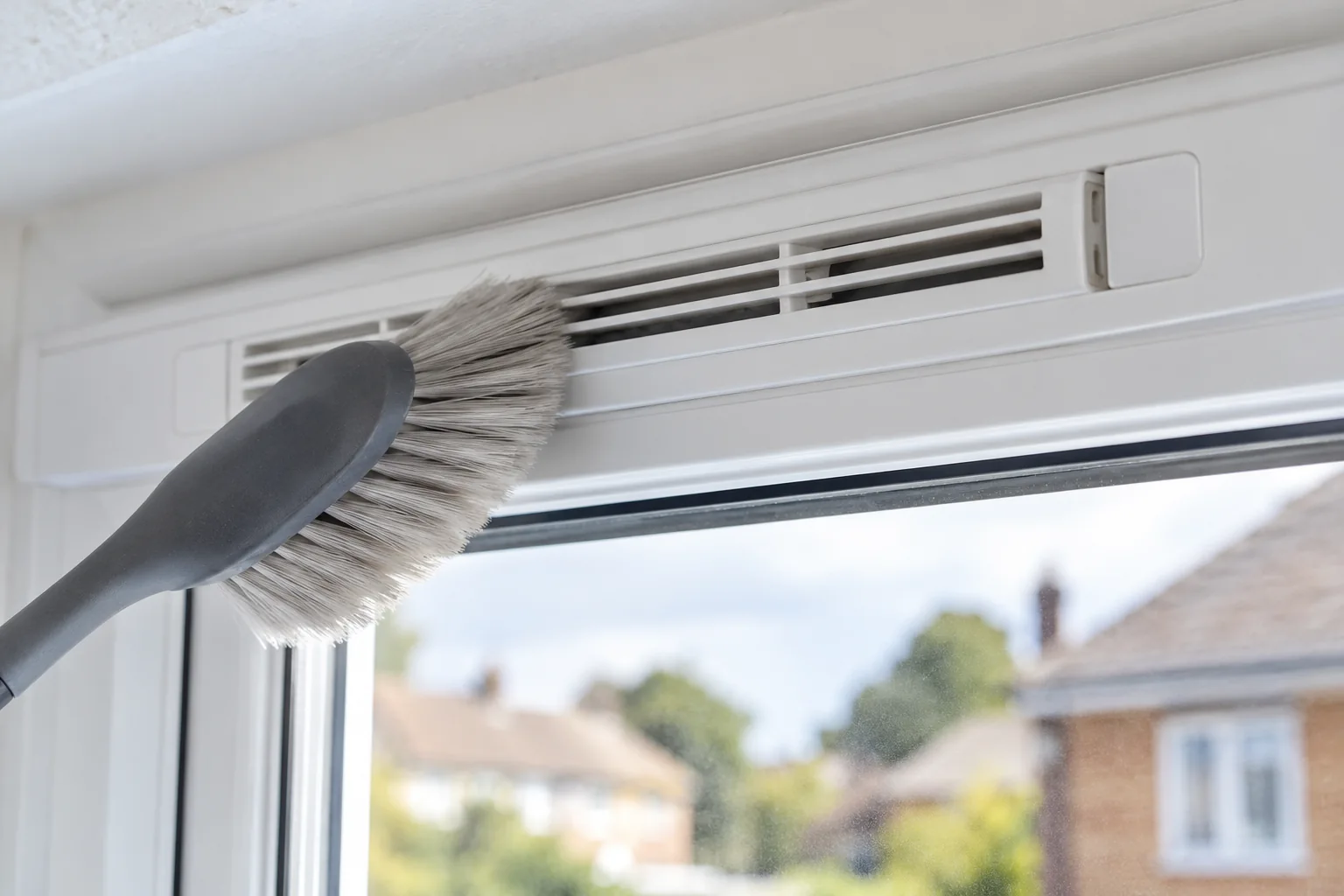
Use a soft brush or vacuum with a brush attachment to take loose dust from the indoor grille. Keep suction moderate and support any loose cover. A clean, barely damp cloth can then wipe the external face of the indoor control. Dry it afterwards so moisture does not carry dirt into the slot. A cotton bud can reach a narrow lip, but do not push it deep into the frame.
If the manufacturer says the cover can be removed, follow the instructions and keep track of clips and screws. Clean a removable plastic grille away from the window with a suitable mild product, allow it to dry fully and refit it securely. Do not assume that every grille is designed to come off. Forcing one can damage the vent or the surrounding uPVC or timber.
Greasy kitchen deposits may need a little mild detergent on a cloth. Apply it to the cloth, not as a spray into the vent. Strong solvents or bleaching products can discolour plastic and leave fumes in the airflow path. Rinse the cloth and remove residue from accessible surfaces without flooding the opening.
The outside hood is a separate access question
On a ground-floor window, an exterior hood may be safely reachable from ground level. Brush away cobwebs and leaves, taking care not to force debris through the grille. On upper floors, do not lean out or stand on a sill to reach the hood. A routine exterior window clean may remove visible cobwebs nearby, but internal vent dismantling is not normally part of washing glass. Discuss the exact scope before booking.
The residential window cleaning service is relevant for suitable external glazing; ask whether a safely accessible exterior vent hood can also be brushed. For managed premises, a facilities contractor may need to coordinate access and maintenance. The commercial window cleaning service can address the glass while the building manager assigns vent repairs separately.
If an exterior cover is missing, rain may enter the opening. Cleaning will not replace the weather protection. Contact the installer or a window repairer and avoid improvising a cover that blocks airflow or traps water.
Condensation, mould and airflow
Dust around a vent can make it less effective, but cleaning is only one part of controlling indoor condensation. Moisture from cooking, bathing, drying clothes and occupants still needs a route out of the building. Use extractor fans as intended and follow the property's ventilation guidance. A vent with a clear grille cannot compensate for a failed fan or a serious damp problem.
If black spotting appears near the top of the frame, determine whether it is superficial dust and mould on a wipeable finish or evidence of persistent moisture in the reveal. Wear appropriate protection for small-scale cleaning and follow product instructions; seek building advice if the area is extensive, recurring or associated with water penetration. Do not spray biocide into the airflow channel.
The guide to condensation or failed double glazing can help identify where moisture is sitting; enable this link after publication. A misty pane between sealed layers will not be fixed by opening a vent, while room-side condensation may respond to better moisture control and ventilation.
When cleaning reveals a fault
A rattle, broken control, missing screen or cover that will not close properly deserves a repair enquiry. Ask the original installer or manufacturer for the vent model if known. Do not wedge a broken flap with paper or glue it shut. That can block airflow and create a harder repair later. A cold draught may also come from an incorrectly fitted vent, an unsealed frame joint or a poorly closing sash; the source should be diagnosed rather than masked.
Keep a note of what was cleaned and whether airflow seems to have improved. If the vent is still blocked by material deep inside the frame, a repairer may need to remove and inspect it. Avoid inserting wire or a pressure nozzle into a route you cannot see.
A simple maintenance rhythm
Check visible vents when you clean accessible interior glass. A quick brush before dust accumulates is easier than removing packed debris later. Make sure the control still moves, the grille is dry and the exterior hood remains intact. In a rented property, report defects to the landlord or managing agent with a photograph. In an owned property, retain the window model details for replacement parts. The aim is a clean, working vent that continues to do the job for which it was fitted.
Vent controls are sometimes hidden by curtains or blinds. Leave enough clearance for air to move and for the grille to be inspected. Heavy fabric pressed against a damp window top can collect dust and make spotting a leak difficult. If you notice a water stain directly below the hood after wind-driven rain, record the conditions and ask for repair advice. Do not respond by plugging the air route; the outside cover or installation may be the actual defect.
After cleaning, operate the vent through its normal range once. It should move without forcing and rest in the positions intended by its design. If it sticks, do not add household oil or prise it with a tool; ask for the correct part or repair advice.