

Window Cleaning Knowledge
Internal vs External Window Cleaning
Interior and exterior glass collect different types of dirt and require different working methods. Understanding the distinction makes it easier to choose the right service, prepare the property and maintain a consistently clear finish.
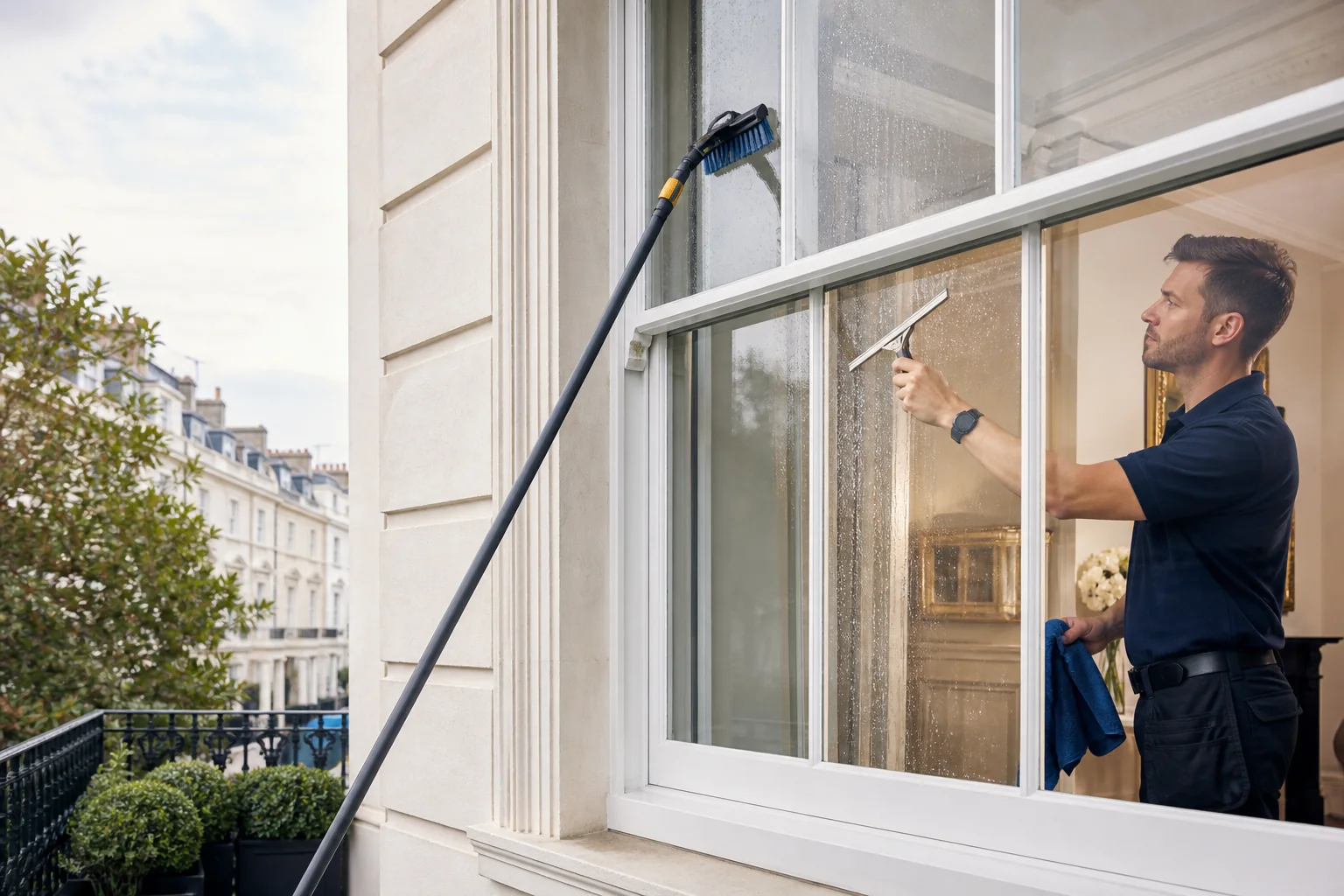
What external window cleaning covers
External cleaning addresses the exposed face of the glass and, where agreed, accessible frames, sills and doors. This is the surface affected by road film, rainfall residue, pollen, bird mess and airborne pollution. For many London properties, a purified-water system and water-fed pole provide a practical way to agitate dirt and rinse the glass without leaving mineral residue.
Because much of the work can be completed from ground level, the method is useful for upper-storey windows where access permits. The technician still needs to assess gates, balconies, basement areas, rooflines and any fragile surfaces before beginning.
What internal window cleaning involves
Internal glass usually carries fingerprints, cooking film, dust, condensation marks and residue from household products. It is commonly cleaned using controlled amounts of solution, an applicator, detailing cloths and a professional squeegee. Floors, furniture and nearby belongings must be protected, and the technician needs clear, safe access to each opening.
Internal work generally takes longer per pane because rooms must be entered carefully and edges need detailed finishing. It may also include glass doors, internal partitions or mirrors when these items have been included in the quotation.
Which service should you book?
Exterior cleaning is usually the foundation of a regular maintenance schedule because the outside face is exposed continuously. Interior cleaning may be arranged less frequently, before an event, at the end of a tenancy or when condensation and fingerprints reduce clarity. Commercial premises often need both sides cleaned to maintain a consistent presentation.
A combined visit can be efficient when the property is prepared in advance, but it is not automatically the right answer for every appointment. A clear quote should state which faces, frames and additional glass elements are included.
Quick comparison
| Consideration | External cleaning | Internal cleaning |
|---|---|---|
| Typical contamination | Traffic film, pollen, rain residue | Fingerprints, dust, cooking film |
| Common method | Pure water and water-fed pole | Applicator, solution and squeegee |
| Access requirement | Safe exterior access | Room-by-room interior access |
| Typical frequency | Often every 4–8 weeks | Often periodic or as needed |
Practical points to remember
- Move fragile items and ornaments away from internal sills.
- Unlock required gates and confirm access before the appointment.
- Identify any damaged seals, cracked panes or delicate finishes in advance.
- Confirm whether frames, sills, doors and internal partitions are included.
Frequently asked questions
Questions about Internal vs External Window Cleaning
Can exterior windows be cleaned while I am out?
Often yes, provided safe access has been arranged and there are no locked areas that prevent the work.
Does pure water work on the inside?
Pure-water pole systems are primarily an exterior method. Controlled traditional tools are generally more suitable indoors.
Are window frames always included?
Inclusion varies by service and condition, so the quotation should state clearly which frame and sill surfaces will be cleaned.
How often should internal glass be cleaned?
Many homes arrange it periodically, while offices, shops and hospitality premises may need more frequent interior attention.
Can both services be completed together?
Yes, when access, time and preparation have been agreed in advance.
Need property-specific advice?