

Residential service guide
Residential Window Cleaning Guide
A reliable residential service should suit the property rather than force every house or flat into the same routine. This guide explains how access, glazing, exposure and household priorities shape a safe, efficient visit.
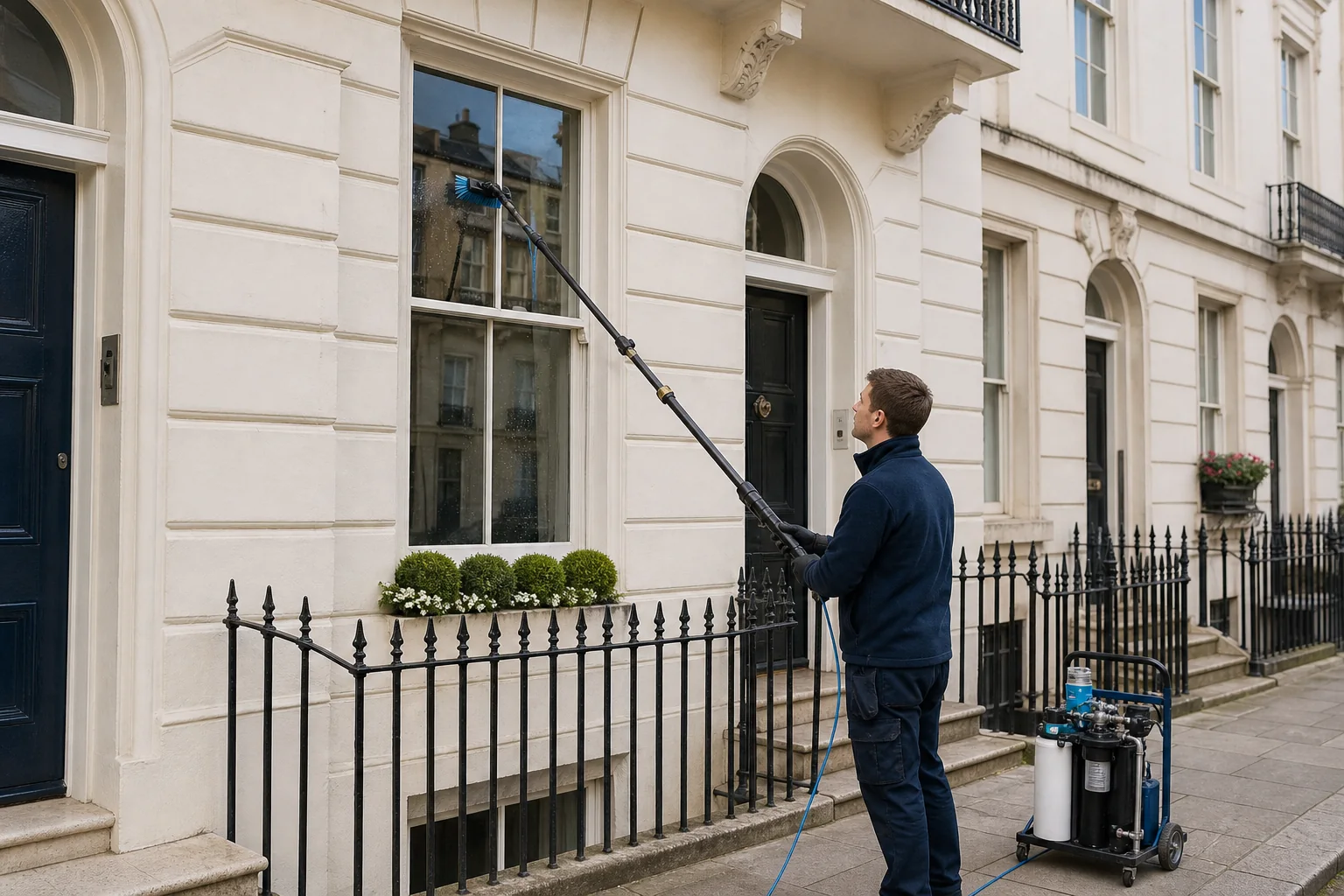
How a residential visit is planned
The first step is to understand the building: number of storeys, window styles, rear access, basement areas, extensions and any roof glazing. A London terrace with a narrow side passage needs a different plan from a detached house or managed apartment block. The quotation should identify which exterior faces, frames, sills and doors are included.
Before work begins, the technician checks ground conditions, gates, overhead hazards and fragile areas. Where suitable, exterior glass is cleaned from ground level using a water-fed pole. Accessible internal panes may be cleaned with traditional applicators and squeegees when that service has been booked.
Equipment and the pure-water process
Purified water contains very little dissolved mineral content. It is delivered through a controlled hose to a specialist brush, which loosens dirt from compatible glass and frame surfaces. The final rinse is left to dry naturally, reducing the spotting associated with ordinary tap water. Pole length, brush type and water flow are selected for the elevation and condition.
Traditional tools still have an important role for interiors, doors and close-detail work. Professional results depend on technique, clean equipment and careful detailing—not simply owning a pole or squeegee. Established hard-water deposits, paint or building residue may need separate assessment.
How often London homes need cleaning
Many households choose a regular exterior visit every four to eight weeks, but there is no universal interval. Homes beside busy roads, mature trees, construction work or exposed corners can collect traffic film and organic residue more quickly. Sheltered windows may need less frequent attention, while highly visible entrance glass may need more.
A sensible schedule is reviewed after the first few visits. Regular maintenance usually prevents heavy build-up and makes each appointment more predictable. Interior glass is commonly arranged periodically, before an event, at the end of a tenancy or alongside a deeper exterior clean.
Before and after: what a professional clean changes
Before cleaning, glass may show road film, pollen, rain-carried residue and marks released from dirty frames. During the service, contamination is agitated rather than merely wetted, then rinsed away in a controlled sequence. After drying, the view should be clearer and the finish consistent across the treated elevations.
Cleaning cannot repair failed double-glazing seals, scratches, etched mineral damage or deteriorated frames. A reputable technician distinguishes surface contamination from defects and explains when restoration or repair may be the appropriate next step.
Pricing and common booking mistakes
Residential prices depend on window quantity and type, storeys, access, condition, frequency and requested extras. Conservatories, roof glass, internal panes and restricted rear access can change the time required. The confirmed quote should make the scope clear and explain any minimum charge.
Common mistakes include booking by bedroom count alone, assuming every frame or internal pane is included, leaving locked gates on the day, and waiting until contamination is severe. Sharing accurate access details and photographs where requested helps the team provide a more dependable quotation.
Quick comparison
| Planning factor | Why it matters | Useful preparation |
|---|---|---|
| Window number and style | Sets the working time and tool choice | Mention sash, bay and roof windows |
| Rear and side access | Affects equipment route | Unlock gates and clear narrow passages |
| Storeys and extensions | Changes reach and risk controls | Share photographs of restricted elevations |
| Visit frequency | Influences build-up and pricing | Choose a maintainable schedule |
| Internal cleaning | Requires room access and protection | Clear fragile items from sills |
Practical points to remember
- Confirm exactly which panes, frames and sills are included.
- Keep pets secure and provide safe access to gates and gardens.
- Move fragile ornaments before any internal appointment.
- Report cracked panes, loose seals or delicate finishes in advance.
- Treat hard-water staining as a restoration issue, not routine dirt.
Frequently asked questions
Questions about Residential Window Cleaning Guide
How often should residential windows be cleaned?
Many London homes choose four- to eight-weekly exterior visits, adjusted for road exposure, trees and the standard of presentation required.
Do I need to be at home?
Often not for exterior-only work when safe access has been arranged and no locked area prevents the visit.
Are frames and sills included?
The quotation should state the included surfaces. Compatible frames are often brushed during a pure-water exterior clean.
Can you clean upper-storey windows?
Where reach and conditions permit, water-fed poles allow many upper windows to be cleaned from ground level.
Do you clean inside windows?
Internal cleaning can be arranged separately and requires safe room-by-room access.
Will pure water leave spots?
Properly produced pure water is designed to dry without ordinary tap-water mineral residue after the surface has been correctly cleaned and rinsed.
Can cleaning fix misted double glazing?
No. Moisture between sealed panes indicates a glazing-unit problem rather than dirt on the accessible surface.
What should I do before the appointment?
Unlock required gates, clear access, secure pets and tell the team about fragile items or known defects.
Need property-specific advice?