

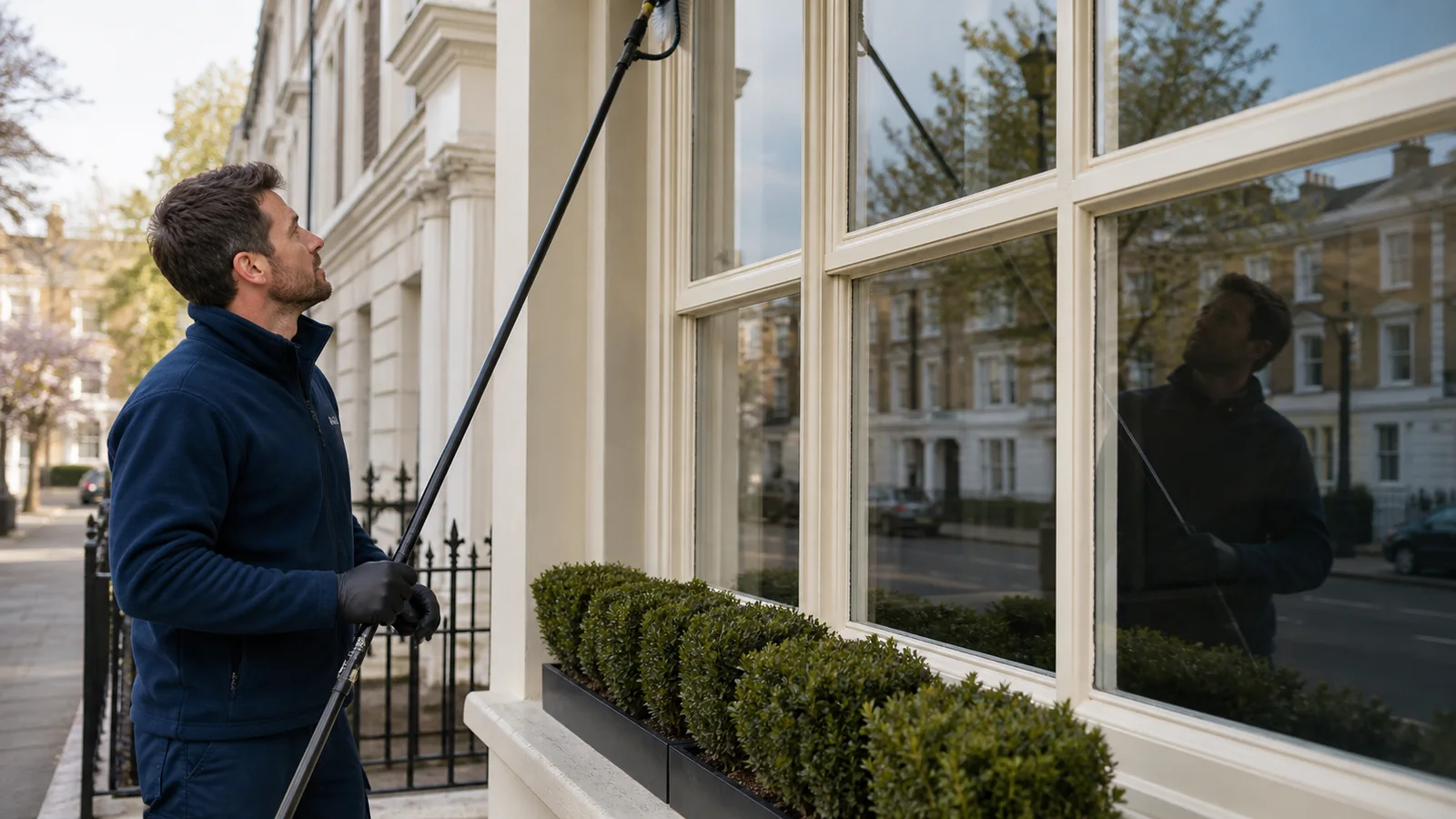
There is no universal timetable for clean windows. A townhouse on a quiet garden square may stay presentable for longer than a flat beside a busy road, while a restaurant frontage can show fingerprints and traffic film within days. The right interval is the one that matches the property, its surroundings and the standard you want to maintain.
For many homes, a regular cycle is more practical than waiting until the glass looks heavily marked. Commercial premises often need a shorter interval because their windows contribute directly to the customer’s first impression.
Typical factors that determine cleaning frequency
Start with location. London traffic creates fine particles that settle on glass, frames and sills. Properties close to main roads, railway lines and active construction may need attention sooner. Trees can bring pollen, sap, bird marks and leaf debris, while coastal salt is less relevant in central London but may matter on the capital’s outer approaches.
Exposure also matters. Sheltered windows beneath deep eaves may collect less direct rain but can hold cobwebs and dust. Open elevations experience more weather. Neither automatically means a particular schedule; it simply changes how quickly the surface looks dull.
How often should residential windows be cleaned?
Many households consider intervals in the region of four to twelve weeks, but that range is a starting point rather than a rule. A home on a busy street may benefit from frequent visits. A protected rear elevation may need less attention. Households with large glazed doors, pets or children may clean internal glass more often than external upper windows.
Think about your priorities. If consistently bright rooms and a well-kept exterior are important, choose a predictable regular visit. If the property is rarely occupied or well sheltered, a longer interval may be reasonable. Our residential service covers houses, flats and apartments, with access discussed before booking.
How often should commercial windows be cleaned?
Commercial frequency is shaped by presentation, footfall and use. Shopfronts and restaurants can accumulate fingerprints and street dirt quickly. Offices above ground level may focus on a planned maintenance cycle. Schools and managed buildings need visits arranged around access and safety requirements.
A schedule should be reviewed when the building use changes, nearby works begin or customer-facing standards increase. Explore commercial window cleaning in London for the types of premises supported.
Seasonal reasons to adjust the schedule
- Spring: pollen, wind-blown dust and brighter sunlight make residue more visible.
- Summer: dry spells can increase dust, while direct sun highlights streaks on internal glass.
- Autumn: leaf debris, rain splash and organic material affect lower windows and roofline areas.
- Winter: road film and existing dirt remain visible even when rain is frequent.
Signs that your current interval is too long
Look for a dull grey film, visible marks after light rain, cobwebs around frames and reduced clarity in low sunlight. Commercial customers may notice fingerprints or splash marks long before the whole elevation appears dirty. If each visit requires a significant restoration rather than routine maintenance, a shorter interval may be more efficient.
Choose a schedule around the property
Top Window Cleaners can discuss one-off and regular options according to current availability. Call 020 3404 9775 with your postcode and property details, or check our London coverage directory.