

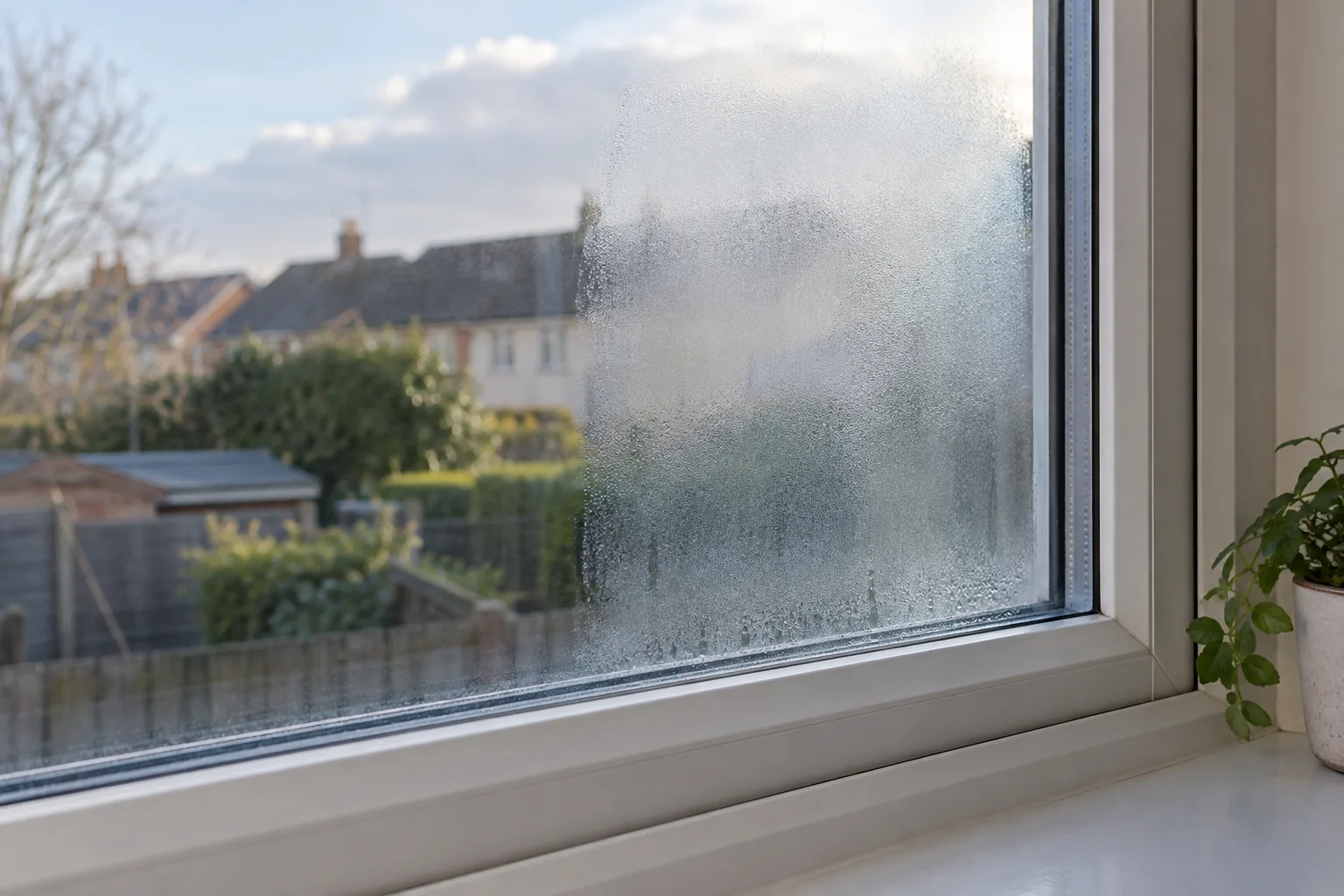
A misty window can describe three different problems: moisture on the room-side face, moisture on the outside face, or moisture trapped between the two panes of a sealed unit. Only the first two can be wiped away. If the haze is inside the unit, more cleaning will not reach it; a glazier needs to assess the seal and the replacement options. Locating the moisture before buying a product or booking a clean saves time and avoids treating the wrong cause.
Find the face carrying the moisture
Choose a small clear area and wipe the room-side glass with a clean, dry cloth. If the mark disappears and moisture transfers to the cloth, it is on the indoor surface. If it does not move, inspect the exterior face from a safe position. Dew outside can make efficient glazing look misty on cool mornings and may clear as the air warms. Never lean out to test the outside of an upper-floor pane.
If both accessible faces are clean but a cloudy patch, droplets or tide mark remains, the problem may sit in the cavity between panes. Look from an angle in good daylight. A trapped mark often appears to have depth, and its shape may change with temperature without ever wiping off. Photograph it at different times. A glazier can confirm whether the sealed unit has failed.
Some glazing has coatings, films or textured surfaces that also change how light looks. A persistent optical effect is not necessarily moisture. Do not scrub or scrape a suspected haze while the surface is unidentified; you can create a scratch that remains after the original question is resolved.
Room-side condensation: address humidity and airflow
Indoor condensation forms when humid air meets a glass surface cold enough for water vapour to condense. It often appears overnight on bedroom panes, after cooking or showering, or behind closed curtains. Wipe the water from glass and sill so it does not soak paint or timber. Then reduce the moisture source where practical and maintain ventilation. Use extractor fans that vent outdoors, cover pans, and avoid drying clothes against cold windows.
Do not block trickle vents to stop a draught without considering the building's ventilation needs. A vent may be part of the intended airflow route. Keep it clear and use it according to the property guidance. Moving furniture or opening curtains for part of the day can allow air to circulate near the glass, though it will not solve a major moisture source on its own.
If mould spreads to reveals, condensation appears on several surfaces or ventilation seems inadequate, seek appropriate property or building advice. A tenant should report persistent damp to the landlord or managing agent with dates and photographs. A homeowner may need a broader assessment of extraction, insulation and thermal bridges. Window cleaning removes the water and visible residue; it does not correct the indoor humidity balance.
Exterior dew can be normal
On some well-insulated glazing, the outer pane cools overnight and dew forms on the outside. This can look alarming because the window is newly fitted, but it may simply show that less indoor heat is warming the external surface. The dew usually clears with sunlight, wind or rising temperature. It may be uneven because an overhang shelters part of the pane or nearby vegetation changes airflow.
An exterior clean can remove dirt that dew makes conspicuous, but it cannot prevent condensation whenever the weather conditions recur. If marks remain after the water has evaporated, then ordinary exterior deposits may also be present. Observe the pane at midday before deciding whether cleaning is needed.
The existing article on whether rain makes windows dirty discusses environmental deposits. Dew and rain are different events, but both can reveal dirt that was already on the glass.
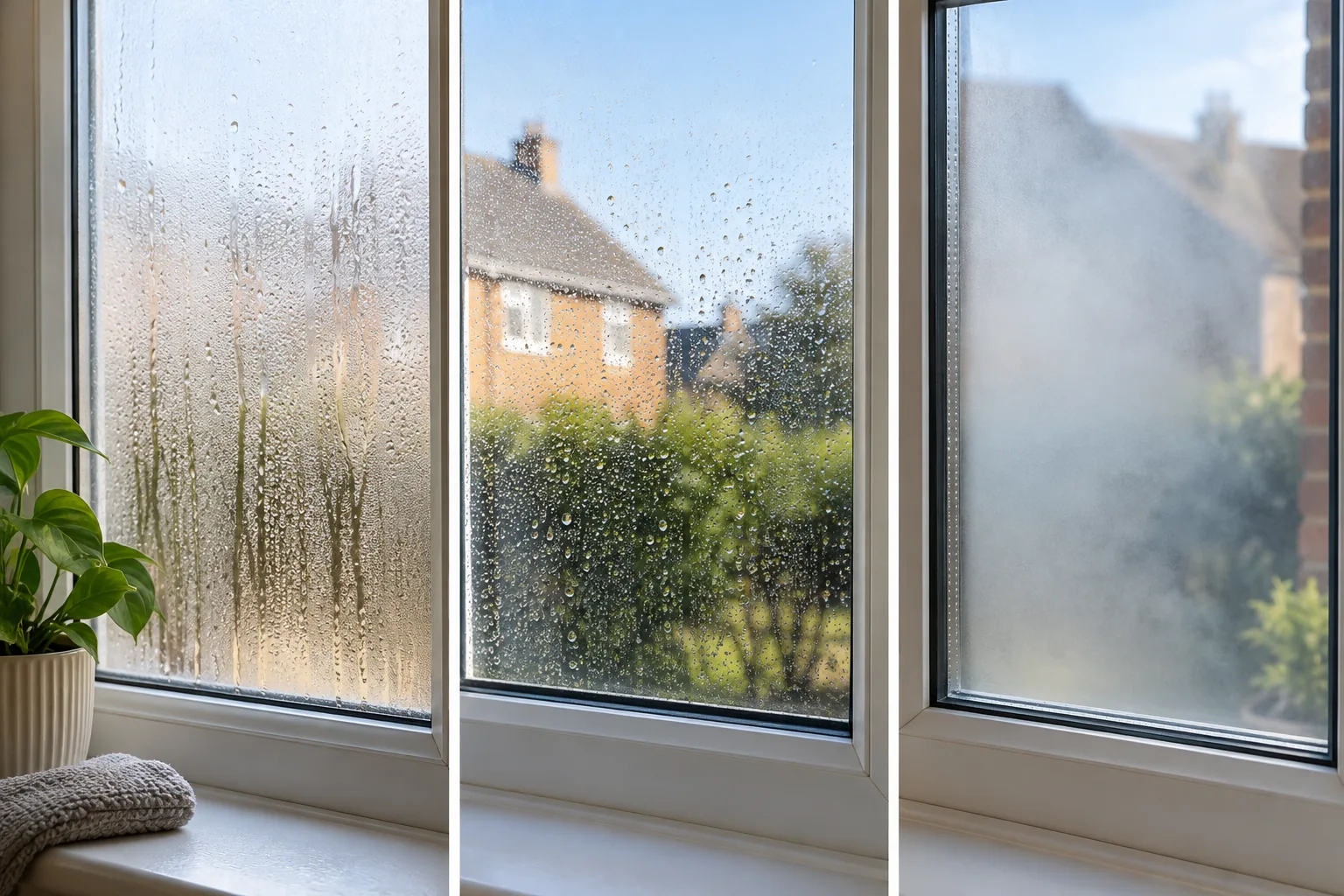
Moisture between panes needs a glazing assessment
A sealed double-glazed unit is made to keep its cavity dry. If moisture enters that space, wiping either face will not remove it. The cloudy area may become more visible at certain temperatures, and mineral-like deposits can remain after droplets disappear. A glazier can inspect the unit, check any warranty and advise whether the insulated glass unit can be replaced while retaining the frame.
Do not drill the unit or inject a household de-fogging product without understanding the consequences. Such interventions may alter performance, appearance or warranty rights, and they do not restore the original factory seal. Ask the installer or supplier about cover if the unit is relatively new. Keep the installation date and photographs to hand.
Occasionally a window has secondary glazing rather than a factory-sealed unit. Moisture in the gap between the primary pane and an interior secondary panel has a different ventilation and sealing problem. Identify the construction before concluding that a double-glazed unit has failed.
What cleaning can usefully achieve
A careful clean makes diagnosis easier. Remove ordinary dirt from accessible surfaces using a product appropriate to the glass and any coating. Dry the edges and view the window once the surface is completely dry. If a persistent mark remains, note whether it is inside the cavity or appears to be a scratch, coating defect or deposit on an unreachable face.
For suitable external panes beyond easy reach, discuss access with a residential window cleaner or, for managed premises, the commercial window cleaning team. Describe the misting before the visit so a cleaner can distinguish a surface clean from a glazing repair request. A quotation should not promise to remove a mark sealed within the unit.
Keep a record and choose the right trade
Record the room, elevation, date, weather and which face you tested. A photograph taken obliquely can show the depth of a trapped mark more clearly than one taken straight on. For indoor condensation, focus on moisture and ventilation conditions; for exterior dew, allow the pane to dry before judging it; for between-pane misting, contact a glazier or the original installer. The visible symptom may look similar, but the correct next step depends entirely on where the water sits.
There is also a useful timing clue. Indoor condensation often peaks after an evening of occupancy and can gather at the lower edge by morning. Outdoor dew may appear on many exposed panes at dawn and clear without anyone touching them. Between-pane mist can linger long after both faces are dry, sometimes forming a recurring patch in the same part of one unit. Timing does not prove a diagnosis, but it tells you which face to check first.
If a tenant reports the issue, ask for photographs taken before the window is wiped and again after. Include the room and date. That gives the landlord or managing agent a basis for arranging the right inspection and avoids treating every photograph of a cloudy window as evidence of the same fault.