

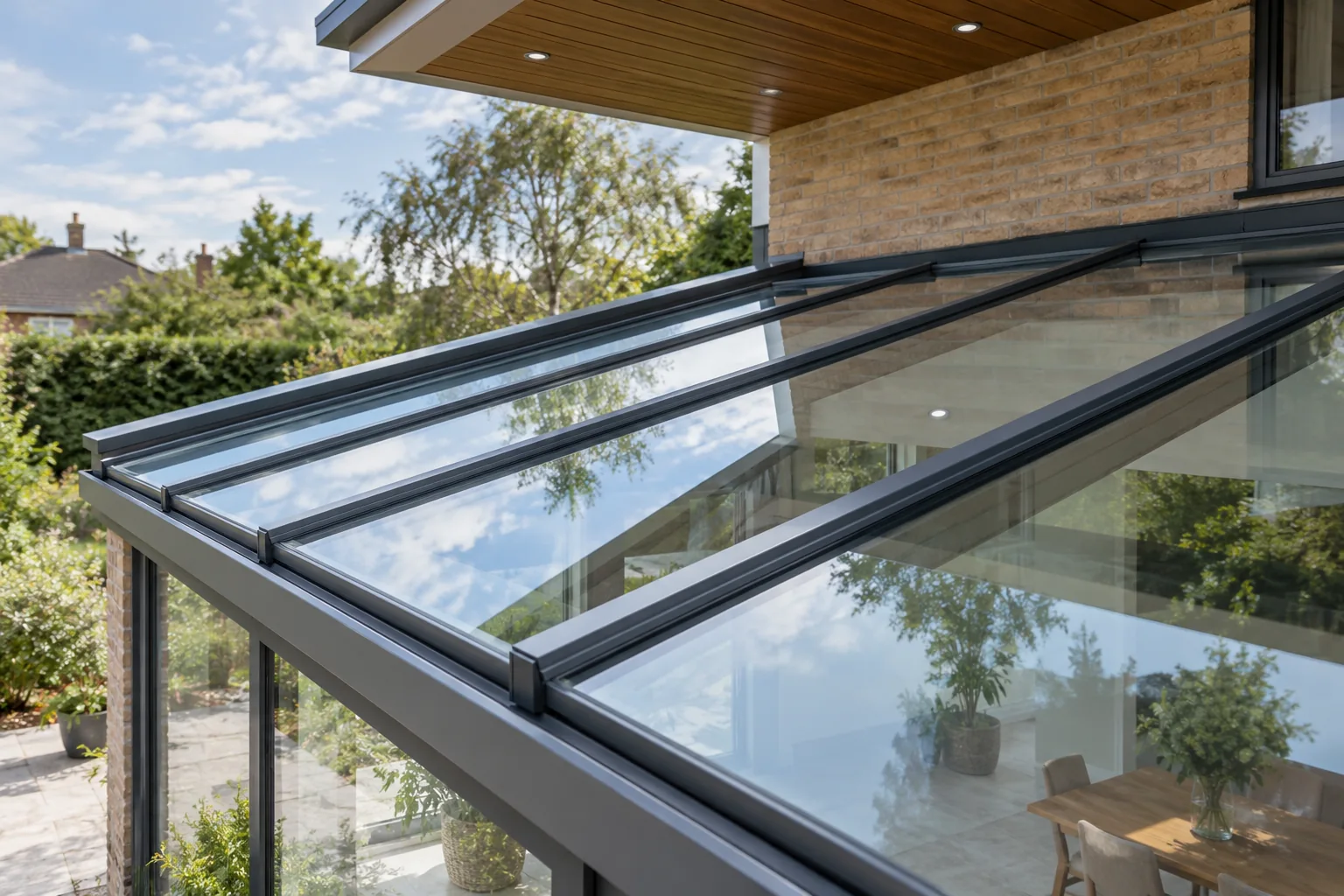
Self-cleaning glass reduces the amount of dirt that clings to an exposed pane; it does not remove every mark or make a window maintenance-free. The coating needs daylight and rain to work as intended. A sheltered rooflight, a pane beneath a deep overhang or a window shaded by trees may receive too little of either. Bird marks, paint, sealant and greasy fingerprints can also remain. Owners should identify the coated face, follow the manufacturer's instructions and arrange a gentle clean when the weather cannot do the job.
What the coating actually does
Most self-cleaning glass sold for external use has a thin surface treatment that helps break down some organic dirt in daylight and encourages rainwater to spread as a sheet. The sheeting action can carry loosened material away with fewer spots than ordinary glass. It is a gradual process, not an instant reaction after one shower. Results depend on the exposure, slope of the glass and type of deposit.
Ask the installer for the product name and care sheet. The coating may be on an external face only, while an interior pane or another elevation has ordinary glass. That distinction affects both cleaning products and expectations. Do not test a coating by scraping a corner or rubbing a mark aggressively. A clear-looking pane is not proof that it is uncoated.
If the coating was supplied as part of a double-glazed unit, the glass specification may be printed on the paperwork rather than marked on the window. Retain that information with the property records. It will help future cleaners, decorators and replacement-glazing contractors avoid incompatible treatments.
Why a self-cleaning pane still looks dirty
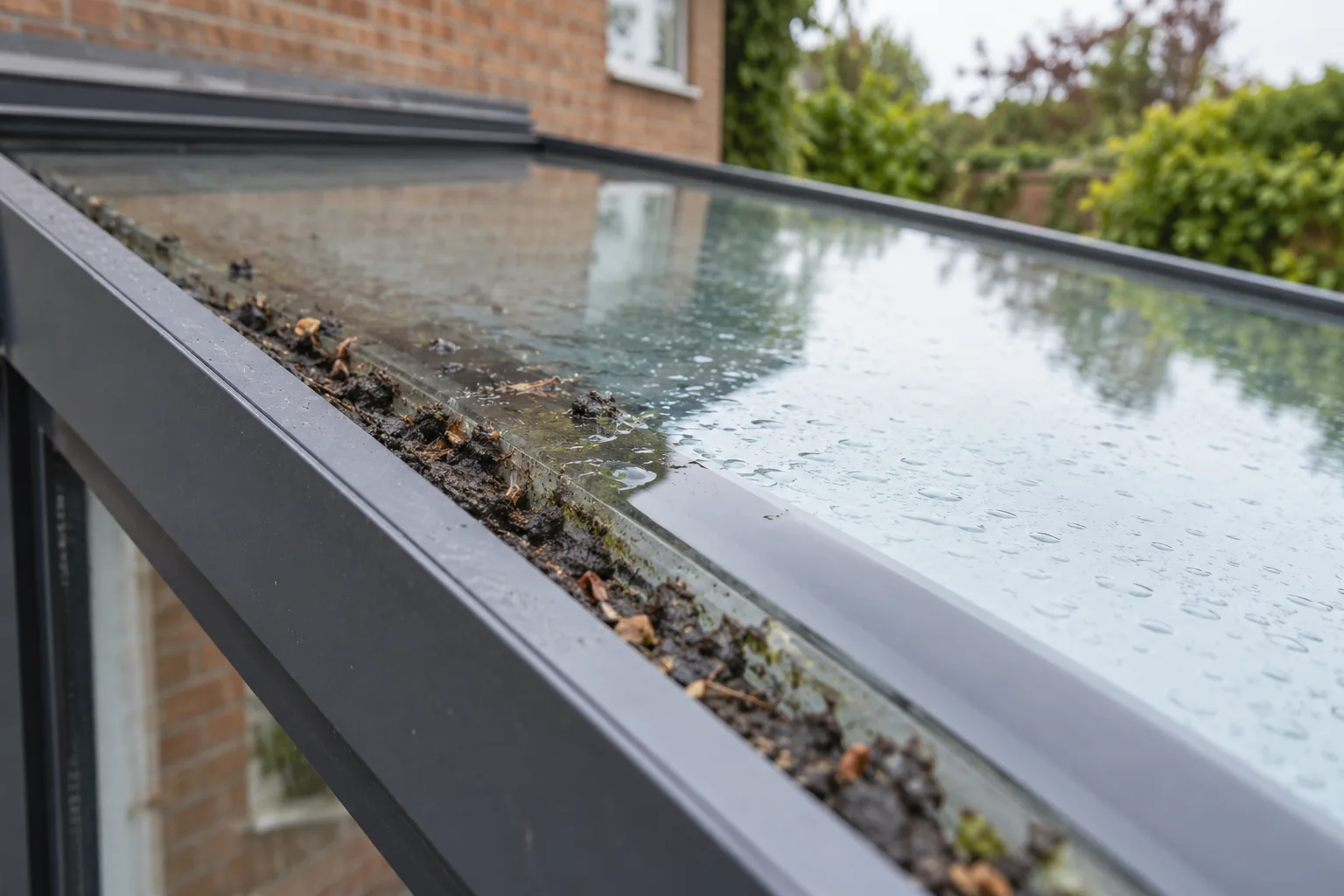
Rain has to reach the pane. Eaves, deep reveals and nearby buildings can leave sheltered sections dry while the centre receives water. On a conservatory roof, the lowest edge may hold run-off from frames and seals. Wind-blown sand, road dust and mineral-heavy splashes can create a film that the coating cannot fully disperse. The coating acts on the exposed glass surface; it does not clean frames, gutters or the inside face.
Shaded panes can take longer to clear organic grime because they receive less daylight. Winter days may also make the effect less obvious. This is not automatically a faulty product. Compare several panes with different exposure before deciding that a coating has failed. Note whether the mark appears on the outer face, the room side or between the panes of a sealed unit. Dirt trapped inside a failed unit cannot be washed off.
Do not assume that a patchy appearance after installation is simply dirt. New glazing can carry protective labels, sealant smears or construction residue. Ask the installer about the permitted removal method before touching the coating.
A gentle cleaning method
Check the manufacturer's care instructions first. In general, start with plenty of clean water to float away loose grit; never dry-rub a dusty coated pane. A soft, clean cloth or suitable non-abrasive applicator may then be used with a mild cleaner if the manufacturer allows it. Rinse thoroughly and let water drain without leaving a pool against the frame. Avoid blades, scourers, abrasive powders, strong acids or alkalis, and unknown water-repellent sprays.
Work from a secure position. Roof glazing can be especially deceptive: a pane just beyond arm's reach invites stretching over a sill or climbing on an adjacent roof. Neither is a sensible cleaning position. Ask a professional to assess suitable access, the glazing specification and whether the coating permits the proposed method.
The residential window cleaning service provides a way to discuss awkward external glass. Tell the cleaner that the pane is self-cleaning and pass on the care sheet. If other areas are ordinary glass, identify them separately so the work can be planned by surface rather than treating the whole elevation alike.
Do not let other trades damage the finish
Window cleaning is only one source of contact with a coating. Paint preparation, render washing, roofing work and silicone sealing can put chemicals or grit onto exposed glass. Covering the pane during nearby work may be appropriate, but any protective film or tape must itself be approved for the coated surface and removed in the stated time. Adhesive left in strong sun can be difficult to lift safely.
Tell painters and builders that the glass has a special exterior finish. Ask them to keep mortar, plaster and paint off it instead of assuming these can be scraped away afterwards. If contamination occurs, photograph it and consult the glass supplier's instructions before removal. Cleaning a fresh deposit promptly by an approved method is usually easier than addressing one that has hardened.
Be cautious with products marketed to make windows repel rain or stay cleaner longer. A second surface treatment may interfere with the original coating or void its warranty. The same applies to some sealants that spread over the glass edge.
Maintenance beyond the glass
Frames and drainage channels still need separate attention. Brush out accessible dry debris, wipe sound frame surfaces using an appropriate cleaner, and check that water can drain as the window was designed to allow. Do not direct a strong hose into seals or vents. Standing water at a lower edge can leave marks even if the main pane sheds rain well.
Interior fingerprints and cooking film also remain your responsibility. The self-cleaning effect is generally on the outside face and depends on outdoor light and water. Clean the room-facing glass according to the complete unit's instructions, taking extra care if it also has an applied film or low-emissivity coating.
After any professional visit, view the glass in ordinary daylight once dry. A few remaining spots may be mineral deposits, damaged coating, residue between panes or simply a sheltered area needing a different method. Describe the exact location and appearance rather than asking for a stronger all-over scrub.
Set a realistic inspection routine
Look at the panes after a period of normal rain, then note which sections repeatedly hold dirt. If one edge never gets wet, expect to clean that edge periodically. If tree cover or an altered roofline changes the amount of daylight, adjust the maintenance plan. Keep the product care sheet available and communicate the coating to anyone working nearby. With the right expectations and gentle treatment, the glass can reduce routine effort without becoming a neglected part of the property.
Keep one or two photographs of the same pane after cleaning and after typical rainfall. This makes it easier to tell whether a persistent streak follows an overhang, a leaking joint or a particular run-off path. If only one pane behaves differently from identical neighbours, pass that observation to the installer. If every sheltered pane behaves similarly, a planned gentle clean is likely to be a more useful response than assuming all the coatings have failed.