

Window Cleaning Knowledge
Glass Restoration Explained
Glass restoration is a specialist corrective process, not another name for routine window cleaning. It may improve particular mineral deposits or surface haze after the glass and surrounding materials have been assessed.
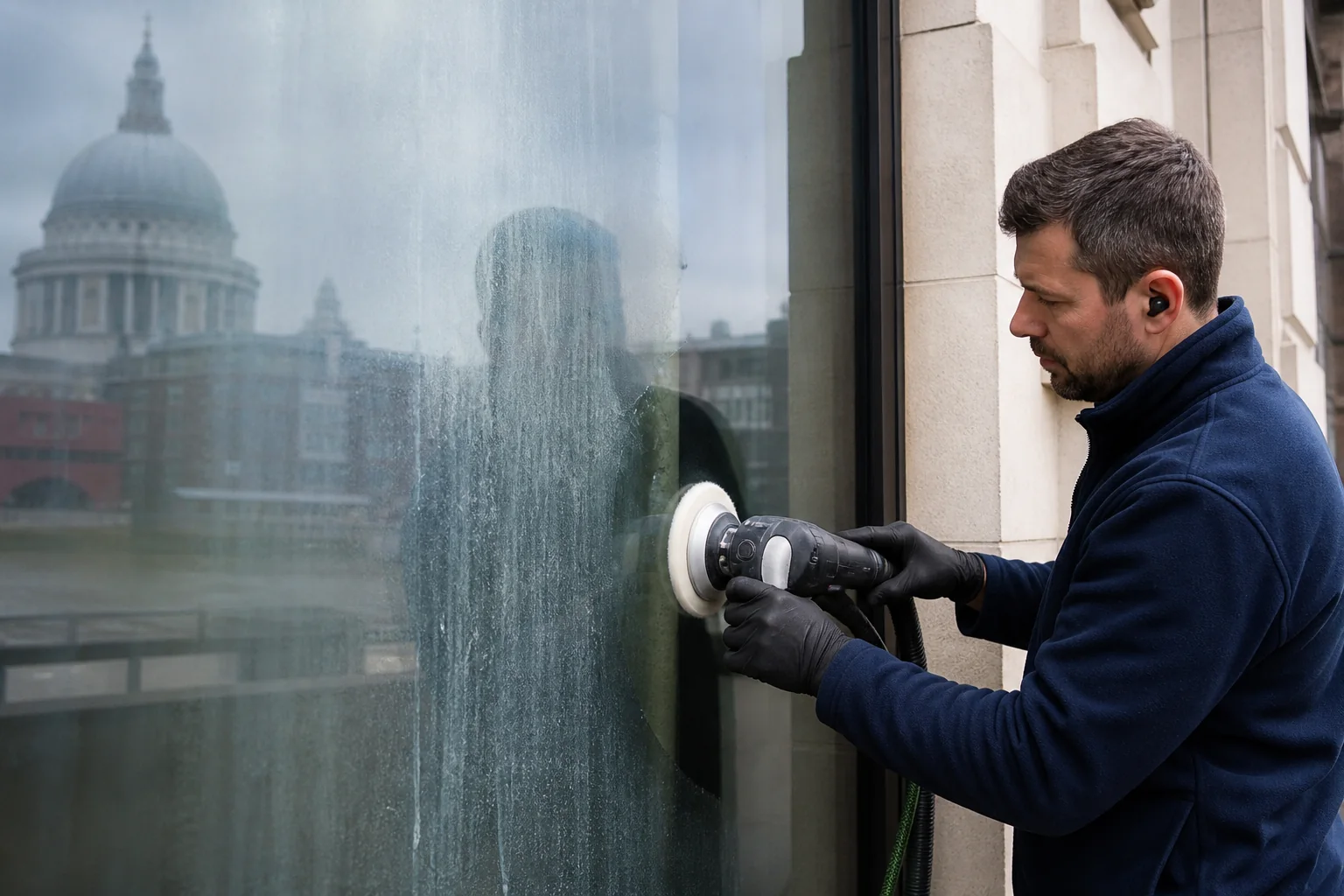
Assessment comes before treatment
The specialist identifies the glass type, coating, contamination and extent of damage. What appears to be dirt may be mineral build-up, scratches, failed sealed units or permanent etching, each requiring a different response.
A test area demonstrates likely improvement and helps avoid treating unsuitable glass.
Restoration uses controlled processes
Selected compounds, pads and polishing equipment may be used in carefully managed stages. Adjacent frames, seals, stone and painted surfaces must be protected.
Removing too much material or using an unsuitable abrasive can distort or damage glass, which is why improvised household treatment is risky.
Results depend on the underlying condition
Some deposits respond extremely well; deep scratches, coating failure or severe etching may remain. Restoration should be judged against replacement cost, access and the visual importance of the pane.
Correcting the cause of deposits is essential if the result is to last.
Quick comparison
| Issue | Routine cleaning | Restoration assessment |
|---|---|---|
| General dirt | Usually appropriate | Not normally needed |
| Established mineral deposits | May remain | Test treatment may help |
| Misting between panes | Cannot resolve | Sealed unit repair required |
| Deep scratches or failed coating | Cannot resolve | Replacement may be preferable |
Practical points to remember
- Request a small test area before full treatment.
- Confirm the glass and coating type where possible.
- Protect adjacent frames and finishes.
- Correct the source of recurring mineral deposits.
Frequently asked questions
Questions about Glass Restoration Explained
Is glass restoration the same as window cleaning?
No. Restoration is a specialist corrective service for selected surface conditions.
Can every scratch be removed?
No. Depth, glass type and optical risk determine what is appropriate.
Will restoration fix misted double glazing?
No. Moisture between panes indicates a sealed-unit problem.
Why is a test patch important?
It demonstrates likely improvement and checks surface response before wider work.
Can hard-water marks return?
Yes, if the sprinkler, leak or runoff source remains active.
Need property-specific advice?