

Window Cleaning Knowledge
Window Cleaning Safety Explained
Safe window cleaning begins before water touches the glass. Access, height, weather, ground conditions, equipment, occupants and members of the public all influence how the work should be planned.
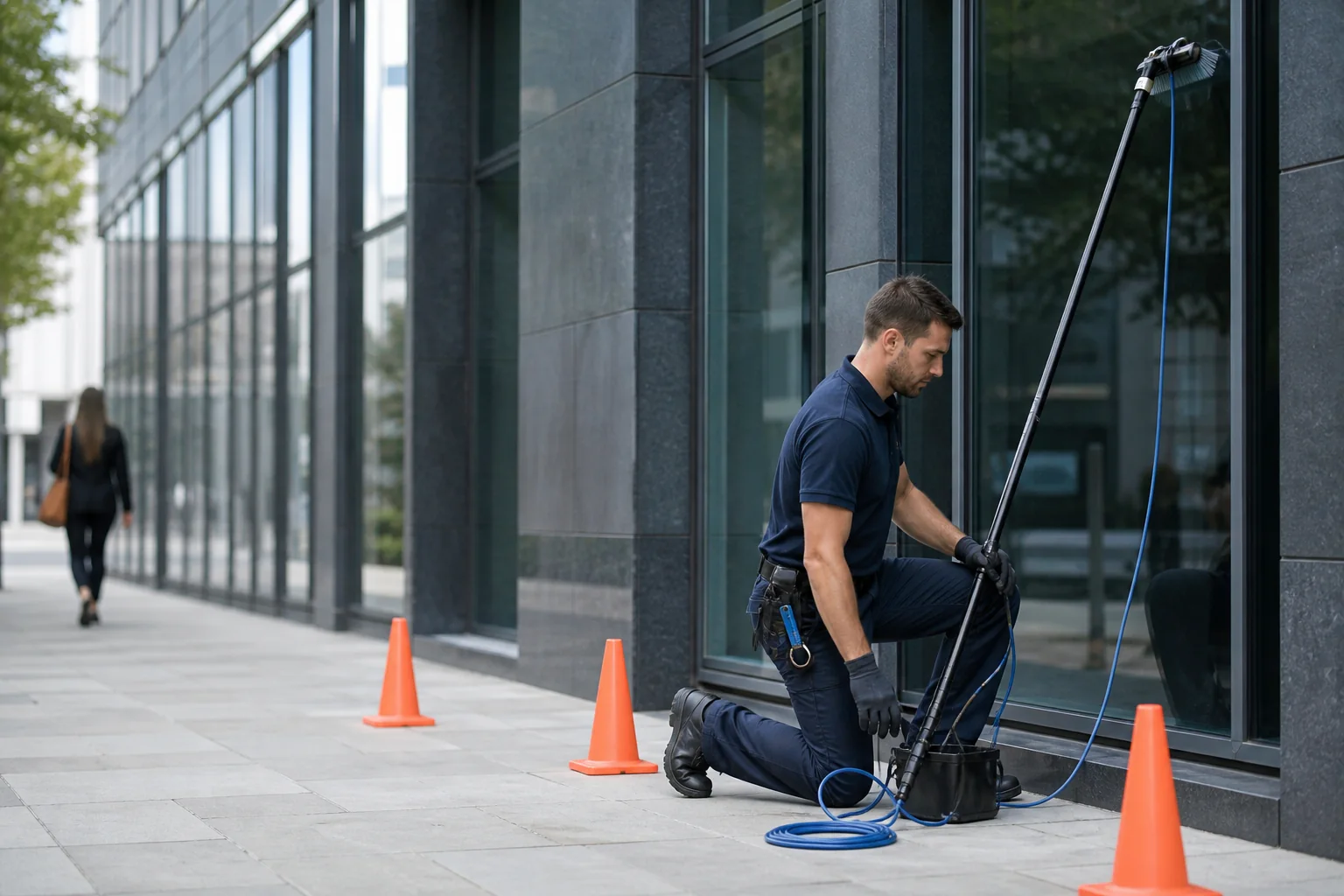
Risk assessment determines the method
A professional assessment considers height, the surface below, pedestrians, overhead hazards, fragile areas and access routes. The method should follow those findings rather than convenience.
Water-fed poles can reduce work at height for many exterior windows, while still requiring pole control, hose management and a clear working zone.
Ground-level work still needs control
Uneven paving, basement light wells, vehicle movement and people entering the area can all affect the operation. Hoses should be routed carefully and warnings or temporary segregation used when appropriate.
Commercial visits may be coordinated around deliveries, customers or school activity. Clear communication with the site contact prevents avoidable conflict.
Customers help prepare safe access
Customers should disclose locked gates, pets, fragile items, damaged panes and known restrictions. Internal cleaning requires clear floors and access; unsuitable furniture is not safe access equipment.
High winds, ice, lightning or poor visibility may require work to be adapted or rearranged even when an appointment was booked in advance.
Quick comparison
| Hazard | Example control | Purpose |
|---|---|---|
| Working at height | Use a suitable ground-based method where practicable | Reduce unnecessary exposure |
| Trailing hoses | Route and identify the work zone | Protect pedestrians |
| Poor weather | Monitor and reschedule when required | Maintain equipment control |
| Restricted access | Confirm routes in advance | Avoid unsafe improvisation |
Practical points to remember
- Choose the method after assessing the property.
- Keep entrances and paths appropriately managed.
- Never improvise access using furniture or unstable equipment.
- Report damaged glass or frames before work begins.
Frequently asked questions
Questions about Window Cleaning Safety Explained
Are water-fed poles safer than ladders?
They can reduce work at height, although ground conditions, pole control and public access still require assessment.
Do professional cleaners ever use ladders?
The access method depends on the task and risk assessment; ladders are not the default for every upper window.
What happens in strong wind?
Work may be adapted or postponed when wind affects safe equipment control.
Must furniture be moved for internal cleaning?
Clear access protects people and belongings and prevents unsafe reaching.
Why are commercial visits sometimes scheduled early?
Lower-footfall periods can simplify control of entrances and pedestrian areas.
Need property-specific advice?