

Window Cleaning Knowledge
Hard Water Stains on Windows Explained
Hard-water marks are mineral deposits left when water evaporates from glass. They differ from ordinary dirt, and established deposits may not disappear during a routine window-cleaning visit.
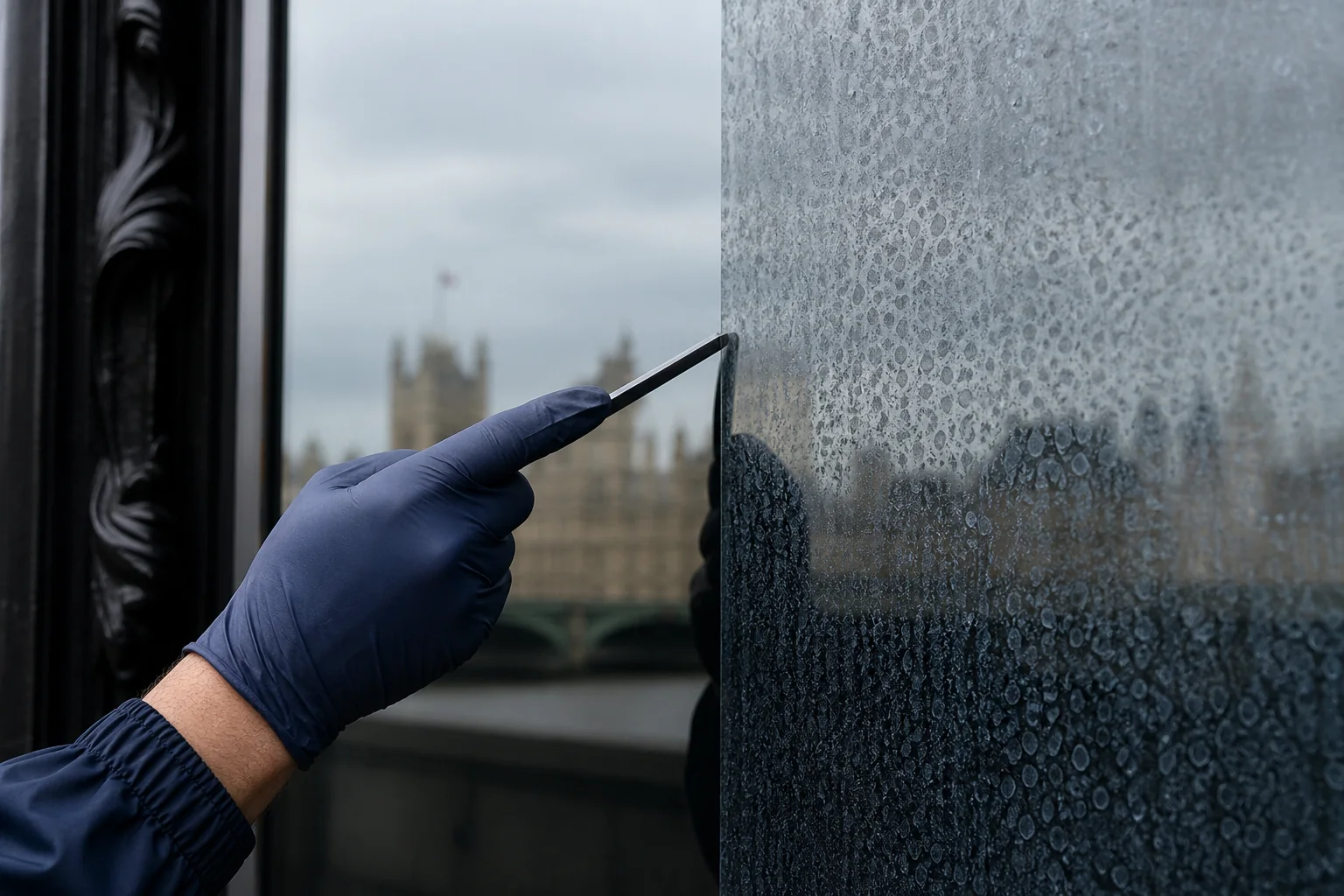
How mineral marks develop
Tap water contains dissolved minerals. Sprinklers, leaking pipework, façade runoff or repeated hose use can leave a pale residue when droplets evaporate. Repetition builds layers that become more visible in direct light.
Marks may also follow water tracks from masonry or metal fittings. Correcting the source matters because otherwise deposits can return after treatment.
Cleaning and restoration are different
Fresh residue may respond to an appropriate cleaning process, while older deposits can bond strongly or contribute to etching. Aggressive household abrasives risk scratching glass or damaging coatings and frames.
A professional should assess the glass, deposit severity and adjacent materials. A small test area helps establish what improvement is realistic before wider treatment.
Prevention protects the result
Redirecting irrigation, repairing leaks and avoiding tap-water rinsing reduces recurrence. Routine pure-water cleaning manages normal exterior contamination but cannot stop a separate source depositing minerals.
If the surface is etched, restoration may improve clarity without guaranteeing a factory-new result. Severe damage may ultimately require replacement.
Quick comparison
| Observation | Possible meaning | Next step |
|---|---|---|
| Chalky spots after sprinkler use | Mineral residue | Stop overspray and assess early |
| Marks remain after cleaning | Established deposits or etching | Arrange a test treatment |
| Lines below masonry | Repeated runoff | Correct the water source |
| Persistent haze | Possible glass damage | Seek restoration advice |
Practical points to remember
- Do not scrape glass without confirming its surface type.
- Correct leaks and sprinkler overspray before treatment.
- Request a test area for established staining.
- Keep expectations realistic where permanent etching exists.
Frequently asked questions
Questions about Hard Water Stains on Windows Explained
Can pure water remove hard-water stains?
It is excellent for routine cleaning, but established deposits may require a separate specialist process.
Are mineral marks permanent?
Some are removable deposits; severe cases may have etched the glass.
Can vinegar safely remove every mark?
No. Glass coatings, frames and nearby materials vary, so untested treatments can cause damage.
Why do the marks return?
The source may remain active, such as a sprinkler, leak or façade runoff.
Is restoration always possible?
Suitability depends on the glass and severity, which is why assessment and testing are important.
Need property-specific advice?