

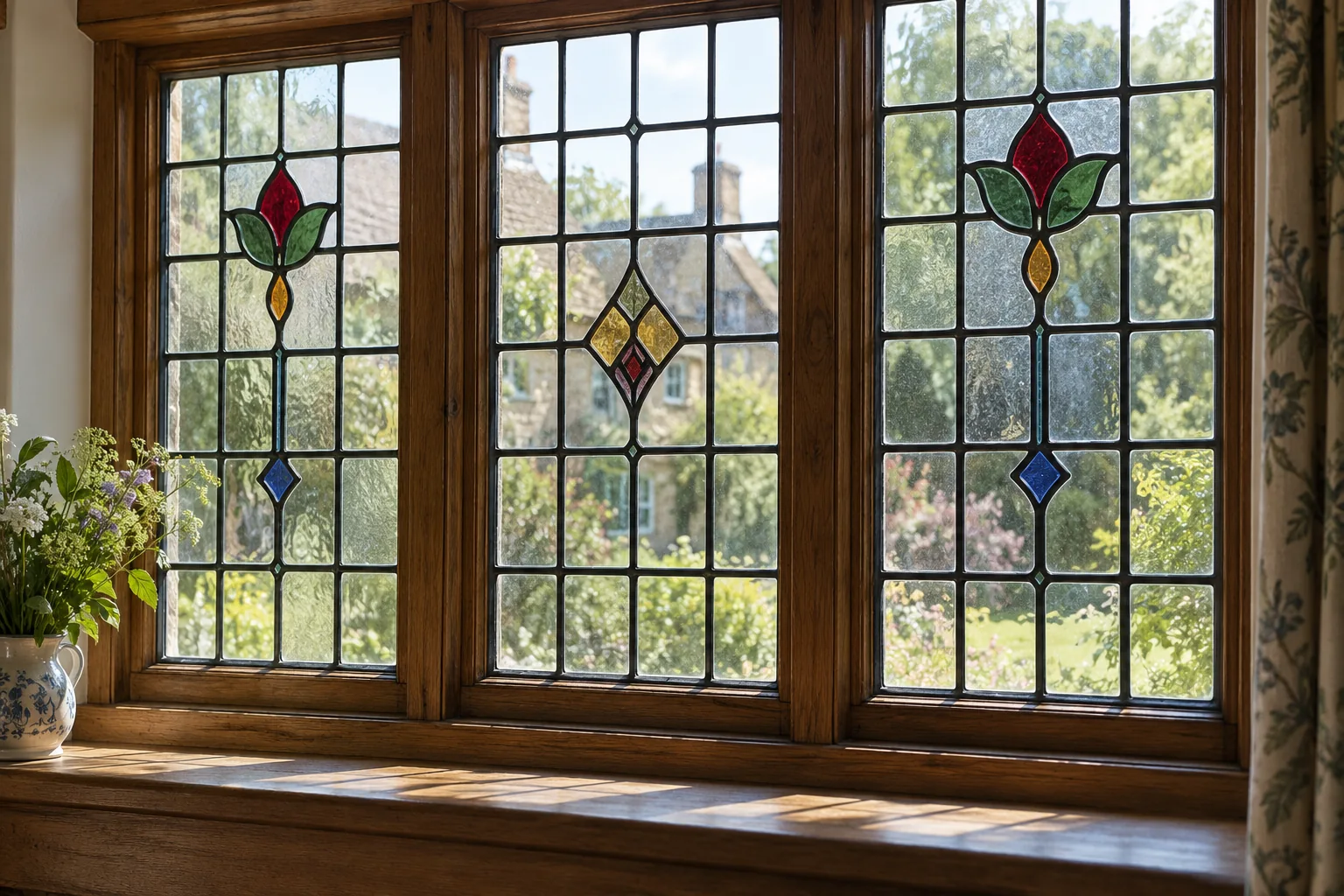
Leaded and stained glass can survive for generations, yet careless cleaning can shorten the life of its surface, paint and lead network. The right first step is to establish what you are looking at. Is it a historic panel with painted detail, a later decorative unit sealed inside double glazing, or an applied film made to resemble stained glass? Those constructions need different care. For a true leaded panel, remove loose dust gently, keep moisture to an absolute minimum and ask a conservator about unstable glass, flaking paint or bowed lead before any wet cleaning.
Identify the material and condition
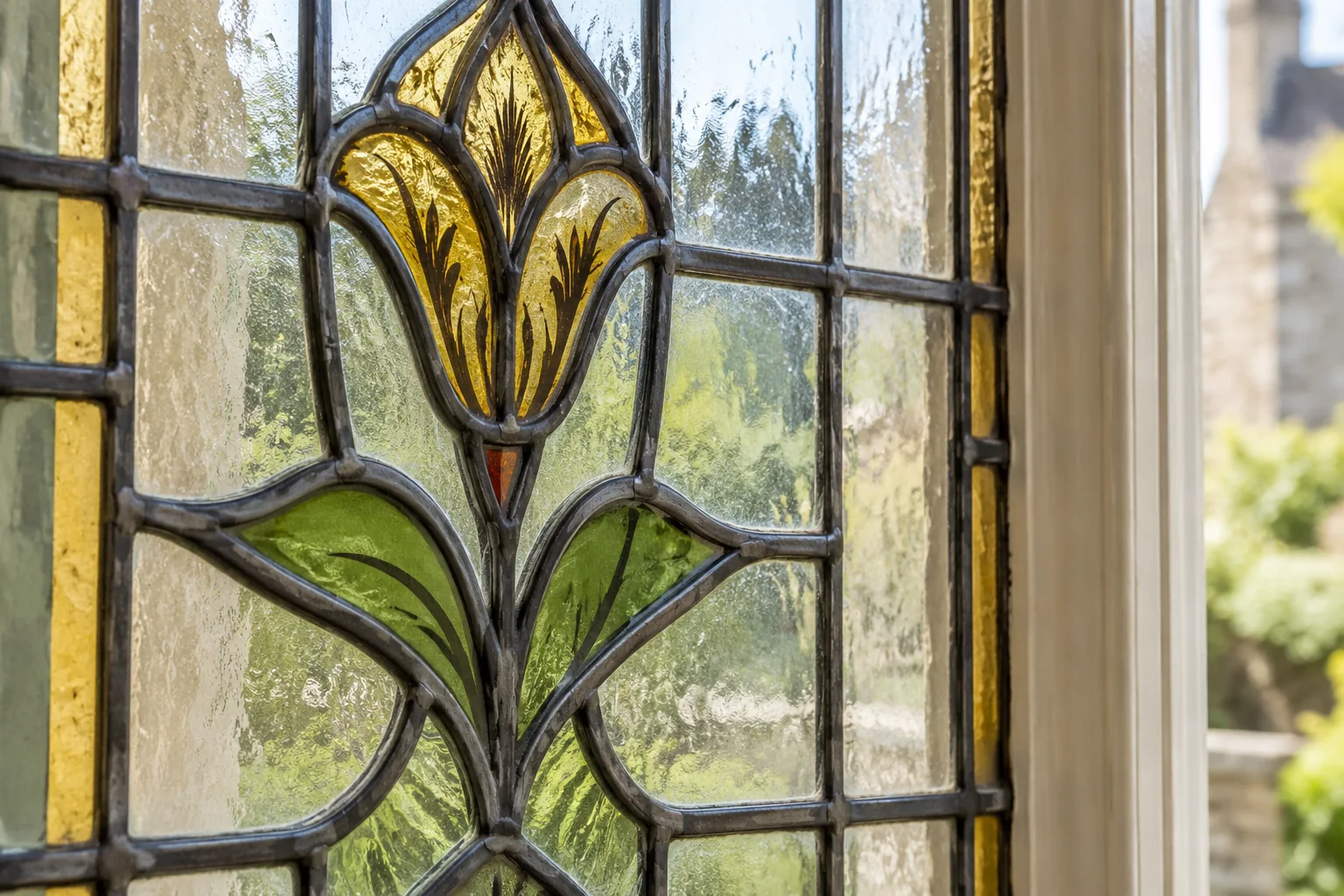
A leaded window is assembled from individual pieces held by lead cames and soldered joints. The glass may be coloured throughout, textured, or decorated with fired and sometimes later applied paint. Putty or cement beneath the lead can help weatherproof the panel. None of those parts should be treated like a single modern sheet of float glass.
Look across the panel in good daylight. Note any cracks, gaps, rattling pieces, loose lead, white deposits, bowing, or areas where painted detail seems to lift. Photograph concerns before touching them. A panel that moves when the window closes, lets in water or sheds fragments needs specialist assessment. Routine window cleaning should stop short of trying to press glass back into place or reseal lead with household products.
Some decorative units are protected behind a plain outer pane. In that case the accessible surface may be ordinary glazing, though the unit's edges and seal still need care. Applied lead strips or coloured film can also look convincing from a distance. Check the glazing documentation if available, and test a tiny inconspicuous area before using any cleaner on the decorative face.
Dry cleaning is the safest starting point
Use a soft, clean brush to lift loose dust from sound glass. Support your hand on the surrounding frame, not on the pane or lead. Work from top to bottom so debris falls away from cleaned areas. A low-suction vacuum held near the brush can capture dust, but do not place the nozzle against the panel. Avoid hard-bristled brushes, scrubbing pads and blades: even if the glass looks robust, painted detail may be fragile.
For an intact domestic panel with no signs of instability, a conservator may permit cautious spot cleaning with an appropriate barely damp swab. That decision depends on the age and condition of the glass and decoration. Do not assume water is harmless simply because stained glass sits in an exterior window. Liquid can enter loose joints and carry dirt into the lead network or onto painted surfaces.
If deposits remain after gentle dry cleaning, leave them until the material is understood. White crusts, corrosion products, old sealants and paint splashes require different treatment. Household vinegar, acid descalers, solvent sprays and abrasive cream cleaners can cause irreversible damage. A clearer pane is not worth the loss of original detail.
Frames and nearby plain glass
The surrounding frame can usually be dusted separately. Use a soft brush to remove cobwebs from the rebate and a lightly damp cloth on sound painted timber or metal, keeping drips away from the panel. Dry the frame afterwards. If condensation regularly gathers at the bottom edge, note where it forms and whether the frame or panel is wet; persistent damp may indicate a ventilation, glazing or building-fabric issue.
Where a leaded panel sits beside ordinary panes, use separate cloths and products. Clean the plain glass according to its own specification, but avoid spray drifting onto decorative glazing. The same applies to window polish: residue in the recesses beside lead can be difficult to remove and can obscure detail rather than brighten it.
Do not pull at a draught strip or protective glazing edge to reach dirt behind it. Secondary glazing can protect historic glass, but the cavity may need a particular ventilation arrangement. Opening or resealing it without understanding that arrangement can worsen condensation. A glazier or conservator should advise on changes.
Exterior access and weathered surfaces
Outdoor faces may have accumulated traffic film, soot and biological growth over many years. High-pressure jets, forceful brushes and aggressive chemicals are unsuitable for a fragile leaded panel. Even a gentle-looking stream can drive water through weakened joints. A conservator can assess whether the surface needs cleaning at all, what material can be safely removed, and whether protective measures are needed first.
Upper-floor decorative glazing creates a second problem: access. Do not lean out or climb onto a ledge to reach it. If adjacent plain glass needs attention, explain which panes are historic and which are conventional before arranging exterior cleaning. The residential window cleaning service can be discussed for suitable glass and access, but a conservation assessment should guide work on a vulnerable decorative panel. Make the boundaries of the cleaning quote explicit.
The choice of method matters for modern glazing too. The site's existing explanation of pure-water window cleaning describes how that method works on suitable windows; it should not be read as blanket permission to brush a historic leaded panel.
When to involve a specialist
Consult a stained-glass conservator when you see flaking painted detail, corroded glass, cracked pieces, failing solder joints, a pronounced bulge or repeated water penetration. A skilled assessment can distinguish harmless age from an urgent structural issue. Ask what can be cleaned, what should remain untouched, and whether a temporary protection measure is warranted. Keep any fragments that have already fallen away; do not attempt to glue them back in place.
For a listed building or a window of architectural interest, proposed repair or replacement may also require consent. Check the building's status and seek advice from the relevant conservation professional and local authority before altering the glazing. Cleaning itself is usually a smaller intervention, but it can still cause damage if an unsuitable method is used.
An owner's useful routine is observation, dry dusting where the panel is sound and safely accessible, and prompt reporting of change. Record a dated photograph from the same position every few months if a panel appears to be bowing or a crack is growing. That gives the specialist better evidence than a vague recollection.
A sensible cleaning brief
Before anyone starts, specify whether the request concerns the decorative panel, the plain protective pane, the surrounding frame or all three. Share photographs of the glass and its condition. Ask the person doing the work to describe the proposed tools and how moisture will be controlled. If they cannot identify the surface or respond to an obvious defect, postpone cleaning until it has been assessed.
Leaded glass rewards restraint. Dust can often be removed without disturbing the construction; stubborn deposits and weathering need judgement. The aim is to preserve the panel while keeping adjacent, suitable glazing clean, not to make an old window look artificially new.