

Window Cleaning Knowledge
Why Do Windows Become Dirty So Quickly?
A window can look marked soon after cleaning even when the glass was cleaned correctly. The reason is usually a combination of local exposure, weather, surrounding surfaces and the type of residue reaching the pane—not simply the passage of time.
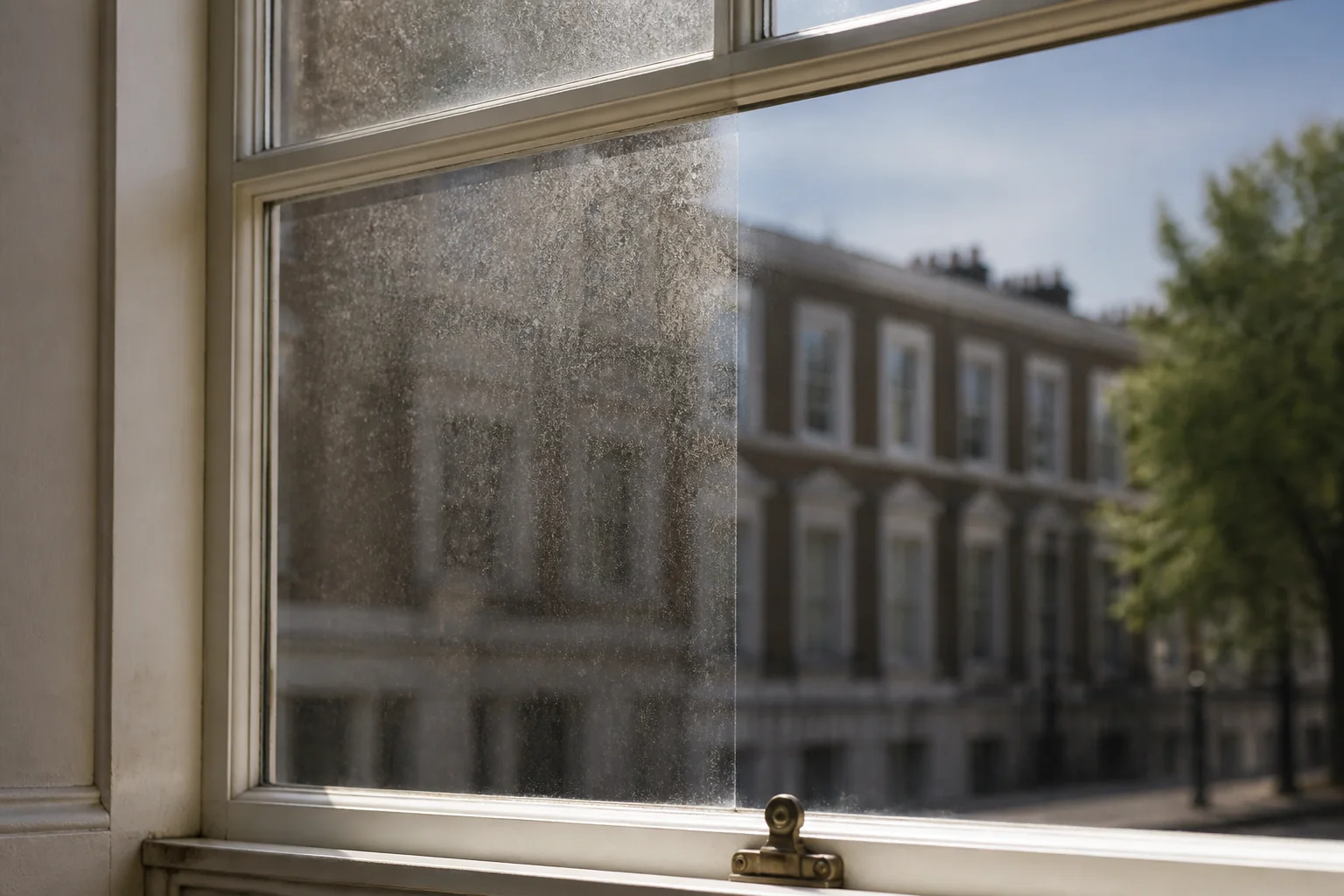
Outdoor pollution and property position
London traffic produces fine airborne particles that settle on glass and frames. Properties close to busy roads, construction activity, rail lines or delivery areas can develop a grey film faster than homes on quieter streets. Lower panes may also receive splashback from paving, soil or window boxes.
Building shape matters too. Recessed windows may be sheltered from rinsing rain but collect dust, while exposed elevations receive more windblown deposits. Ledges and poorly maintained frames can release dirt onto newly cleaned glass during wet weather.
Rain is often blamed for existing dirt
Clean rainwater does not automatically make clean glass dirty. Visible spotting frequently occurs when rain redistributes dust, pollen or residue already present on the pane, frame, roofline or surrounding masonry. Tap-water spray from irrigation and exterior hoses is different because it can contain minerals that remain after evaporation.
This explains why properly rinsed windows can remain clear through ordinary rain, while neglected glass may show marks after the first shower.
Indoor moisture and daily use
On the interior, fingerprints, cooking aerosols, candles, open fires and household sprays create films that attract more dust. Condensation can move residue across the glass and encourage grime around seals. Persistent moisture may also indicate ventilation or insulation issues that cleaning alone cannot resolve.
Regular maintenance removes accumulated contamination before it becomes difficult to treat. The ideal interval depends on exposure, presentation standards and how the rooms are used rather than a universal calendar rule.
Quick comparison
| Cause | Typical sign | Useful response |
|---|---|---|
| Traffic and construction dust | Grey film across exposed panes | Regular exterior maintenance |
| Pollen and organic debris | Fine yellow or green residue | Frame and glass cleaning |
| Tap-water spray | Chalky spots or arcs | Prevent overspray; assess mineral deposits |
| Indoor condensation | Runs and marks near edges | Clean glass and improve moisture control |
| Dirty frames and sills | Streaks after rain | Include compatible frames in maintenance |
Practical points to remember
- Keep sprinklers and hose spray away from glazing.
- Maintain frames, sills, gutters and nearby rooflines.
- Use ventilation to manage recurring internal condensation.
- Choose a cleaning interval based on exposure and use.
Frequently asked questions
Questions about Why Do Windows Become Dirty So Quickly?
Does rain make freshly cleaned windows dirty?
Rain often reveals or moves existing contamination; correctly cleaned glass does not automatically become dirty because it rains.
Why are roadside windows dirtier?
Traffic movement and emissions increase the amount of fine particulate matter settling on exposed glass.
What causes white spots that do not wipe away easily?
They may be mineral deposits from hard water, which can require assessment and specialist treatment.
Can dirty frames mark the glass again?
Yes. Residue from frames, seals and ledges can wash onto panes during rain.
Will more frequent cleaning prevent all marks?
It reduces build-up, but active sources such as sprinklers, building work or condensation also need addressing.
Need property-specific advice?