

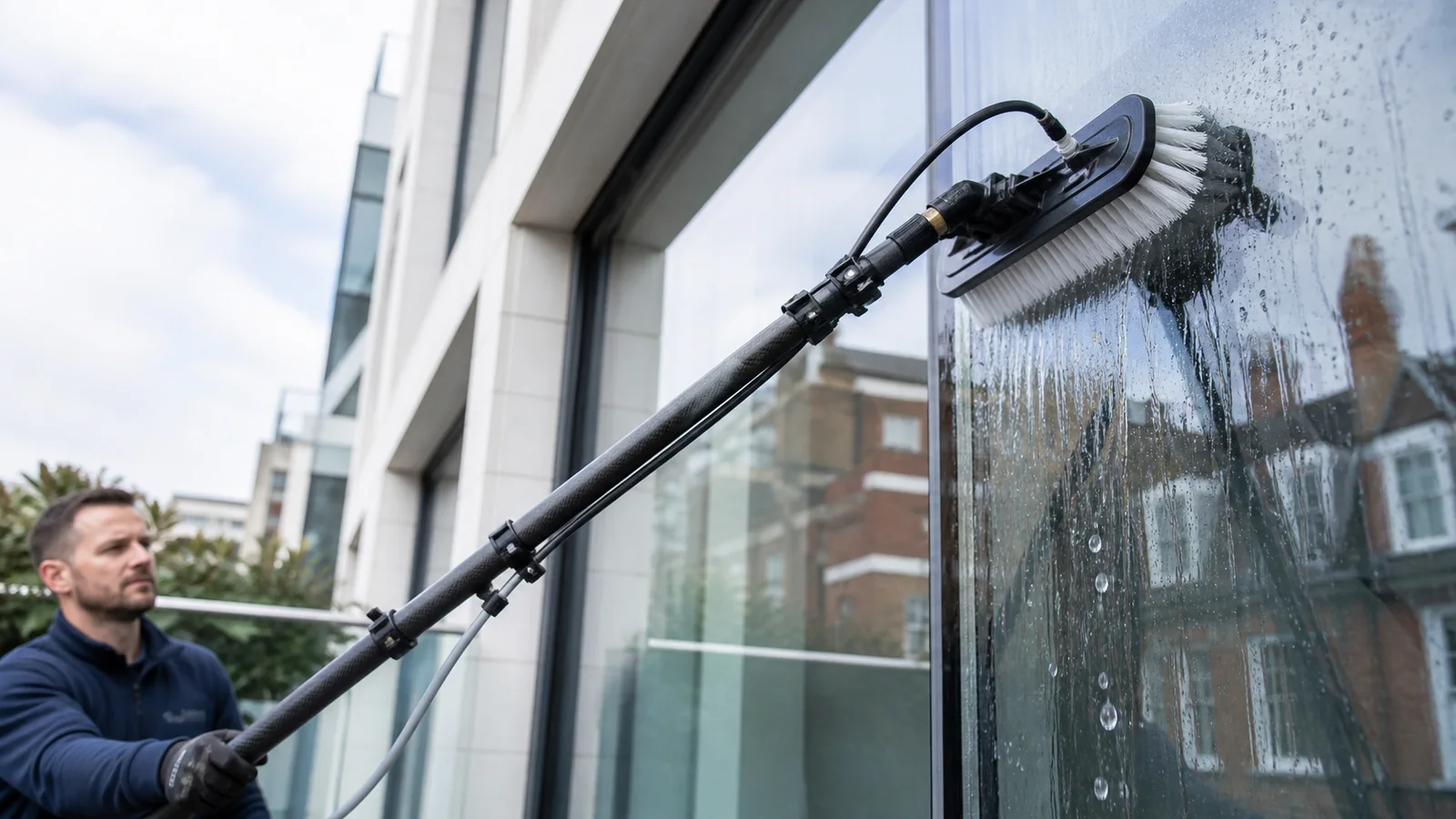
Pure-water window cleaning is now a familiar sight across the UK: a technician works from the ground with a telescopic pole, a soft brush and a controlled flow of water. What is less obvious is why the process works and why the glass is normally left wet at the end.
The method is not simply tap water delivered through a long pole. The water is treated to remove the dissolved minerals that can otherwise remain as visible marks when droplets evaporate. Used with the correct technique, it allows exterior glass and accessible frames to be agitated, rinsed and left to dry naturally.
What does “pure water” mean?
Ordinary mains water contains naturally occurring dissolved solids. Their levels vary by area, and hard-water minerals can leave residue on a surface after evaporation. Professional purification systems reduce those dissolved solids through processes such as reverse osmosis and de-ionisation.
Technicians monitor water quality rather than assuming it is suitable. The aim is a final rinse that does not introduce the mineral spotting associated with untreated water.
How a water-fed pole clean works
- The technician assesses the glazing, access and surrounding hazards.
- Purified water is delivered to a purpose-made brush at the end of a telescopic pole.
- The brush agitates dirt on the glass and, where suitable, the surrounding frames.
- The surface is rinsed so loosened contamination can flow away.
- The remaining purified water is left to dry naturally.
That final step often surprises first-time customers. Wiping the wet glass with a used cloth could reintroduce minerals or detergent, so a correct pure-water rinse is normally allowed to evaporate.
Benefits for London properties
Working from the ground can reduce the need to position ladders against many residential facades. Telescopic systems also help technicians reach windows above extensions or landscaped areas where the site and pole reach allow. The method can be efficient for repeated maintenance across houses, offices, shops and managed properties.
Pure water also avoids leaving a sticky detergent film on correctly rinsed exterior glass. That does not make a window resistant to future pollution, but it removes one possible surface residue to which dust can cling.
Why the first clean may behave differently
Old soap deposits, frame oxidation and contamination around seals can be drawn onto the glass during an initial visit. A first clean may therefore require more agitation and rinsing than a maintained window. Water dripping from vents or heavily soiled upper frames can also affect the pane below if the process is rushed.
This is why technique matters as much as equipment. A professional should work in a logical order and give upper sections time to drain before completing lower glass.
When another method may be needed
Pure water is not a universal answer. Internal windows, delicate surfaces, damaged seals, construction residue and some specialist glazing require a different assessment. Paint, cement, silicone and adhesive are not routine dirt and should not be scraped without understanding the glass and manufacturer guidance.
For commercial buildings, access height, public areas and site restrictions can determine whether water-fed poles are appropriate. See our commercial window cleaning service for more information.
Professional pure-water window cleaning in London
Top Window Cleaners uses professional equipment for appropriate residential and commercial properties. Learn about residential window cleaning, view the areas we cover, or call 020 3404 9775.