

Property type guide
Window Cleaning for Schools
School window cleaning must fit safeguarding, lesson movement and site-security rules. The service map should separate teaching blocks, entrances, halls and restricted areas.
Plan around pupils, staff and safeguarding
A survey records elevations, playground boundaries, courtyards, roof setbacks and internal partitions. Each zone receives a method and a permitted attendance window.
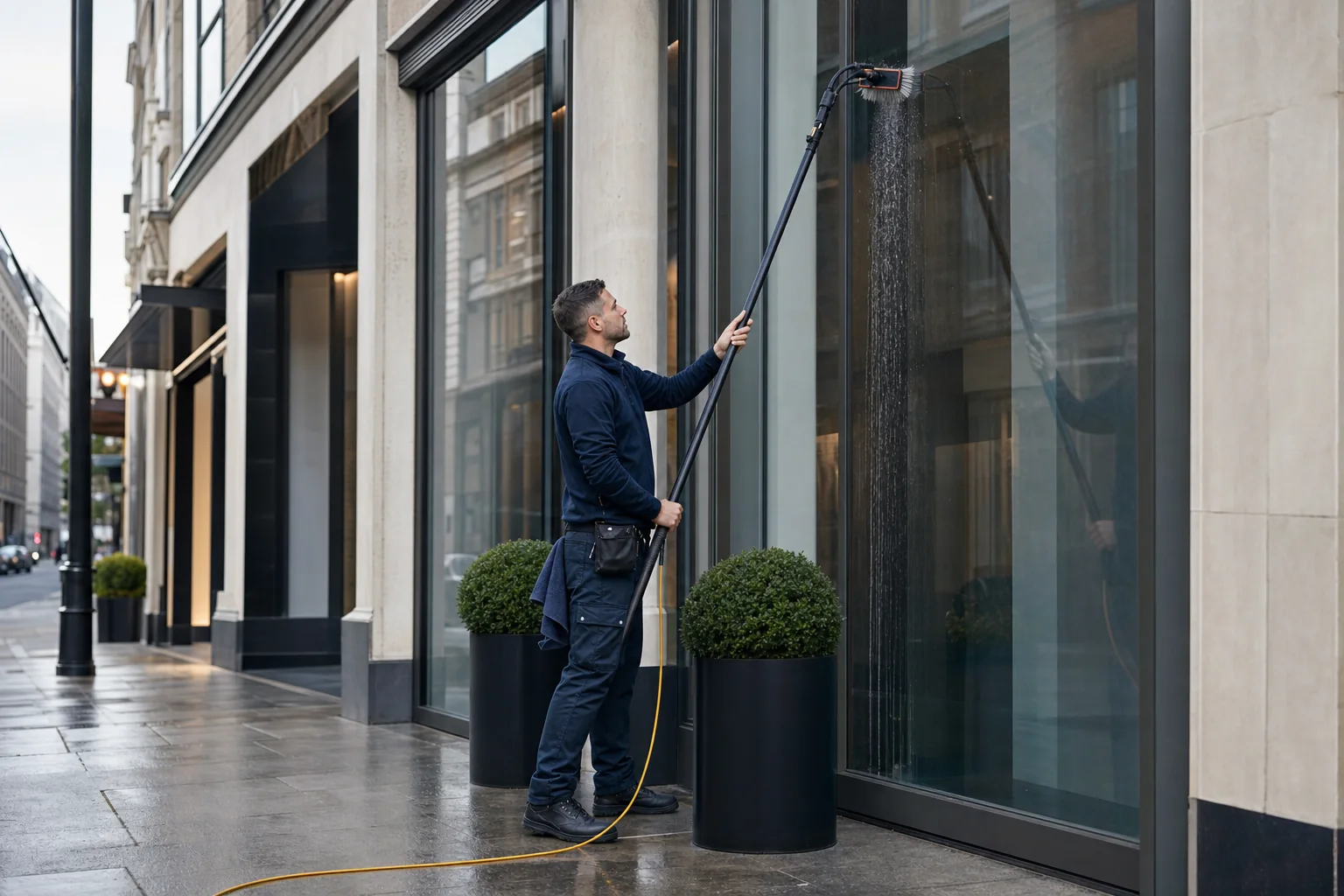
Exterior pole work may be practical from controlled ground positions, while internal doors and partitions need detailing that protects floors, displays and classroom equipment.
Assign methods to classrooms, halls and façades
The school should identify arrival, break, lunch and collection periods when pupils use exterior routes. Cleaning is normally sequenced outside those conflicts.
Contractor signing-in, identification, supervision and restricted-area procedures must be supplied before the visit. A technician should not improvise access to an occupied classroom.
Coordinate access with the school timetable
Playgrounds and sports areas can limit equipment placement even when the façade is reachable. Gates and safe separation form part of the same access assessment.
Entrance glass may require more frequent care than upper classroom windows. Split schedules can maintain presentation without disrupting the whole site each time.
Set cycles by use and visibility
The quotation should name blocks, elevations, internal zones, frequency and exclusions. Rooflights, canopies and specialist access stay separate when assessment is needed.
One estates or facilities contact should authorise changes and receive completion information. Staff in individual rooms should not add unrecorded work on the day.
School glazing priorities at a glance
| Planning point | Why it matters | What to confirm |
|---|---|---|
| Surface scope | Prevents omissions | Private, communal, internal and external glass |
| Access method | Controls safety and feasibility | Ground position and specialist requirements |
| Site activity | Protects occupants and visitors | Best time and controlled routes |
| Frequency | Aligns spend with presentation | High-touch versus upper glazing |
Information needed before the survey
- Map buildings and restricted pupil areas.
- Provide safeguarding and signing-in procedures.
- Avoid arrival, break and collection periods.
- Use consistent zones for scope and completion.
Frequently asked questions
Questions education teams commonly ask
How is access assessed?
Holiday periods can suit larger exterior programmes, but building use, clubs and maintenance projects still need confirmation before attendance.
Can upper windows be cleaned from the ground?
Cleaning cannot repair damaged safety film, failed seals or cracked units. Those conditions belong in the school maintenance record.
Are frames and internal panes included?
Weather may affect exposed façades while protected internal work remains possible. The completion note should identify exactly which zones were delivered.
How often should the glass be cleaned?
Photographs can support pricing, but complex or multi-block schools may need a survey. Secure information should be shared through the agreed contact.
What affects the final price?
Price reflects zone quantity, height, timing, access controls and frequency. Competing quotations should be compared using the same building list.
Can cleaning repair misted units or damaged seals?
Consistent zone names improve recurring records and make missed access easier to investigate. The same names should appear in the quotation and completion note.
Need property-specific advice?