

Property type guide
Window Cleaning for Offices
Office window cleaning can involve exterior façades, reception glass, meeting-room partitions and shared atriums. A zone-based brief prevents internal and external responsibilities from being mixed.
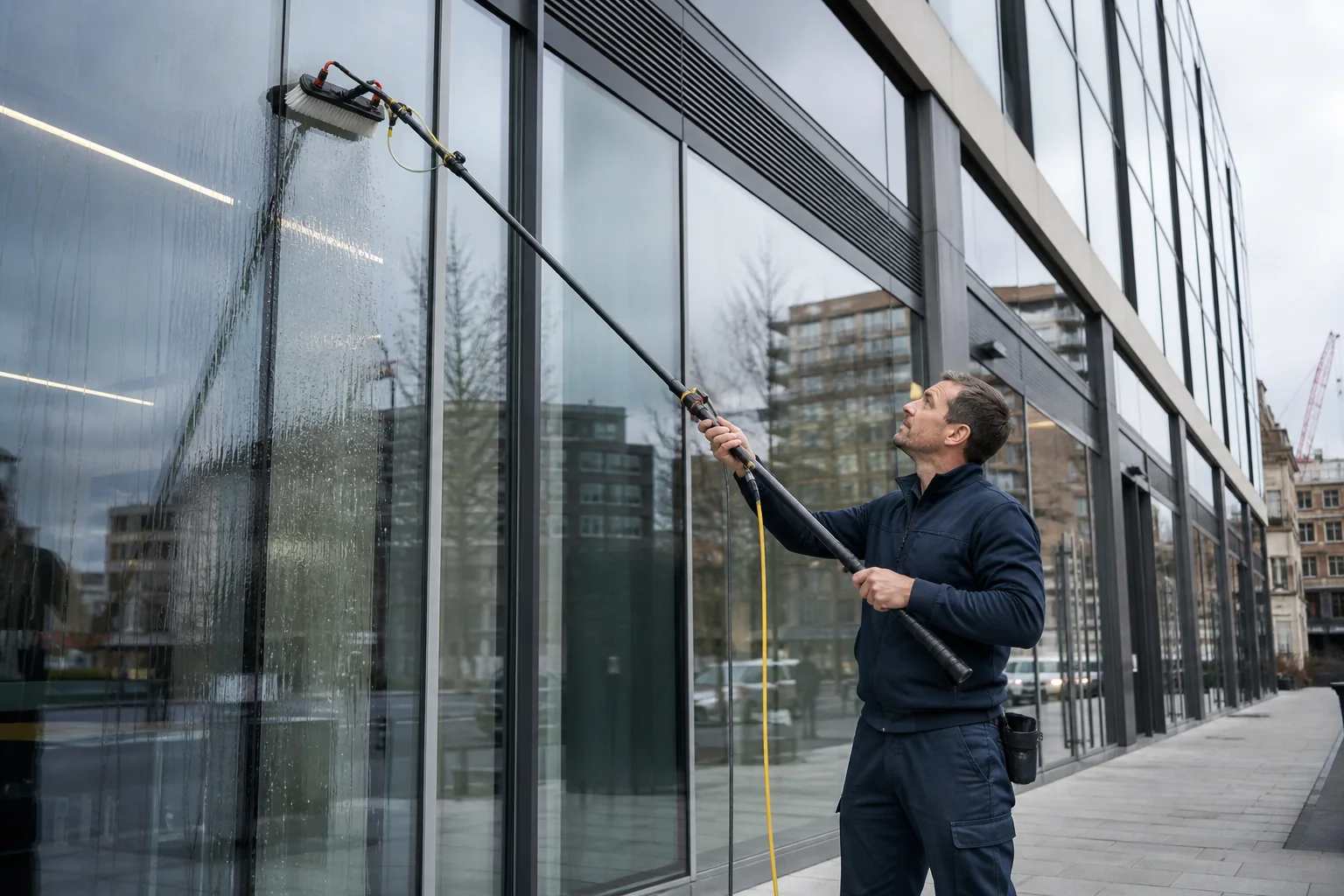
Define façade and interior workplace zones
The survey records elevations, floor levels, podiums, roof setbacks and ground restrictions outside. Inside, it identifies reception desks, workstations, partitions and sensitive equipment near the glass.
Purified-water poles may serve suitable exterior panes from controlled ground positions. Interior partitions and doors usually require detailing tools with careful protection of floors and furniture.
Select methods around desks, atriums and entrances
Security procedures, contractor passes, loading access and lift rules should be supplied before attendance. One facilities contact should approve any change to the building plan.
Occupied floors require timing that protects staff movement and confidential work. Desks, screens and paperwork should not be moved by the technician without an agreed arrangement.
Coordinate facilities, security and occupied space
Reception and entrance glass often needs a shorter cycle than upper façades. Separate frequencies can maintain presentation without repeating the entire exterior service.
The quotation should name exterior elevations, internal zones, frames, sills and exclusions. Atrium glass, canopies and specialist access remain separate line items when needed.
Set cycles from footfall and corporate presentation
Out-of-hours work may reduce disruption but can change staffing, security and cost. Those conditions should appear in the commercial estimate rather than being assumed.
Public pavement, deliveries and building entrances influence equipment placement. A busy frontage may need a quieter time or a different controlled method.
Office glazing decisions at a glance
| Planning point | Why it matters | What to confirm |
|---|---|---|
| Surface scope | Prevents omissions | Private, communal, internal and external glass |
| Access method | Controls safety and feasibility | Ground position and specialist requirements |
| Site activity | Protects occupants and visitors | Best time and controlled routes |
| Frequency | Aligns spend with presentation | High-touch versus upper glazing |
Information for a workable quotation
- Separate façade, reception and partition glazing.
- Provide security and contractor-access procedures.
- Schedule work around staff and visitor movement.
- Use zone-based completion and pricing records.
Frequently asked questions
Questions facilities teams ask
How is access assessed?
Photographs support initial planning, while complex façades may need a survey. The decision depends on whether height, angle and working positions can be verified remotely.
Can upper windows be cleaned from the ground?
Completion records can identify each façade and internal zone delivered. An inaccessible office or blocked loading area should be noted against the same naming system.
Are frames and internal panes included?
Cleaning cannot repair failed seals, façade defects or damaged privacy film. Maintenance observations should be reported without being presented as cleaning outcomes.
How often should the glass be cleaned?
Price reflects glazing quantity, access, operating hours, condition and frequency. Quotations should be compared only after confirming identical zones and controls.
What affects the final price?
Recurring visits work best when the facilities team maintains current access contacts. Changes to tenants, security or furniture layout should be reported before the next date.
Can cleaning repair misted units or damaged seals?
Weather may postpone one exposed exterior zone while approved interior work continues. The attendance record should make that division clear.
Need property-specific advice?