

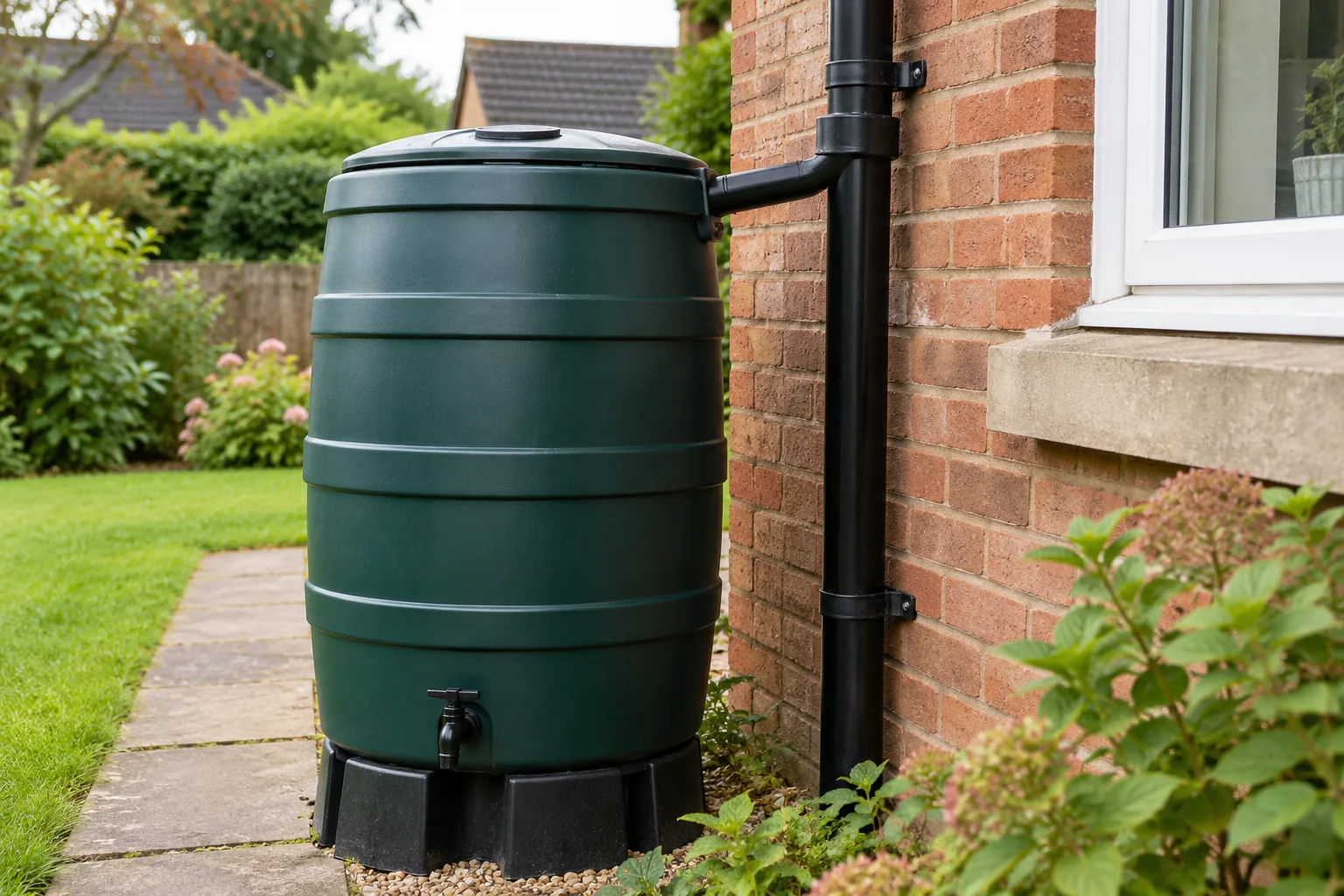
A water butt collects rain from a downpipe, so a blocked inlet or full container can look like a gutter problem. Water may spill at the diverter, run down the wall or back up near a joint even when the roof channel is reasonably clear. Before arranging a gutter clearance, follow the visible route from roof to storage and identify where the water stops behaving as expected.
This does not require taking apart a high downpipe. Most useful checks are at ground level: the butt lid, inlet, overflow connection, stand and nearby gully. Leave inaccessible fittings and any work at height to someone with appropriate equipment.
Understand the route on your property
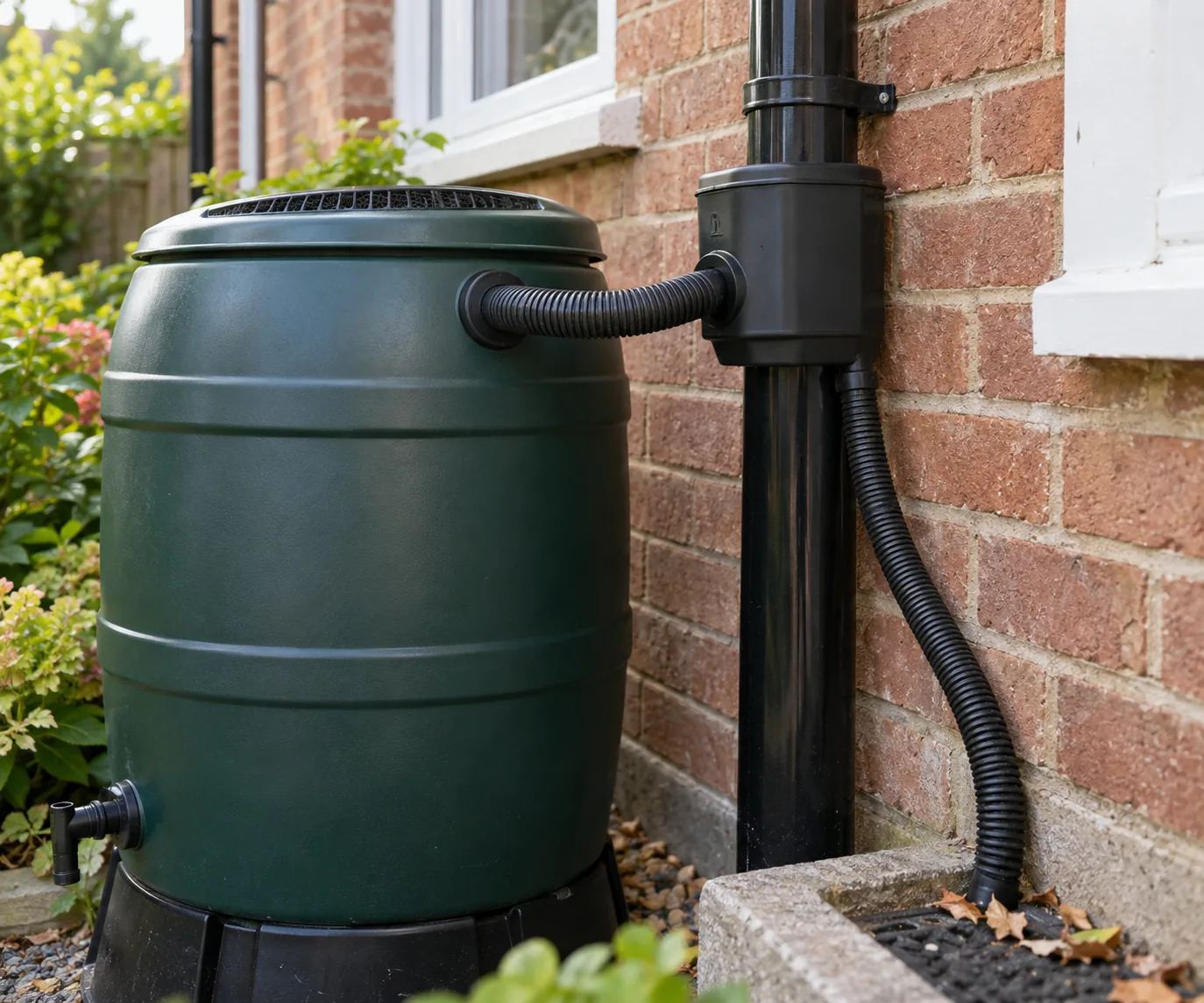
Many domestic butts use a diverter fixed into the downpipe. Some send water into the butt until it reaches a certain level, then return the flow to the pipe. Others rely on a separate overflow hose. Installations vary, and later alterations can change how they work. Take a photograph of the fittings and check any instructions supplied with the butt rather than assuming every setup follows the same design.
Look for the point where the gutter feeds the downpipe, the diverter branch, the inlet at the butt and the eventual overflow or drain. If a hose disappears behind planting, trace it only where it is safely accessible. A disconnected or kinked hose can send water onto paving or against a wall. A poorly supported butt can also shift as its weight changes.
The existing gutter cleaning guide covers the roofline. The addition of storage means the ground-level fittings deserve their own check.
Check the butt before blaming the gutter
Start with the water level. If the butt is full, is the overflow taking surplus water away from the building? If there is no obvious overflow, inspect the manufacturer's arrangement and seek suitable help to correct it. Water should not be allowed to soak repeatedly beside a wall or foundation.
With the lid closed between checks, look at the inlet screen or filter where one is fitted. Leaves and small organic fragments can collect here. Remove loose material only if the component is at a safe height and designed for user access. Wear gloves, avoid spilling collected sludge into a ground gully, and refit the screen properly. An open butt can attract insects and present a hazard for children or wildlife, so keep its lid secure.
Check the stand and tap for leaks. A wet patch beside the butt may come from a dripping tap rather than the downpipe. If the container is cracked, cleaning the gutter will not stop water escaping. Mark the source before choosing a trade or replacement part.
Observe what happens in ordinary rain
From a safe position, watch the downpipe above the diverter and the connection to the butt. Is water entering the storage inlet? Does it return to the downpipe when the butt is full? Does any joint drip? A short video can capture intermittent leakage more clearly than a description.
Avoid opening the lid during heavy rain or reaching behind a full butt. Water makes the ground slippery, and a filled container is heavy. Do not disconnect fittings under load. If water is running into the building, seek urgent building advice rather than waiting for a routine maintenance visit.
If there is no inflow despite steady rain, the roof gutter or upper downpipe may be restricted, or the diverter may be blocked. If water reaches the butt but does not leave it safely when full, the overflow arrangement is the likely focus. These are observations, not a complete diagnosis; concealed connections may need inspection.
Prevent debris moving from roof to storage
Tree leaves, moss and grit can travel down the rainwater route. A clear outlet at the roof and a suitable inlet filter can reduce what ends up in the butt. Neither removes the need to inspect both ends. Filters require cleaning, and fine particles can still pass through. Do not force debris down a blocked downpipe with water; that can move the obstruction to a less accessible point.
If the gutter visibly contains material or water spills over its edge, request a defined gutter cleaning assessment. Tell the contractor that the downpipe feeds a water butt and ask how the diverter and accessible upper pipe will be treated. The quotation should say whether the butt connection is included or excluded. A cleaner may identify a damaged diverter but may not be contracted to replace it.
Where rainwater also serves a garden, avoid assuming that clearer water is safe for drinking or food preparation. Roof-collected water can contain contaminants from surfaces and wildlife. Use it in line with the butt manufacturer's guidance and sensible garden practice. If you use it around edible plants, seek appropriate advice for that use rather than treating it as potable water.
Protect the wall and paving
Check where surplus water goes. A hose that releases beside the house can keep masonry wet and create algae on adjacent paving. Moveable hoses should be secured to the intended drain or suitable discharge area according to the installation instructions. If no safe route is available, ask a drainage professional for advice; simply diverting water onto a neighbour's land is not a solution.
The patio cleaning service may address staining or organic deposits that have built up below a faulty overflow, but correct the water path first. Otherwise the marks can return. Likewise, repeated damp on a wall should be assessed as a building issue rather than covered with cosmetic cleaning.
For a terrace or shared downpipe, check the ownership and permission arrangements before altering fittings. A diverter may affect how rainwater moves beyond your section. Document the existing setup and speak to the responsible owner or manager.
If a butt is positioned on a small London courtyard, leave enough space to inspect the wall behind it. Pots and climbing plants can hide a persistent leak. A clear photograph taken before the butt is installed makes later comparisons easier. Where the container stands beside a basement lightwell, pay particular attention to the overflow path: a small amount of repeated discharge may collect at the lowest point. Ask for suitable drainage advice if water has no obvious safe destination.
Build a simple seasonal routine
At the start of wetter seasons, check the lid, inlet screen, overflow hose, stand and surrounding ground. Empty or draw down the butt as appropriate for your use, following the product instructions. After leaf fall or a windy spell, glance at the visible gutter and inlet from the ground. Keep an eye out for new overflow rather than waiting for a stain to form.
If you arrange gutter clearance, repeat the rain observation afterwards. A good result is water entering the channel, passing down the pipe, filling the butt as designed and leaving safely when storage is full. Keep a note of any restriction or damaged fitting found. That separates a roofline cleaning need from a butt or drainage repair and makes the next maintenance decision much easier.