

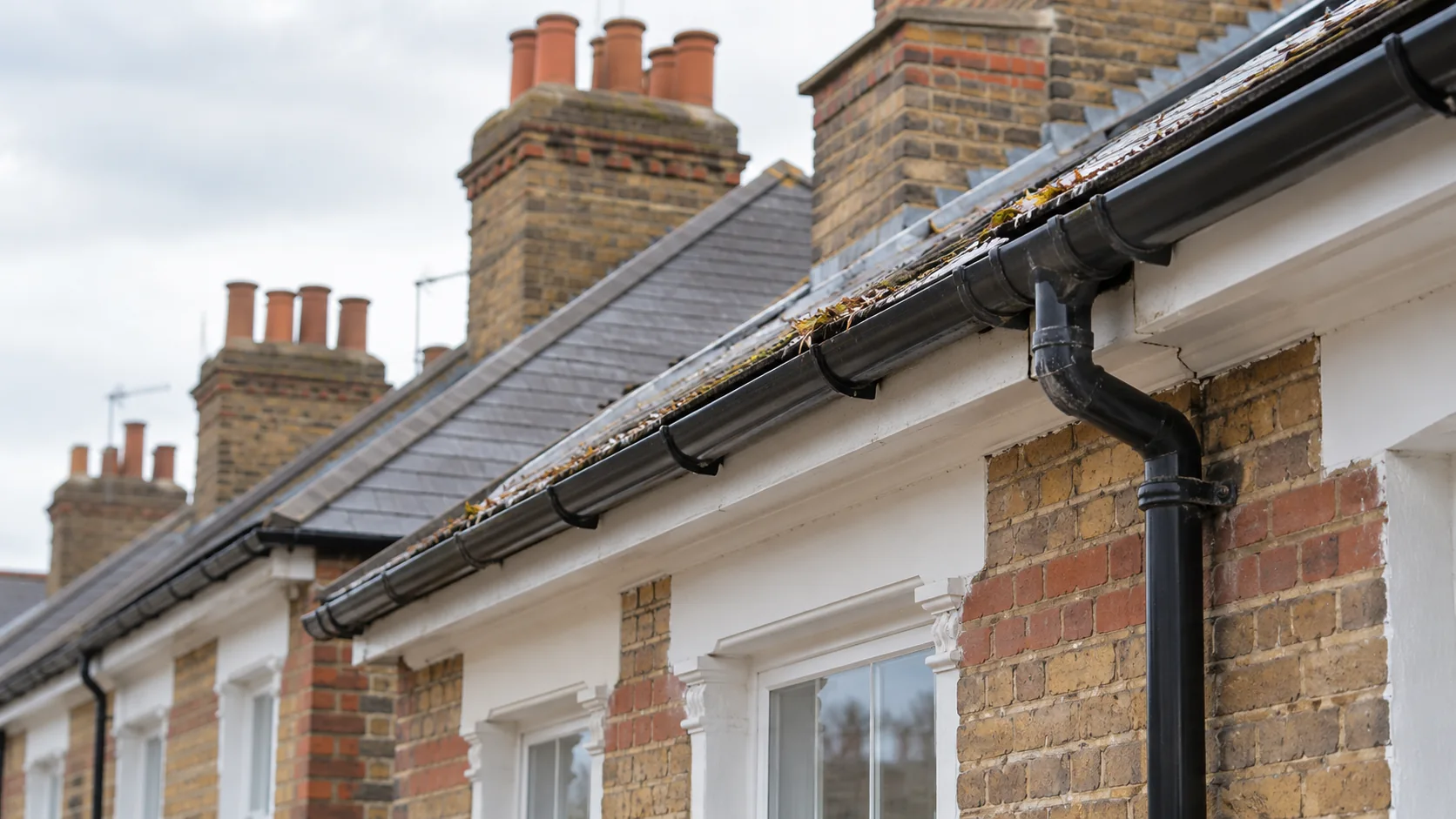
Building work can leave a surprising amount of material above eye level. Dust and small fragments settle on roof slopes, scaffold boards and window ledges before rain carries them into the gutter. A tidy pavement does not tell you whether the rainwater system is clear. If work has recently finished on your home or a neighbouring property, a focused roofline check is sensible, particularly before a period of heavy rain.
The useful question is not simply whether the gutter contains dirt. It is whether construction residue is restricting the route from the roof to the downpipe, and whether any damage needs a separate repair. You can gather good evidence from the ground; there is no need to climb a ladder to investigate.
Which jobs leave debris near the roofline?
Roof repairs and chimney work are obvious sources, but smaller projects can have the same effect. Repointing releases mortar dust and grit. Replacing tiles can leave fragments in valleys and channels. Fascia work may dislodge old paint or sealant. Rendering, exterior painting and masonry cutting can leave a fine coating that rain gradually moves towards the eaves.
Work on a neighbouring property matters where terraces share close rooflines or scaffolding spans an alley. Debris may travel on the wind, although it is rarely possible to identify its source confidently from appearance alone. Start with the condition and location of the material rather than an argument about who caused it.
Light dust does not automatically mean a blockage. A handful of coarse fragments trapped at an outlet is a different matter. Mortar or plaster residue can also become compacted when wet. The risk depends on the gutter's shape, fall and existing leaf build-up as much as the total amount of material.
Make a ground-level inspection after the site is clear
Wait until scaffolding, skips and loose materials have gone, then walk around the property in daylight. Look for visible grit on accessible lower roofs, staining beneath joints, plant growth, sagging sections and debris at the mouth of any outlet you can see safely. Photograph each elevation and note where water should discharge. Binoculars or a camera zoom can help, but neither proves that the inside of a high gutter is clear.
Check from safe public or private ground only. Do not lean from an upstairs window, stand on a conservatory roof or step onto a ladder for a better view. If an extension hides the rear gutter, describe that limitation when requesting help. Access affects both the method and the quotation.
A dry-day inspection is a baseline. During ordinary rainfall, observe the system from a doorway or sheltered position. Watch for water spilling over one short section, running behind the gutter, or missing the downpipe altogether. Avoid going outside during lightning, high winds or dangerous rainfall. A photograph taken safely from inside is more useful than a risky close-up.
Read the pattern of escaping water
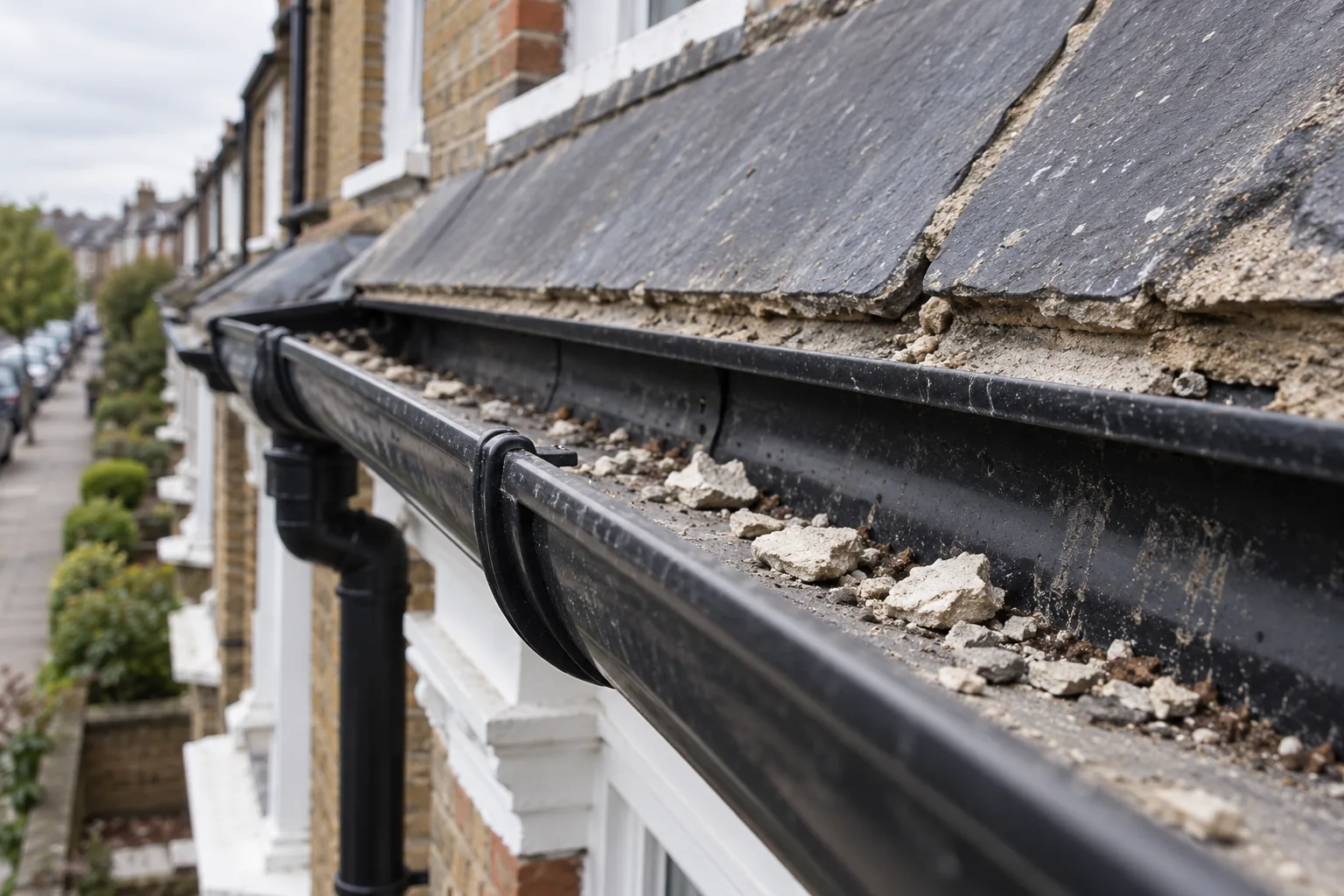
Water spilling close to an outlet may indicate debris at the outlet or in the connected downpipe. A long, uniform spill along the front edge can point to wider accumulation, but a gutter set at the wrong fall can produce a similar effect. Water escaping from a joint may indicate a failed seal or movement. These are clues, not a diagnosis from the pavement.
If an external downpipe empties into a visible gully, check whether the gully is also clear. Clearing the roof gutter cannot solve a blocked drain below it. Equally, a clean-looking gutter will not fix a detached downpipe bracket. Note the exact point where water leaves its intended route so a contractor can investigate the right section.
The existing guide to blocked gutters explains the usual warning signs. Construction residue adds another possible cause, but the practical response remains an inspection of the complete water path.
When should clearing be arranged?
Arrange an assessment promptly if you can see fragments in a gutter, a downpipe is slow to discharge, or water is reaching a wall, doorway or timber detail. You do not have to wait for an internal damp mark. Water may track behind cladding or over a wall for some time before its effect becomes obvious indoors.
If the property is dry and the gutter appears to run normally, a scheduled check can still be worthwhile after roofing, repointing or other work above the eaves. Keep the description specific: what work took place, which elevations were affected, whether scaffold access remains, and what you observed in rain. That gives the cleaner a better starting point than asking for a generic post-build clean.
Where contractors are still on site, speak to the project manager before arranging another trade to enter the working area. There may be active work overhead or access restrictions. If the project contract included clearing the roof and gutter on completion, ask for its scope and completion evidence. Do not assume every building contract includes that task.
What a useful clearance should cover
For a quotation, identify the gutter runs and outlets you want checked. Ask whether the scope includes removing loose material, checking the outlet and assessing the accessible upper part of the downpipe. If a section is inaccessible, ask how that will be reported. A clear description of exclusions matters more than a general promise to “clean the gutters”.
The gutter cleaning service is the relevant starting point for a property-specific request. Provide photographs, recent work details and access information, including locked gates, rear extensions and shared passages. The gutter cleaning guide explains how routine clearance is approached; the post-build brief should additionally identify any dense grit or fragments.
Clearing and repair are different jobs. A cleaner may reveal a cracked fitting, poor fall or leaking joint once debris is removed. Those defects need suitable repair rather than repeated cleaning. Ask for photographs or a clear description of any problem discovered, then decide whether a roofer or rainwater goods specialist is needed.
Protect surfaces below the work
Before a visit, move lightweight pots, furniture and children's toys away from the affected walls where practical. Tell the contractor about fragile paving, ponds, planting and any water butt connected to the downpipe. Debris should not simply be washed through an outlet and left to collect in a trap or water butt. The best handling method depends on the material and access, so agree it in advance.
Fine dust on window glass and frames is a separate cleaning question. The residential window cleaning service can be considered if the building work also left visible deposits on glazing, but it should not be treated as a substitute for clearing the rainwater route. Abrasive grit should be removed with care so it is not dragged across glass.
If you manage a block or a rental property, record the condition before and after any work. A short dated set of photographs can help with maintenance records and later conversations between owners, contractors and managing agents. It is especially useful where several elevations or shared downpipes are involved.
Check the result in the next safe rainfall
The first rain after clearance offers a practical check. Observe the same places you photographed before: the outlet, any previously overflowing run, the downpipe discharge and the wall below. A dry wall and steady water path are reassuring, although very heavy rain can expose capacity or drainage issues that are not apparent in a light shower.
If overflow persists, share the location and conditions with the contractor. Further investigation may be needed; repeated clearing without identifying the cause is unlikely to help. If water appears to be entering the building, seek appropriate building repair advice promptly.
After future roof or masonry work, add the gutter to the completion walk-through. One deliberate check is much easier than tracing a concealed obstruction after the next storm. Record what you can see safely, describe the work accurately and request a defined gutter assessment for any doubtful sections.