


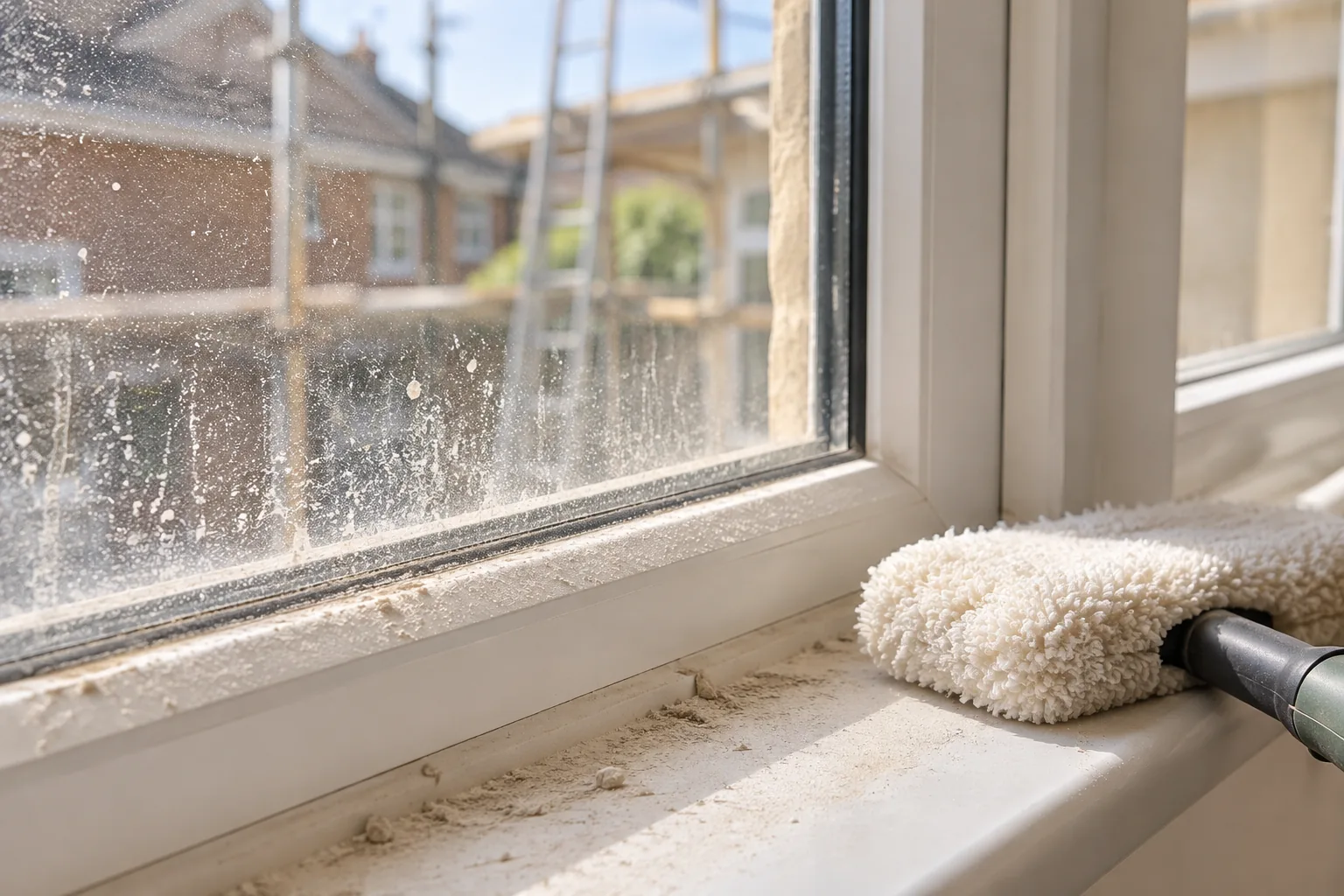
New plaster, brick dust and paint can make a recently finished extension look as though it needs an aggressive scrub. That is precisely when glass is most vulnerable. Fine grit can scratch the pane if dragged across it, and hardened mortar or sealant may need a method that is not suitable for coatings or toughened glass. Before cleaning, identify the glazing specification, photograph deposits and ask the builder what materials may have reached the windows. Begin with a careful rinse and a small test rather than a blade.
Prevent contamination while work is under way
Protecting glass before messy work is easier than removing hardened deposits afterwards. Ask the contractor to follow the glazing supplier's guidance for covering and tape. A suitable temporary protection should not trap moisture against frames, adhere to a coating or remain in strong sun longer than specified. It also needs checking as the job progresses; torn film may collect grit against the pane.
Keep grinding, cutting and pressure washing away from unprotected glass. Hot particles from metalwork can bond to the surface, while cement dust mixed with water can set into a difficult film. Painter's overspray travels farther than expected. Have trades wipe accidental splashes promptly using the glass maker's approved method, then record what happened. Do not accept the blanket reassurance that a cleaner can scrape everything off at the end.
If the window is newly fitted, ask for the product care sheet and warranty terms before taking responsibility for a first clean. Some surfaces have exterior self-cleaning treatment, room-side low-E coatings or applied film. Adjacent panes can differ. Keep labels and specifications until the handover inspection is complete.
Inspect before putting a cloth on the pane
Look at the glass in raking light and note scratches, chips, cement spots, paint, silicone and ordinary dust separately. Photograph each pane, including an image that shows its location in the building. This helps distinguish a pre-existing defect from a mark created during cleaning. Do not try to remove a hard speck with a fingernail or pocket tool simply to identify it.
Check the frames and drainage channels as well. Building dust and offcuts may accumulate in the lower rebates. A new window can leak because a drainage outlet has been blocked with sealant or debris, while a dirty pane is merely cosmetic. Report installation defects to the installer rather than trying to clear hidden channels with force.
Before a contractor cleans the windows, agree the scope: ordinary glass wash, removal of paint specks, frame detailing and construction-debris removal are different tasks. A standard maintenance clean may reasonably exclude hardened material that carries scratch risk. Ask how the cleaner will confirm the surface type and handle stubborn deposits.
Start with loose grit and water
Where the manufacturer permits it, remove dry loose debris from frames with a soft brush and vacuum, keeping hard grit away from the pane. Wet the glass generously enough to float particles before touching it with a clean, soft applicator. Change rinse water and cloths often; a cloth that collected brick grit on one pane should not be used on the next. Work from top to bottom and check the applicator for trapped particles.
Do not use an abrasive pad on a hazy film. A plaster or cement deposit may respond to a specialist treatment, but chemical compatibility, contact time and protection of adjacent stone, metal and seals all matter. Acidic products can damage surrounding materials even if the glass itself appears unaffected. If the material is unknown, stop and obtain advice from the glazing supplier or a specialist post-construction cleaner.
Glass scrapers are particularly contentious. A blade may be safe for some plain, clean glass in trained hands, yet unsuitable for coated surfaces and able to drag grit across a pane. Some toughened glass can have surface particles that increase scratch risk during scraping. A blanket instruction to ‘razor it off’ is poor practice. Obtain the product-specific guidance and document the chosen method.
Deal with paint and sealant carefully
Water-based paint that is still fresh may lift with water and a soft cloth; cured paint is a different problem. Sealant smears can spread if rubbed with the wrong solvent. First identify the substance from the trade that applied it. Then check both the glass and surrounding frame instructions for an approved remover. Test a discreet area and protect gaskets and painted finishes. If removing a speck needs force, leave it for a specialist assessment.
Adhesive from temporary labels is another common handover problem. Peel only as the label maker recommends and avoid scraping across gritty glass. If a label has hardened in the sun, check the glazing supplier's approved method before reaching for a solvent or blade.
Never mix cleaning chemicals to accelerate removal. Apart from the safety risk, residues can react with frame finishes or leave a more persistent haze. Rinse according to product directions and keep chemical containers away from children and occupied rooms.
Access and responsibility on a live site
An extension may leave scaffolding, unprotected edges, trenches or stored materials beside the glass. Access that looked straightforward before construction may not be safe during it. Agree when the cleaner can attend, who controls the work area and whether scaffold use is authorised. Do not climb onto scaffolding or a new roof without permission and appropriate planning.
The residential window cleaning service can discuss a suitable exterior clean once the building work is ready. Explain that it is a post-build visit and send clear photographs. The method and quote should reflect the actual deposits and access, not assume that a normal maintenance clean will remove cement or overspray. For larger occupied premises, the commercial service can be discussed with the site manager.
Handover and future cleaning
Inspect the panes dry in ordinary daylight, then again with low-angle light if possible. Record any fixed scratch, trapped mark or missed deposit promptly, with photographs and the cleaning method used. Avoid repeatedly polishing a mark that may be inside a sealed unit or part of a coating. Ask the installer to assess glazing defects while warranty and handover records are available.
Once construction residue has been safely dealt with, future cleaning is usually simpler. Keep the glass specification for the next cleaner and make sure frames and drainage are clear of building debris. A deliberate first clean protects a costly part of the project and gives a sound baseline for routine maintenance.
Ask the builder to remove protective materials at the agreed stage, with the glazing supplier's instructions to hand. Tape left through several hot days can leave stubborn adhesive, while film removed too early may expose the pane to the final sanding or painting. Record who is responsible for the first clean in the handover paperwork. This avoids a dispute later about whether a scratch predates the cleaner's visit or appeared during the last trade's work.