


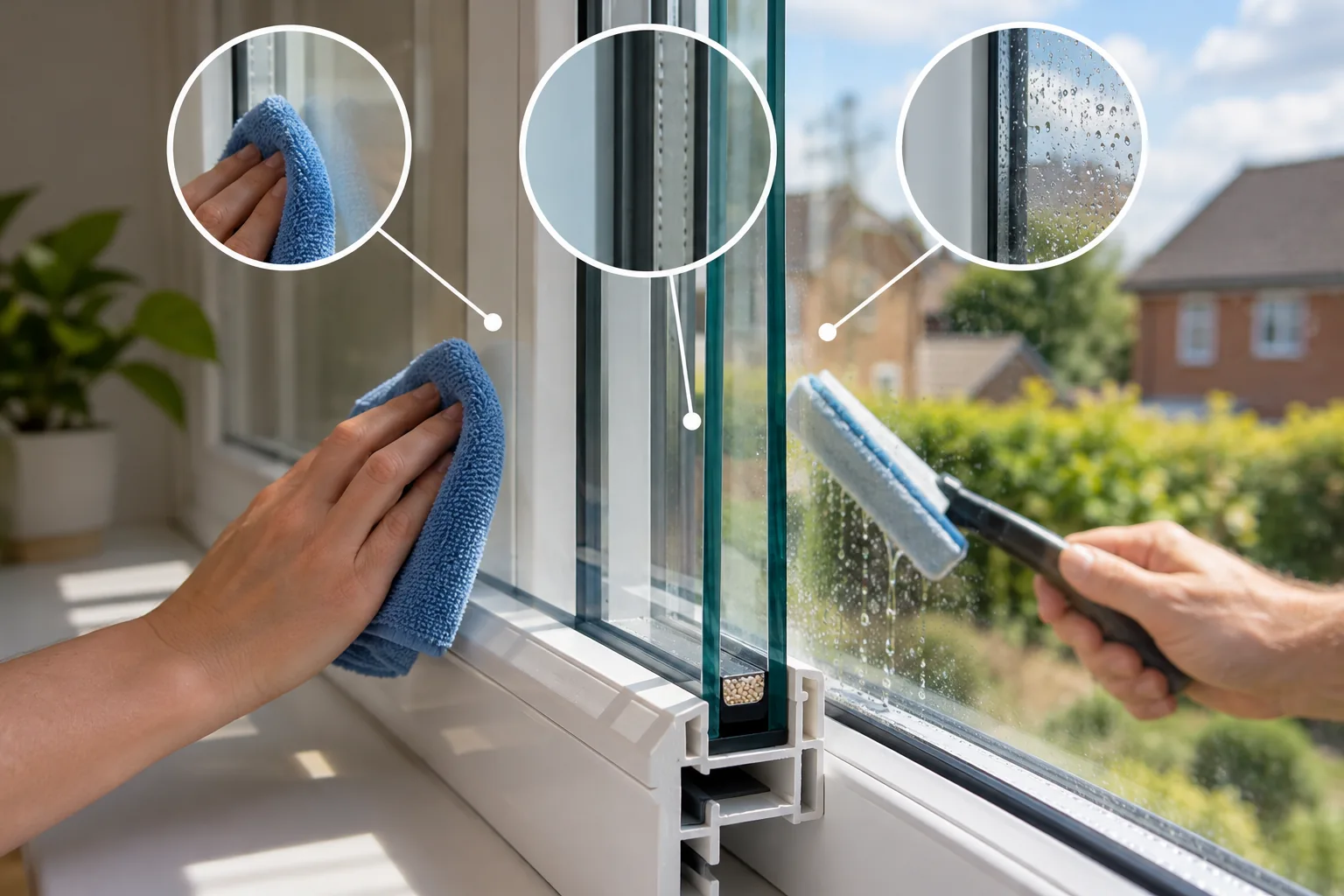
Low-emissivity, or low-E, glazing has a thin coating designed to reduce heat transfer. In many double-glazed units the coating is sealed inside the unit and cannot be touched during normal cleaning. Some products place a durable coating on an accessible face, so the safest cleaning method depends on the exact specification. Find the manufacturer's care instructions before using a blade, abrasive pad or chemical stain remover. If you cannot identify the glass, begin with a soft cloth, clean water and a mild approved cleaner.
Locate the coating before choosing a product
The phrase ‘low-E glass’ describes a performance feature, not one universal surface. A coating may sit on a cavity-facing pane, protected within a sealed unit. In that case the accessible indoor and outdoor faces are cleaned as directed for that complete unit. Other installations may expose a coating to the room, particularly in secondary glazing or specialist configurations. A tinted or mirrored look is not a reliable way to identify which surface has been treated.
Look for glazing schedules, installer invoices, warranty literature or markings on the spacer bar. Ask the supplier if the paperwork does not explain the cleaning rules. This is especially useful in commercial buildings where adjacent panes may have different solar-control and low-E specifications. A maintenance record should identify the elevation and pane type, not just the brand of glass.
If the coating is sealed inside and a cloudy patch appears between the panes, surface cleaning will not reach it. The sealed unit may need assessment by a glazier. Trying progressively stronger cleaners on the outside only risks damaging an otherwise sound accessible face.
Remove grit before wiping
Fine grit is a common cause of cleaning damage. Dust the frame gently, then wet the glass sufficiently to lift loose particles. Do not start by rubbing a dry mark with a microfibre cloth. Use a clean, soft applicator and a product the glass maker permits. Wash in manageable sections and remove residue before it dries along the edges. Separate tools used on brickwork or frames from those touching the glass.
Strong alkaline cleaners, acidic descalers, abrasive creams and steel wool are poor default choices. Even a glass scraper may be prohibited on a coated surface. A blade can catch a particle or a raised edge and leave a permanent scratch. If a paint or cement speck remains, identify the material and ask the glazing supplier for a compatible method rather than increasing pressure.
On the inside, use modest amounts of liquid. Spray onto a cloth where possible so cleaner does not run into timber, seals or electrical blinds. Dry lower rails and corners after washing. A residue that appears only in low winter sun may need another gentle rinse, not a harsher chemical.
Recognise marks cleaning cannot remove
A room-side film may come from cooking, candles or smoke and can be cleaned if the surface permits. Condensation can form on an accessible face when humidity and surface temperature meet; it should wipe away, though the underlying moisture condition needs attention. Mist or droplets sealed between panes are different. They may indicate a failed unit and require glazing advice rather than window cleaning.
Scratches, coating damage and rainbow-like interference can be hard to distinguish from residue in a photograph. Observe whether the mark moves or changes after a small, gentle test clean. Record which face is affected. If no visible dirt transfers to the cloth and the mark remains fixed, stop rubbing and ask a specialist to assess it.
The existing guide to rain and window cleaning can help distinguish ordinary weather-related deposits from other glazing issues, but it does not override the care sheet for a coated unit.
Plan exterior cleaning around the installation
Before booking, tell the cleaner about any coated or filmed glass and provide the manufacturer's requirements. Describe windows beside construction work, balconies or heavy traffic, where embedded grit may change the first-clean approach. The quote should identify which panes are included and whether frames and sills are part of the visit. The residential window cleaning service is a starting point for a property-specific discussion; larger managed premises can use the commercial service.
For upper-floor or fixed panes, leave access assessment to a competent professional. A coating does not justify leaning out, standing on a roof or using an unstable ladder. The cleaning method must suit both the surface and the working position. If the supplier prohibits a common method, say so before attendance so equipment is chosen accordingly.
Keep a record of the cleaner's method and any product used, particularly while the glazing warranty is active. This helps if a later mark is disputed and prevents future contractors from guessing what was used.
Protect the unit during other work
Dust from drilling, plastering and sanding can be abrasive. Shield the glazing during nearby work with materials approved by the installer, and avoid adhesive tape directly on a coated face unless its use is permitted. Have trades remove splashes promptly under the correct instructions. Dried mortar can be particularly difficult to remove without a tool that might damage a coating.
Do not apply aftermarket films, polishes or water repellents without checking compatibility and warranty terms. A product designed for ordinary glass may change optical performance or make future cleaning harder. If you need privacy or sun control, discuss the whole glazing specification with the supplier first.
Also inspect the frame, gaskets and drainage separately. A clean pane will not compensate for a blocked drain or failed seal. Persistent damp at an edge warrants maintenance attention, not repeated polishing of the glass.
Keep the instructions with the property
The most useful preventive step is a simple glazing record: product name, date fitted, coating location, care sheet and any warranty details. Pass it to cleaners and new occupants. When that information is missing, choose the least aggressive viable method and stop if a mark does not lift. Low-E glass is designed to perform quietly for years; cleaning should preserve the specified surface rather than test its limits.
For rented or managed buildings, attach the care information to the maintenance schedule rather than leaving it in a drawer with installation paperwork. A change of cleaner or occupant should not reset the knowledge of what is fitted. Ask anyone reporting a stain to specify the room, elevation and face of the glass. That small amount of detail prevents repeated attempts to wash a mark that is actually inside a sealed unit.
When comparing quotations, ask how the contractor will deal with an unidentified pane. A good answer includes checking documentation, using a gentle test and stopping if the surface reacts unexpectedly. A promise to remove every mark with one standard product ignores the different coatings in current glazing. Keep the results of any test in the maintenance record so future work can start from evidence rather than repeating the same trial.