

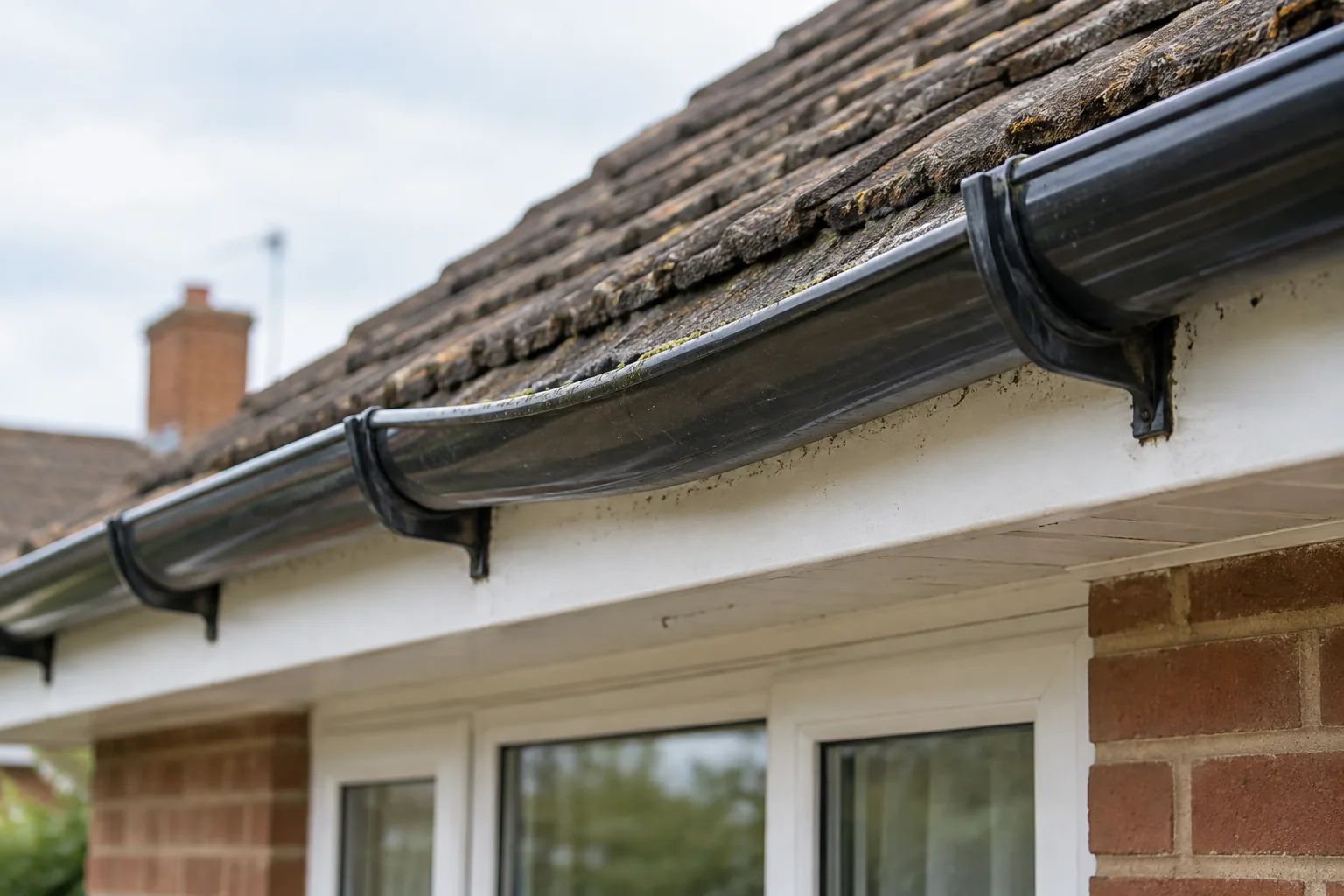
Water escaping from a gutter is often described as a blockage, but the channel may be clear. A loose bracket, shifted joint or section set at the wrong angle can spill water in much the same place. The distinction matters: clearing debris is useful when the water path is obstructed, while a damaged or poorly aligned gutter needs repair. You can gather clues from the ground without trying to inspect the roofline yourself.
No single sign proves the cause. Note where water escapes, what happens before and after rain, and whether the gutter shape has visibly changed. A contractor can then examine the relevant section and recommend the right next step.
Look at the gutter when it is dry
From a safe ground position, compare the suspect section with the rest of the run. Does it bow down between brackets? Is a joint visibly separated? Is the front edge lower in one short area? Do you see plants or debris above the lip? A phone camera zoom can help you record what is visible, but it cannot show the entire inside of a high channel.
Do not stand on a ladder, flat roof or conservatory panel for a closer look. Gutter faults are rarely worth the risk of a fall. If access is difficult, describe the property layout so a professional can plan an appropriate inspection method.
Photographs from earlier years may be useful. If a section has gradually changed position, movement becomes more plausible. Keep in mind that camera angles can distort apparent levels. A visual comparison is only a clue, not a measurement of the gutter's fall.
Watch the pattern in ordinary rain
A concentrated spill near an outlet often suggests an obstruction at the outlet or in the upper downpipe. Water collecting in a low point away from the outlet may indicate a sagging section or incorrect fall. Drips emerging from a joint can signal a seal problem. Water spilling along a long run could indicate debris or insufficient capacity. Heavy rain can blur these patterns, so use observations from ordinary rainfall if it is safe to do so.
Look at the wall behind the gutter as well as the front edge. Water running behind it may stem from positioning, roof details or a defect at the back edge. This needs proper inspection. A clean gutter channel will not correct a gap between the roof covering and the gutter.
The site's blocked-gutter explanation describes debris-related symptoms. The advice about leaking gutters makes clear why cleaning and repair should be treated separately.
Check what happens after the rain stops
If a section continues to hold standing water, it may lack sufficient fall or contain a local obstruction. A gutter does not need to be completely bone dry immediately, but an obvious pool that remains in one place deserves assessment. A bowed length can retain water even after all leaves are removed.
Persistent damp staining beneath a joint or bracket may point to a recurring escape route. Staining alone does not tell you whether the cause is current; an old mark can remain after a fault is fixed. Compare it with fresh wetting in the next safe rainfall and note whether the pattern changes.
At ground level, see whether the downpipe discharges into its intended gully or water butt. A restriction below the gutter can back water up, and a full or poorly connected butt can create another visible spill. Follow the route before deciding that the gutter itself has moved.
On a terraced property, compare neighbouring sections only with care. A continuous-looking front gutter can have different falls, outlets or later replacement pieces. Water escaping near the boundary may come from a shared connection. Record the physical point of failure and check the ownership arrangements before authorising work beyond your own property. An accurate sketch can prevent a contractor being asked to treat the wrong section.
What a gutter cleaner can establish
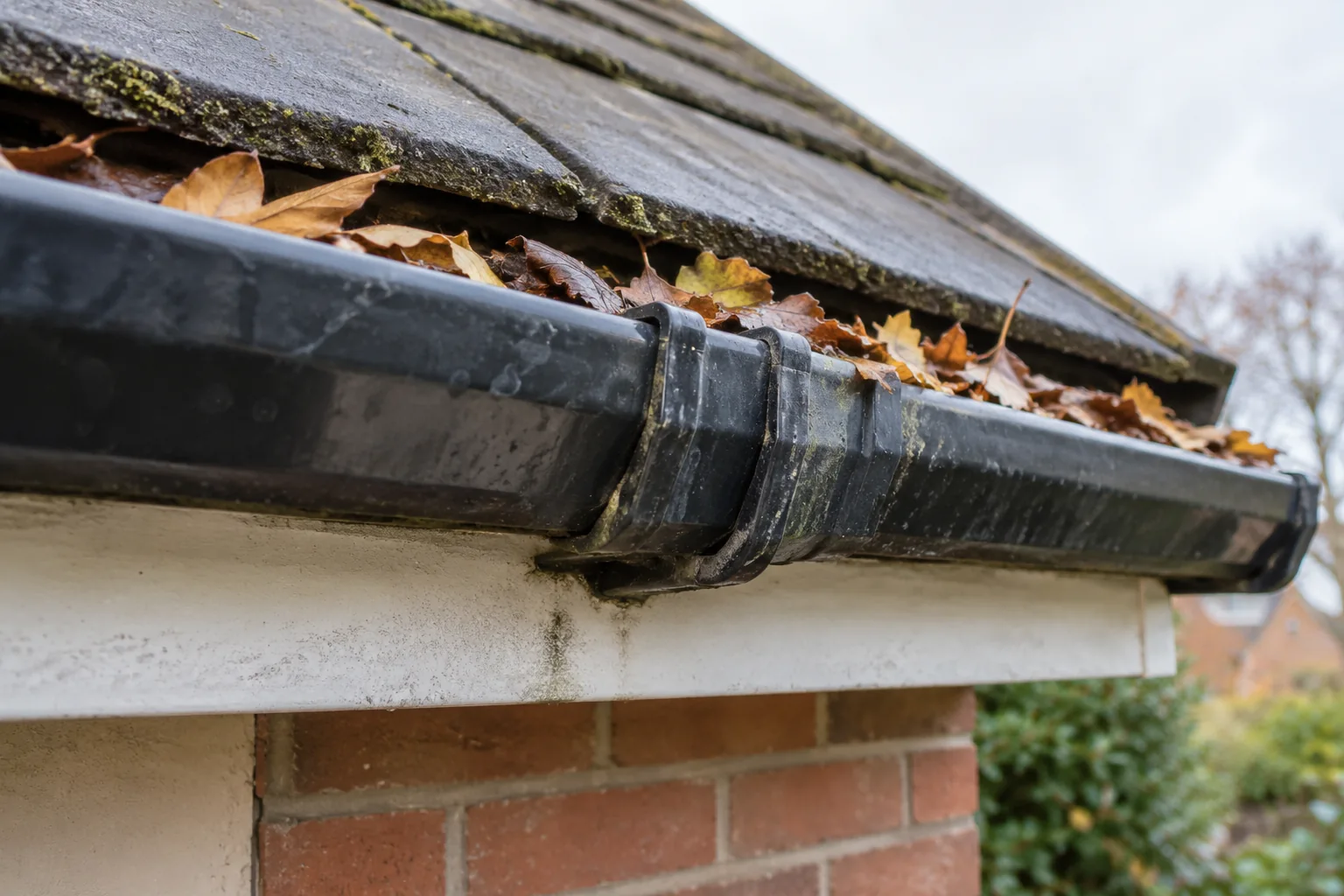
A defined gutter cleaning assessment can remove debris and reveal the condition of the accessible channel and outlet. Ask for the quotation to state which runs and downpipes are included. If the contractor finds little debris but sees a loose joint or bracket, ask for a photo and description rather than treating the clearance as a failed service.
A cleaner may be able to identify visible defects, but repairs should be scoped separately by a suitable trade. Some joints need replacement parts; a sagging gutter may require bracket work or adjustment of the fall. Roof-edge details can also be involved. The correct repair depends on material, installation and access, so a pavement-level guess is not enough.
If the gutter is clearly detached or at risk of falling, keep people away from the area below and seek prompt repair advice. Do not wait for a routine cleaning slot. Similarly, if water is entering the building, address that as a building issue promptly while the rainwater system is investigated.
If the problem appears after recent roof or fascia work, share that history with the assessor. A bracket may have been disturbed, but construction grit could also have reached the outlet. Avoid assigning a cause from timing alone. Ask for photographs of the channel and fixings before any proposed repair so the sequence of work is based on what is actually visible.
Avoid repeated cleaning when the shape is wrong
An obstructed gutter can overflow again if debris returns, particularly near trees. That is a reason to adjust maintenance timing. By contrast, a section with incorrect fall may retain water after every clean. Rebooking clearance at short intervals will not change its alignment.
Ask the contractor what was actually removed and whether water could be seen moving towards the outlet. If there is a substantial quantity of leaf litter, a blockage may have been part of the issue. If the channel is clear and water still pools, investigate the physical installation. Both problems can exist together, so the work may involve clearing first and repairing second.
The gutter cleaning guide explains ordinary maintenance. Your record should add the remaining behaviour after the channel is clear. That prevents the same uncertainty at the next visit.
Give a useful brief to the next contractor
Send a short account: the affected elevation, where the water spills, whether a joint looks separated, whether the channel was recently cleaned and what was removed. Include photographs taken from a safe position in dry weather and during ordinary rain. Mention access constraints such as a rear extension, basement steps or a shared passage.
Ask the assessor to distinguish an obstruction, a downpipe or gully restriction, a joint leak and a slope or bracket problem. They may not be able to confirm every cause in one visit, but a written account of observed conditions will support the next decision. If repair is required, request a separate scope stating the parts and sections involved.
After the work, watch the same location in safe rainfall. A successful clearance should restore flow if debris was the cause; a successful repair should stop the specific leak or pooling it addressed. Keep the dates and photographs. When the cause is recorded, future maintenance becomes a planned task rather than another cycle of guessing why water is escaping.