

Property type guide
Window Cleaning for Houses
Houses vary from compact terraces to detached properties with extensions, roof glass and side access. A useful quotation starts with the complete exterior layout rather than a bedroom count.
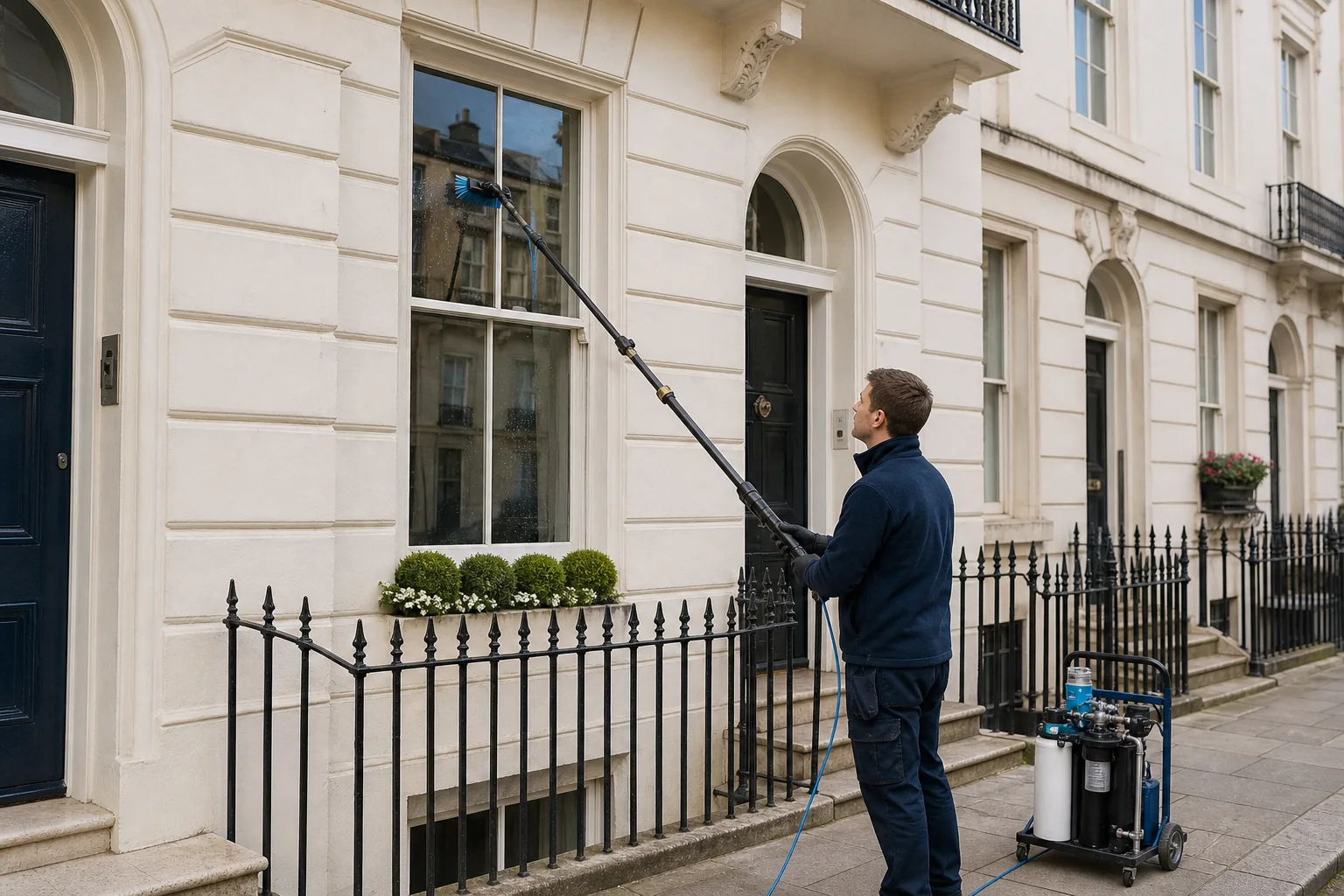
Survey the whole exterior before pricing
The survey identifies front, rear and side elevations, conservatory connections, lower roofs and obstacles beneath upper windows. Each area is linked to a realistic working position.
Purified-water pole systems can suit many exterior panes where the ground and angle permit controlled brushing and rinsing. Accessible interior glass may require traditional detailing tools.
Choose methods for each house elevation
Extensions, narrow passages, planted borders and parked vehicles can change the route even when two houses have the same number of windows.
Customers should unlock agreed gates, move avoidable obstacles and keep pets away from hoses and working areas. The technician should not need to create access by moving unapproved belongings.
Coordinate gardens, gates and household access
Frames and sills are included only when the quotation lists them. Conservatory roofs, gutters, skylights and internal panes remain separate unless specifically assessed.
Road-facing glass may need attention sooner than sheltered rear elevations. The household can review frequency after early visits instead of accepting a fixed interval based on postcode.
Set a practical cycle for residential glass
Price reflects pane quantity, levels, condition, access and frequency. Photographs should show whole elevations so the estimate does not depend on close-ups of individual windows.
Weather is considered against the actual ground and method. Light rain does not always prevent work, but unsafe wind, footing or equipment control can require rearrangement.
House-cleaning decisions at a glance
| Planning point | Why it matters | What to confirm |
|---|---|---|
| Surface scope | Prevents omissions | Private, communal, internal and external glass |
| Access method | Controls safety and feasibility | Ground position and specialist requirements |
| Site activity | Protects occupants and visitors | Best time and controlled routes |
| Frequency | Aligns spend with presentation | High-touch versus upper glazing |
Details to provide with the enquiry
- Show every exterior elevation in photographs.
- Report gates, extensions and ground obstacles.
- List interiors, frames and roof glass separately.
- Agree one-off or recurring care in writing.
Frequently asked questions
Questions householders often ask
How is access assessed?
The person booking should identify any window controlled by a neighbour, tenant or building manager. Permission cannot be assumed from visibility alone.
Can upper windows be cleaned from the ground?
Cleaning does not repair failed seals, cracked panes or damaged surface films. These observations should be directed to an appropriate maintenance provider.
Are frames and internal panes included?
A one-off visit can address a defined requirement, while a recurring plan keeps the same pane list and access notes available for later attendance.
How often should the glass be cleaned?
Upper windows can often be reached from ground level, but extensions and setbacks may limit the angle. Specialist access is considered separately when needed.
What affects the final price?
A completion check compares delivered elevations with the accepted scope. Any inaccessible pane can be recorded without obscuring the work completed elsewhere.
Can cleaning repair misted units or damaged seals?
Interior attendance requires clear space around the glass and protection of personal belongings. It should be requested before the booking is confirmed.
Need property-specific advice?