

Property type guide
Window Cleaning for Flats
Flats place private windows beside communal façades, shared entrances and controlled courtyards. The first task is to establish who can authorise each surface and how the technician reaches it.
Map ownership before arranging access
A useful survey separates the resident’s glazing from areas controlled by a freeholder or managing agent. Balcony doors, basement light wells, converted sash windows and shared stairwell glass should be listed independently.
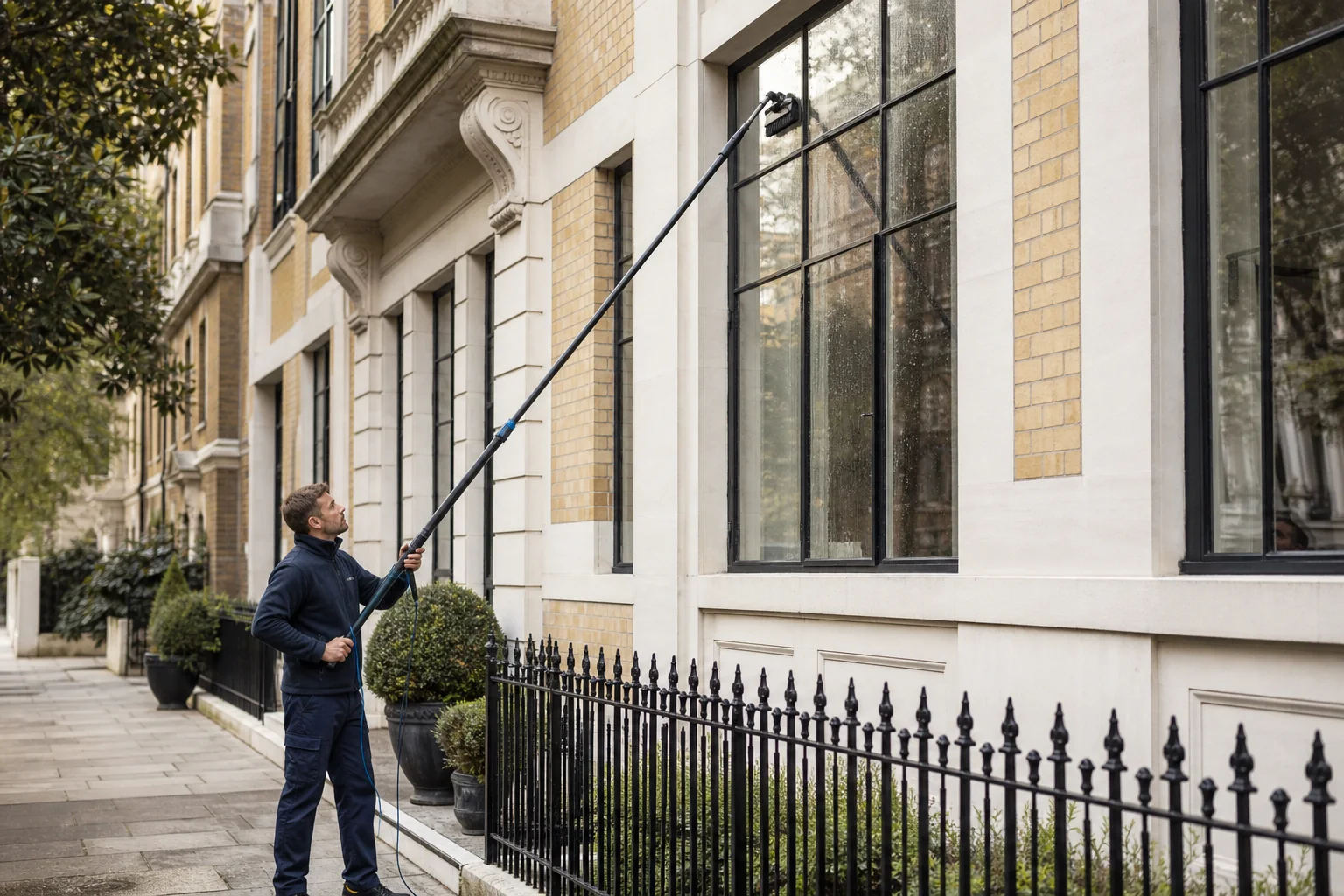
Upper floors are not priced from storey count alone. Setbacks, planted borders, lower roofs and the ground available beneath the elevation determine whether pole equipment is practical.
Match each elevation to a workable method
Ground-based purified-water systems can suit accessible exterior panes, while reachable interiors may need applicators and squeegees. Recessed or roof-level glass is assessed rather than promised from a photograph alone.
Residents should explain keys, entry codes and any restriction on hoses through communal space. A named contact prevents neighbours and contractors from giving conflicting instructions.
Coordinate residents, keys and communal routes
Internal work requires privacy planning and a clear route around belongings. Pets, window restrictors, desks and fragile items beside the glass should be considered before arrival.
Street-level entrances can need a shorter cycle than sheltered upper windows. Separating those intervals often provides a better result than placing the whole building on one frequency.
Choose separate cycles for different glass
The quotation should identify private, communal, internal and external surfaces, plus any frame or sill inclusion. Repair concerns such as failed seals and cracked panes stay outside the cleaning promise.
For leasehold buildings, approval should be obtained before shared elevations are added. A resident cannot always authorise glass maintained through the service charge.
Flat-cleaning decisions at a glance
| Planning point | Why it matters | What to confirm |
|---|---|---|
| Surface scope | Prevents omissions | Private, communal, internal and external glass |
| Access method | Controls safety and feasibility | Ground position and specialist requirements |
| Site activity | Protects occupants and visitors | Best time and controlled routes |
| Frequency | Aligns spend with presentation | High-touch versus upper glazing |
Information to collect before quoting
- Identify who controls private and communal glazing.
- Provide elevation photographs and access rules.
- Separate entrance glass from upper-window frequency.
- List frames, interiors and specialist areas explicitly.
Frequently asked questions
Questions residents and managers ask
How is access assessed?
Photographs should show the complete elevation, not only the dirtiest pane. Wider views reveal balconies, railings and obstructions that influence the method.
Can upper windows be cleaned from the ground?
Many upper windows can be cleaned from suitable ground positions, but reach and angle must be confirmed. Specialist access remains a separate decision where the approach is unsuitable.
Are frames and internal panes included?
Frames and interior panes are included only when the accepted scope names them. Exterior glass should not imply unrestricted access to a resident’s home.
How often should the glass be cleaned?
Useful frequency follows exposure, traffic and presentation expectations. The interval can be reviewed after early visits without changing the agreed pane list.
What affects the final price?
Price reflects quantity, levels, access, condition, timing and frequency. Comparing quotations is meaningful only when each contractor has included the same elevations.
Can cleaning repair misted units or damaged seals?
Cleaning cannot repair misted units, damaged films or failed seals. Those findings should be reported to the responsible maintenance party.
Need property-specific advice?