

Window cleaning problem
Slippery Patio: Causes and Safe Cleaning
Slipperiness is a safety symptom with several possible causes. Surface algae is common, but worn finishes, standing water, loose material and frost can also reduce traction.
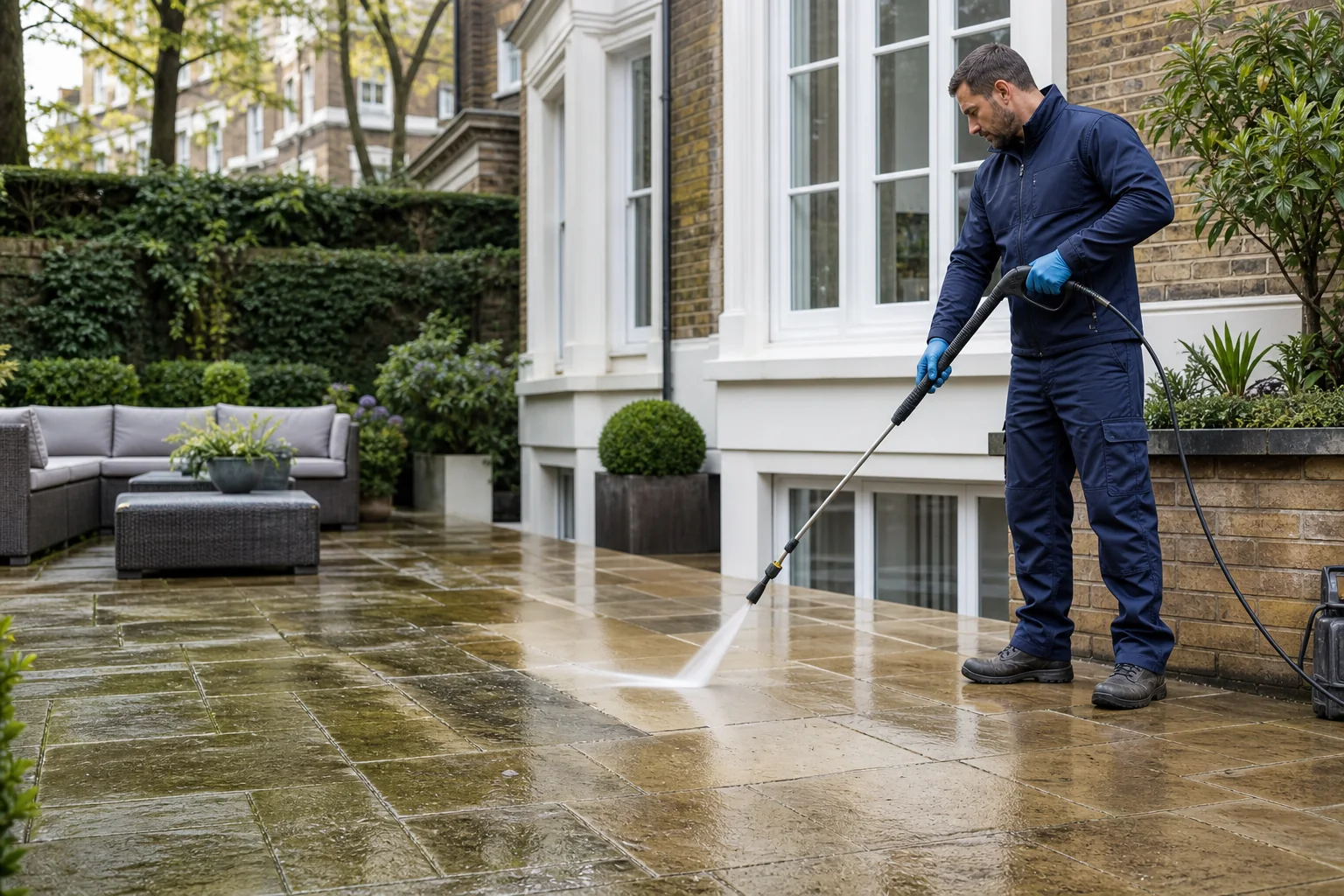
Identify when the surface becomes slippery
A patio that is hazardous only when wet may carry a thin organic film that is difficult to see. A problem confined to one low area suggests drainage or settlement. Loose sand, crumbling stone and damaged coatings need different remedies.
Avoid assuming that a stronger pressure wash is always safer. The surface must remain structurally sound after the dirt is removed.
Cleaning organic contamination
On suitable paving, controlled pressure and surface-cleaning equipment can remove algae and general grime. Edges, steps and joints are treated with attention to splash and water direction. A test area helps confirm the response.
After cleaning, the patio needs to dry before its final appearance and traction can be judged. Block paving may require joint inspection and possible re-sanding.
When cleaning is not the whole answer
Depressions that hold water, unstable slabs, polished wear and unsuitable sealants require repair or specialist advice. In cold weather, runoff and freezing conditions must be managed to avoid creating a new hazard.
Professional help is useful for large areas, complex levels and surfaces where the material or coating is uncertain.
Ongoing risk reduction
Sweep debris, keep drains clear and treat early green film before it thickens. Improve lighting around steps and avoid directing garden irrigation onto already shaded paving.
Document recurring wet spots so that drainage problems can be distinguished from seasonal organic growth.
Quick comparison
| When slippery | Likely factor | Response |
|---|---|---|
| After rain | Algae or retained water | Clean and inspect drainage |
| At one low point | Settlement or blocked drain | Repair water route |
| When dry | Loose material or worn coating | Surface assessment |
| During frost | Ice | Avoid runoff and treat weather risk |
Practical points to remember
- Keep people away from hazardous wet areas.
- Test the paving before full pressure cleaning.
- Do not ignore loose slabs or standing water.
- Allow the surface to dry before evaluating traction.
Frequently asked questions
Questions about Slippery Patio: Causes and Safe Cleaning
Can algae make a patio dangerously slippery?
Yes, especially when a thin film becomes wet.
Will cleaning solve standing water?
No. Drainage or settlement must be corrected separately.
Can high pressure damage paving?
Yes. Excess force can scar material and disturb joints.
How soon can the patio be used?
It should be allowed to drain and dry appropriately after the service.
Does sealing prevent slipperiness?
Not automatically; unsuitable coatings can affect traction and require specialist selection.
What if the patio is slippery when dry?
Loose, worn or coated surfaces should be assessed beyond routine cleaning.
Need property-specific advice?