

Window cleaning problem
Why Patios Turn Green
A green patio usually indicates surface algae thriving where moisture dries slowly. Shade, poor drainage and organic debris matter as much as the age of the paving.
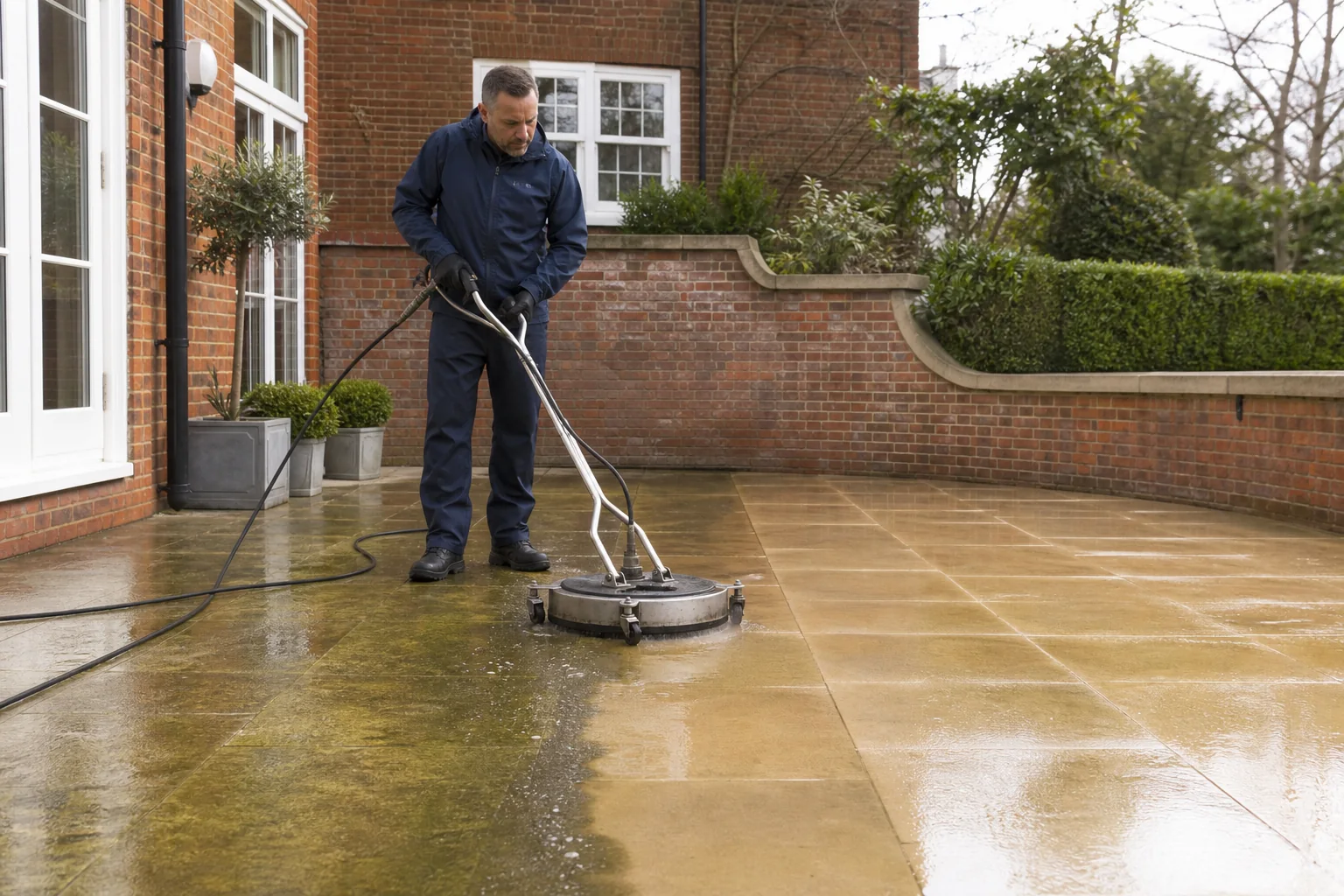
Conditions that encourage green growth
North-facing gardens, dense planting and low winter sun keep paving damp. Leaves and soil provide organic material, while blocked drainage holds water at slab edges. Porous stone may remain wet longer than dense porcelain.
The colour alone does not identify the paving or the safest pressure. Material, joint condition and sealants must be assessed first.
How the surface is cleaned
Loose debris is removed and the area prepared before controlled pressure or a rotary surface cleaner is used where suitable. Consistent passes help avoid stripes, while edges and steps receive separate attention.
Pressure is adjusted to the material. Excessive force can scar softer stone, expose aggregate or remove jointing material, and uncontrolled runoff can affect doors and planting.
When professional help makes sense
Large areas, uneven levels, delicate stone and substantial organic growth benefit from appropriate equipment and planned water management. A professional can test the response and identify defects that should not be treated as dirt.
Cleaning can improve traction where surface algae is responsible, but it cannot correct underlying drainage or repair unstable slabs.
Slowing the green film’s return
Sweep leaves, keep drainage paths open and improve air movement where practical. Early maintenance requires less force than allowing a thick layer to establish. Any chemical aftercare should be compatible with the paving, planting and drainage.
Because shade and moisture remain, no honest service can promise algae will never return.
Quick comparison
| Contributing factor | Effect | Maintenance response |
|---|---|---|
| Deep shade | Slower drying | Shorter cleaning interval |
| Blocked drainage | Standing moisture | Clear water route |
| Leaf litter | Organic feed | Regular sweeping |
| Porous surface | Moisture retention | Use material-appropriate method |
Practical points to remember
- Identify the paving material before cleaning.
- Test delicate or sealed surfaces in a small area.
- Protect door thresholds and manage runoff.
- Address shade, leaves and drainage to reduce regrowth.
Frequently asked questions
Questions about Why Patios Turn Green
What is the green layer on my patio?
It is commonly algae or related organic growth encouraged by damp and shade.
Will pressure washing remove it?
Suitable surfaces often improve, but pressure must be adjusted to the material and condition.
Can algae make paving slippery?
Yes, surface growth can reduce traction, particularly when wet.
Will it come back?
It can return while moisture, shade and organic debris remain.
Can every stone patio be pressure washed?
No. Softer stone, damaged joints and coatings require assessment.
Should paving be sealed afterwards?
Sealing is a separate decision based on material, preparation and drying.
Need property-specific advice?