

Exterior surface guide
Patio Cleaning Guide
Patios weather differently according to material, shade, drainage and use. Professional cleaning begins by identifying the surface and its weaknesses so that grime can be removed without treating every slab with the same pressure.
Assessing paving before cleaning
Natural stone, concrete slabs, block paving and porcelain have different porosity, joints and finishes. Loose pointing, cracks, failing sealant and unstable blocks should be identified before water pressure is applied. A small test area can reveal whether the surface responds evenly.
Green growth is encouraged by shade, retained moisture and poor drainage. Dark marks may also be rust, oil, tannin or mineral staining, each of which can need a different treatment and may not disappear through pressure alone.
Professional pressure and surface-cleaning methods
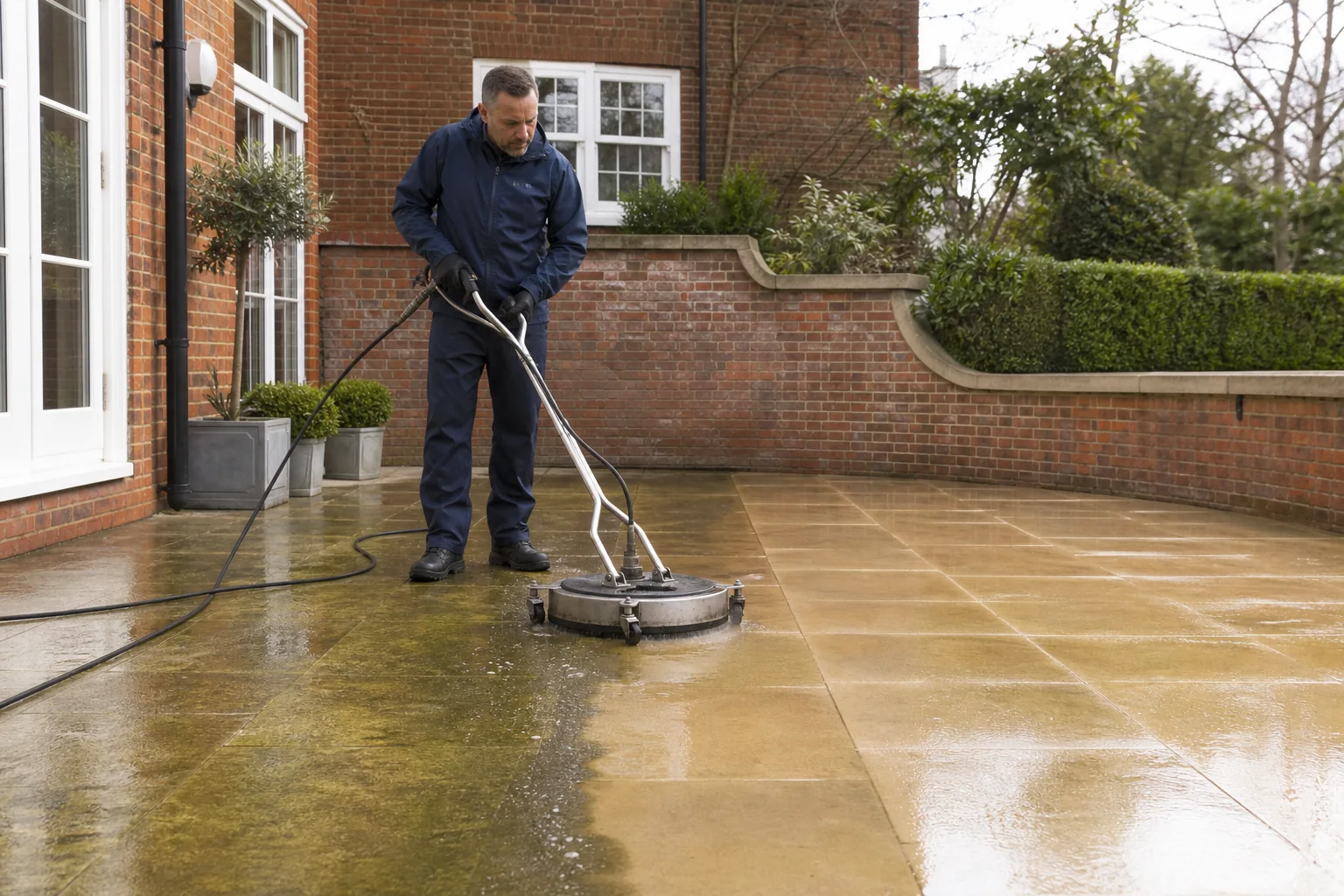
A rotary surface cleaner distributes water in a controlled, consistent path and can reduce the striping associated with an unsteady lance. Edges, steps and awkward details may still need careful separate work. Pressure, flow and distance are adjusted to the material and condition.
The objective is not to use the highest possible pressure. Excessive force can remove jointing material, expose aggregate, scar softer stone and drive water toward doors or vents. Run-off and neighbouring surfaces must be managed throughout the visit.
The cleaning process from preparation to rinse
Furniture, planters and fragile items are moved where practical, and access to water and equipment position is confirmed. Loose debris is removed before the main clean. The team works in planned sections, protects adjacent areas and rinses residue toward an appropriate drainage route.
After cleaning, the surface needs time to dry before the final appearance can be assessed. Block paving may require re-sanding when jointing sand has been displaced; sealing is a separate decision and should only follow suitable preparation and drying.
Before-and-after expectations
A well-executed clean can reveal the original colour and texture beneath organic film and general grime. The most credible comparison uses the same patio, position and lighting. It should not imply that cracked slabs, deep oil penetration or permanent weathering have been repaired.
Slipperiness caused by surface algae may improve when growth is removed, but underlying drainage, shade and wear still affect traction. Ongoing maintenance should address the conditions that allow regrowth.
Pricing, frequency and common mistakes
Price depends on measured area, surface type, access, contamination, furniture, drainage, edge detail and any requested post-clean treatment. Small intricate terraces can take longer per square metre than open paving.
Avoidable mistakes include pressure washing fragile stone without testing, directing spray into doors, ignoring run-off and expecting sealant to solve damp. Regular sweeping, clear drainage and early treatment of organic growth help extend the cleaned appearance.
Quick comparison
| Surface | Key risk | Planning response |
|---|---|---|
| Natural stone | Etching or surface damage | Test and use appropriate pressure |
| Concrete slabs | Striping and exposed aggregate | Use consistent controlled passes |
| Block paving | Loss of jointing sand | Plan for inspection and possible re-sanding |
| Porcelain | Residue at edges and joints | Use compatible method and thorough rinse |
| Steps and boundaries | Splash and uneven access | Detail separately and protect adjacent areas |
Practical points to remember
- Identify the paving material before choosing pressure.
- Point out loose joints, cracks and existing sealant in advance.
- Clear furniture and plan a safe equipment route.
- Manage water run-off away from doors and unsuitable drains.
- Allow the patio to dry before judging the final colour.
Frequently asked questions
Questions about Patio Cleaning Guide
Can every patio be pressure washed?
No. The material, condition, joints and coatings must be assessed before a suitable method is selected.
Will cleaning remove black spots?
Some organic marks respond to treatment, but results depend on depth, surface and the agreed process.
Do you move garden furniture?
Light items should normally be cleared before the visit; heavy or fragile objects need to be discussed in advance.
Will block paving need re-sanding?
Jointing sand can be displaced during cleaning, so re-sanding may be appropriate after the surface dries.
Can cleaning remove oil stains?
Oil can penetrate porous paving and may need specialist treatment; complete removal cannot always be guaranteed.
How long does a patio take to dry?
Weather, shade, material and drainage affect drying time, so the final colour should not be judged immediately.
Does pressure washing stop algae returning?
It removes existing surface growth, but shade, moisture and drainage conditions influence regrowth.
What determines the price?
Area, material, access, contamination, drainage, obstacles and requested aftercare are the main factors.
Need property-specific advice?