

Commercial service guide
Commercial Window Cleaning Guide
Commercial glazing supports the way customers, occupants and stakeholders experience a building. The best maintenance plan balances presentation with access, safety, trading hours and a clearly defined service specification.
From site survey to service specification
An office, shop, restaurant, school or managed block should be assessed before a recurring programme is agreed. The survey records glazing type, elevations, public routes, delivery times, security controls, water access and any work-at-height implications. The resulting specification should state the glass, frames and frequency covered.
A named site contact helps coordinate keys, permits and changes to occupancy. For multi-tenant buildings, responsibility for internal partitions, communal areas and individual units should be established rather than assumed.
Methods and equipment for commercial glazing
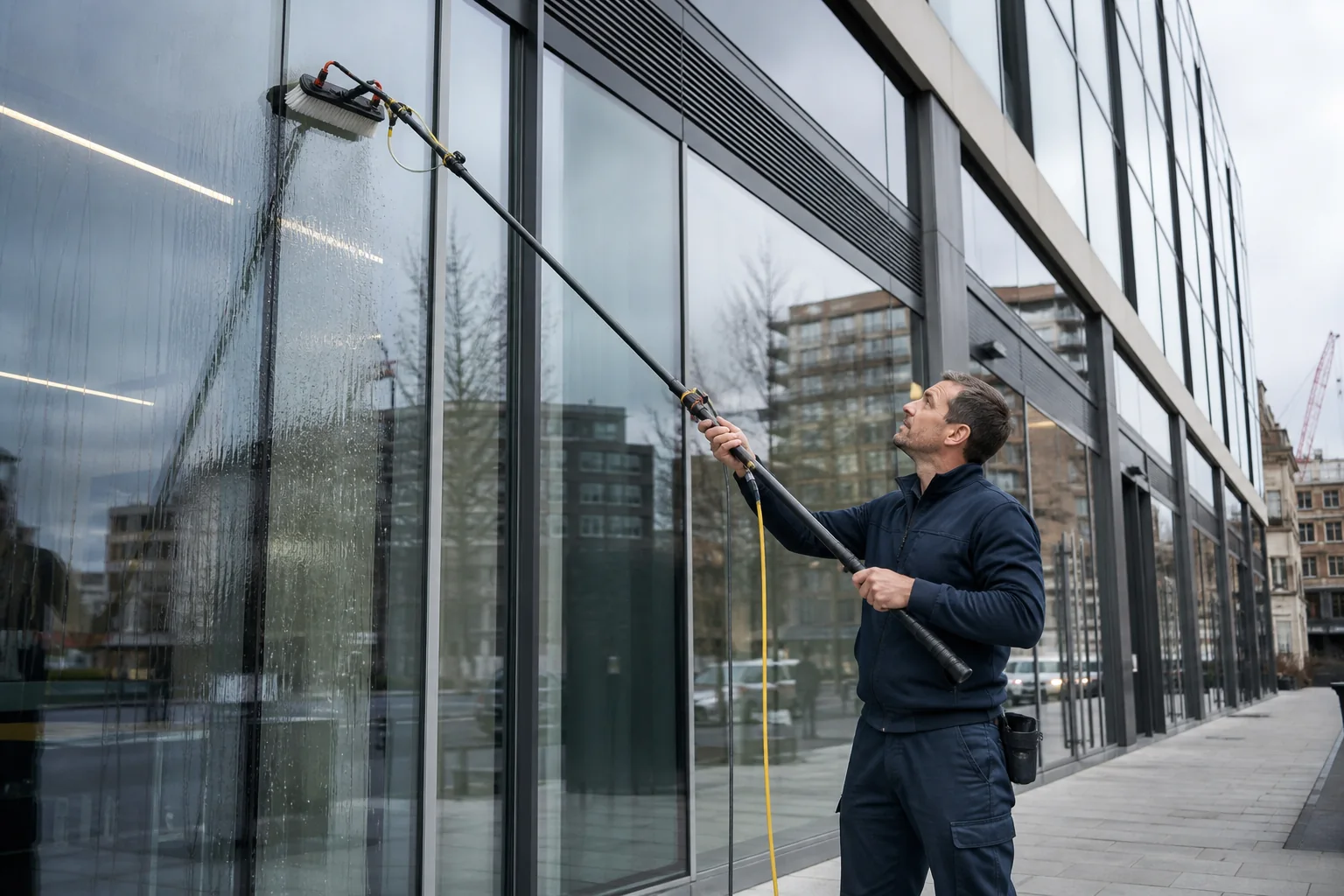
Water-fed poles suit many regular exterior elevations because technicians can often work from ground level while brushing and rinsing the glass with purified water. Traditional squeegee methods remain useful for internal partitions, reception glazing, doors and directly accessible shopfronts. Specialist access must be separately planned where neither method is suitable.
Equipment selection follows the risk assessment. Hose routes, pedestrian movement, vehicles, overhead services and weather all affect the working sequence. Cleaners should not improvise access simply to preserve a fixed timetable.
Scheduling around customers and operations
Retail and hospitality premises may prefer early visits before opening, while offices can need work coordinated around reception peaks or meetings. Schools and care settings require particular attention to safeguarding, controlled zones and busy arrival periods. A realistic plan prevents cleaning activity from conflicting with occupants.
Frequency is shaped by frontage, traffic, fingerprints, road film and brand standards. Street-level glass can need more frequent attention than upper elevations, so a split schedule may offer better value than treating every pane at the same interval.
Health, safety and quality control
Commercial work should include proportionate risk controls, maintained equipment and clear communication. Wet areas and hoses must be managed, and severe wind, ice or lightning may require the visit to be adapted. Site-specific rules should be provided before the team arrives.
Quality checks should focus on the agreed scope, including overlooked corners, entrance doors and recurring access problems. A log of completed visits helps property managers track delivery and address defects that cleaning cannot resolve.
Contracts, prices and frequent procurement mistakes
Pricing reflects total glazing, height, access, visit timing, frequency, parking, internal work and specialist requirements. A credible proposal separates routine work from occasional deep cleaning and explains what happens when access is unavailable.
Common mistakes include accepting a quote without a written specification, overlooking security procedures, scheduling during peak footfall and comparing prices that cover different surfaces. The most useful contract is transparent about inclusions, reporting and review points.
Quick comparison
| Site type | Typical priority | Planning focus |
|---|---|---|
| Office | Consistent professional presentation | Reception hours and internal partitions |
| Retail | Clear high-touch frontage | Opening times and pedestrian control |
| Restaurant | Entrance and street-level appearance | Service periods and grease film |
| School | Safeguarding and safe zones | Arrival times and site rules |
| Managed property | Accountability across elevations | Access, records and tenant boundaries |
Practical points to remember
- Use a written service specification for every recurring contract.
- Nominate a site contact for access and operational updates.
- Schedule street-level and upper glazing according to their actual exposure.
- Confirm whether doors, partitions, frames and internal glass are included.
- Review access and safety arrangements when the building use changes.
Frequently asked questions
Questions about Commercial Window Cleaning Guide
Do you provide regular commercial contracts?
Commercial schedules can be arranged to suit the building, access and presentation standard required.
Can work take place before opening hours?
Timing can be discussed during the survey, subject to safe access and local operational constraints.
Do you clean internal office partitions?
They can be included when clearly listed in the specification and safe internal access is available.
Can you clean shopfronts more often than upper windows?
Yes. A split-frequency schedule can reflect the heavier use and visibility of street-level glass.
What health and safety information is needed?
Site rules, access restrictions, known hazards and contact procedures should be shared before work begins.
How is commercial pricing calculated?
Glazing quantity, height, access, timing, frequency, parking and the agreed scope all influence the quotation.
Will cleaning disrupt customers?
The programme can be sequenced around quieter periods, with hoses and working areas managed appropriately.
Can you guarantee access to every pane?
Access is assessed in advance; glazing that needs specialist equipment or cannot be reached safely is identified separately.
Need property-specific advice?