

Window Cleaning Knowledge
Traditional vs Water-Fed Pole Window Cleaning
Traditional tools and water-fed pole systems are not competing versions of the same technique. Each solves a different access and surface challenge, and a professional cleaner may use both during one carefully planned service.
How traditional window cleaning works
Traditional cleaning uses a measured cleaning solution, an applicator to loosen contamination and a squeegee to remove liquid from the glass. Edges are detailed with appropriate cloths. The operator works close to the pane, which provides precise control and makes the method especially useful for internal windows, accessible shopfronts, doors and detailed finishing.
The limitation is access. Upper-level exterior glass may require ladders or specialist equipment, and those decisions must be governed by a proper risk assessment rather than convenience.
How a water-fed pole system works
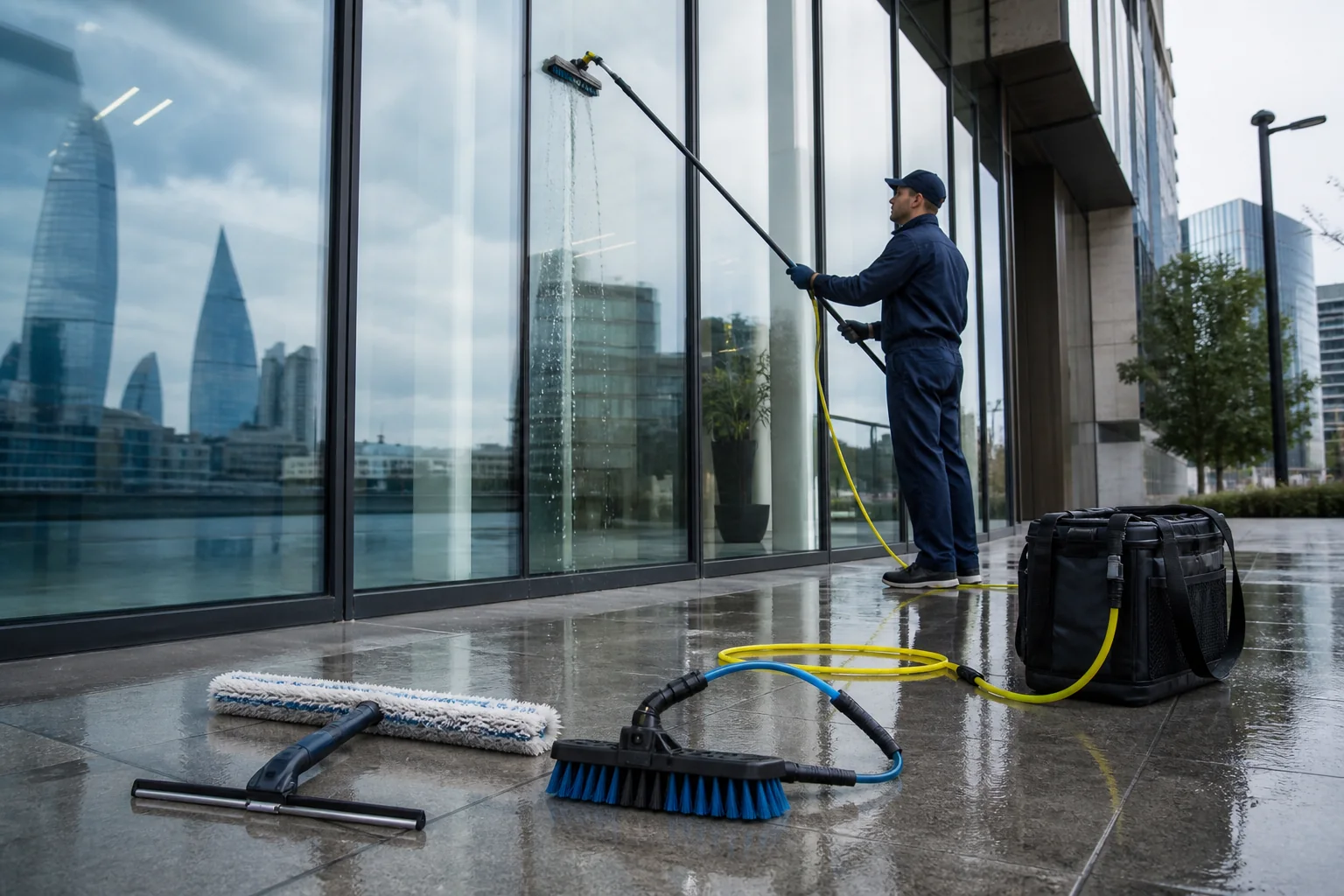
A water-fed pole delivers purified water to a specialist brush. The brush agitates dirt on glass and compatible frames; the surface is then rinsed and left to dry naturally. Because dissolved minerals have been removed from the water, a correctly cleaned pane can dry without the spotting associated with ordinary tap water.
The system lets technicians reach many upper-storey windows while remaining on the ground. That can reduce work at height, although safe ground conditions, pole control, overhead hazards and public movement still need consideration.
Choosing the appropriate method
Water-fed poles are highly effective for regular exterior maintenance, modern glazing, many sash windows and properties where safe ground-level reach is preferable. Traditional methods remain valuable for interiors, close-detail work and particular first-clean conditions. Neither method compensates for damaged glass, failed seals or mineral etching.
The best approach depends on height, access, glass condition, surrounding surfaces and the result required. A credible quotation should reflect those factors instead of prescribing one tool for every pane.
Quick comparison
| Feature | Traditional method | Water-fed pole |
|---|---|---|
| Operator position | Close to the glass | Often at ground level |
| Best suited to | Interiors and accessible detail work | Regular exterior and upper-level work |
| Drying | Squeegee removes solution | Purified rinse dries naturally |
| Frame cleaning | Possible with detailing | Often integrated into brush-and-rinse process |
Practical points to remember
- The correct method follows the access assessment, not a marketing claim.
- Pure water must be produced and monitored correctly.
- First cleans may require additional agitation and time.
- Some deposits need a separate restoration process rather than routine cleaning.
Frequently asked questions
Questions about Traditional vs Water-Fed Pole Window Cleaning
Does a water-fed pole leave windows wet?
Yes. The purified rinse is intentionally left to dry naturally without ordinary tap-water minerals.
Is traditional cleaning outdated?
No. It remains an effective professional method, particularly for internal and directly accessible glass.
Which method is safer?
Ground-level pole work can reduce work at height, but every site and method still requires appropriate controls.
Can pure water remove hard-water stains?
Routine pure-water cleaning removes general dirt but established mineral deposits may require specialist treatment.
Why might a cleaner use both methods?
Different elevations, interior areas and contamination types can require different tools during the same visit.
Need property-specific advice?