


Sash windows collect dirt in places that are easy to miss: the narrow meeting rail, the lower corners of the frame and the channels beside each moving sash. The safest approach is to clean the accessible glass first, then work through the surrounding timber with a barely damp cloth. Keep water and cleaning solution away from the cord openings, pulley housings and any loose paint. A professional window clean can deal with exterior glazing that cannot be reached safely from indoors, but it will not repair a stiff sash or failed paintwork.
Identify the window before you start
Traditional timber sashes usually have two glazed frames that slide vertically. Cords, weights and pulleys balance the movement. Some later windows use spring balances instead, and many modern replacements tilt inward for cleaning. The details matter because the cleaning position that is convenient for one design may damage another. Look for manufacturer instructions if the window has tilt latches or removable restrictors. Do not release a catch until you know what it supports.
Check the condition of the paint and putty around the panes. Flaking paint, soft timber, a loose glazing bead or cracked putty calls for a gentler approach. If a sash binds, resist the temptation to force it open to reach the outside face. Forcing the frame can break a cord, distort a fitting or pull away already fragile paint. Arrange maintenance separately if the window is not moving normally.
An older property may have historically important joinery and glass. Decorative or unusually thin panes deserve particular care. If you are uncertain whether a finish is original, treat it as delicate and seek specialist advice before using a scraper, polish or solvent.
A practical sequence for accessible glass
Begin by removing loose dust with a soft brush or a clean, dry microfibre cloth. This step matters because grit dragged across a pane can leave marks. Place an absorbent cloth on the internal sill, then wash the glass with a modest amount of suitable cleaner on the cloth or applicator. Avoid spraying generously towards the frame: liquid can run into joints and under tired paint. Wipe from the upper edge downwards and dry the lower edge so dirty water does not settle on the meeting rail.
On a sound sash that opens freely, clean only the surfaces you can reach while standing securely on the floor. Raise the lower sash a manageable distance to expose its top rail and the lower part of the upper pane. Close it gently before moving on. Depending on the design, lowering the upper sash may reveal more of the exterior lower-sash glass from inside. Never lean out to reach a remaining strip. A small missed area is preferable to a fall.
If the glazing has applied film, textured glass or a specialist coating, follow its care instructions instead of assuming that a standard glass cleaner is suitable. Test any unfamiliar product on a discreet area. Use separate cloths for the glass and painted timber so abrasive dirt from the frame is not carried back across the pane.
Clean the rails without soaking the timber
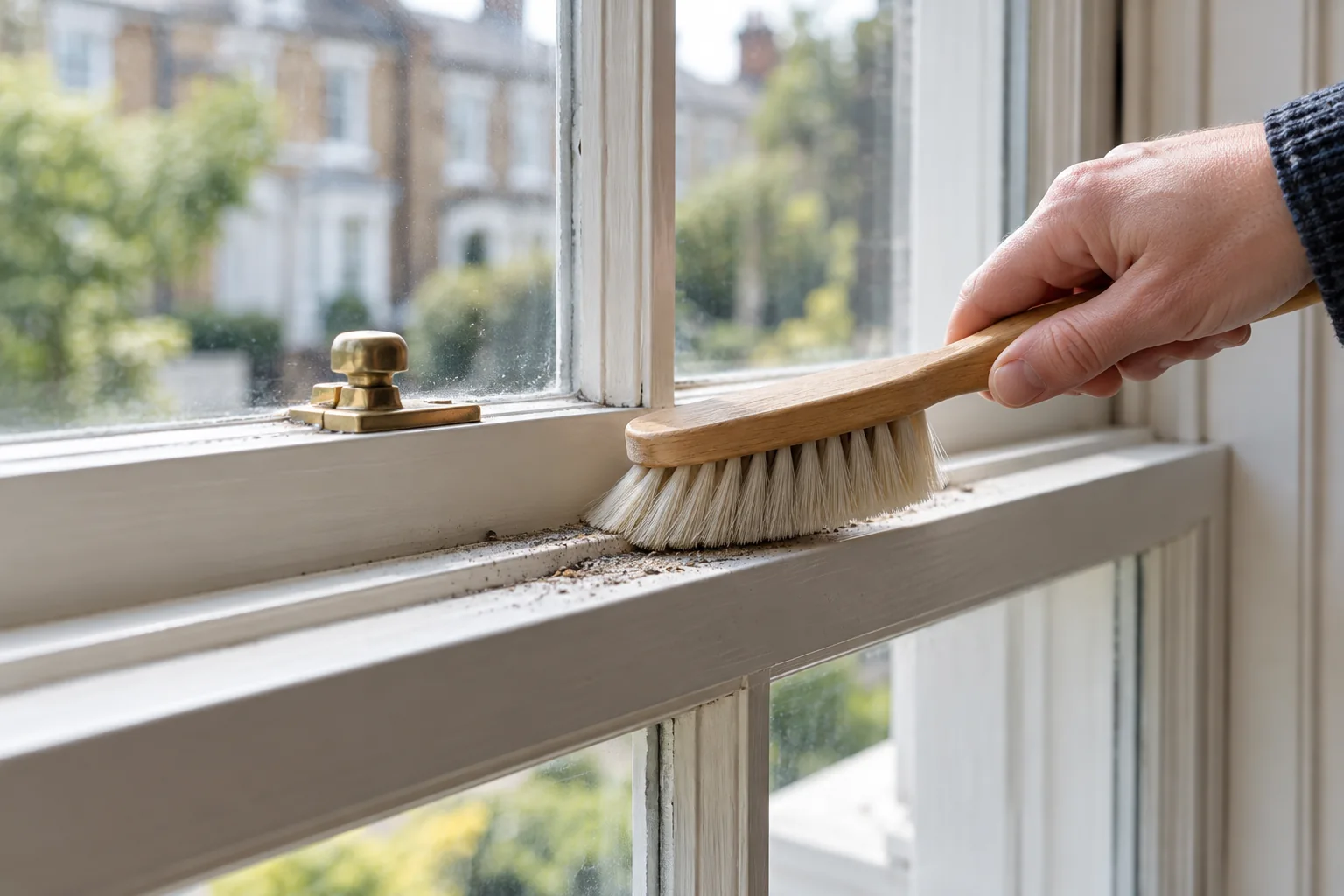
The meeting rails are the two horizontal members that come together when the window is closed. Their shape creates a ledge for dust and insect debris. Brush out dry material first, including the corners. Follow with a lightly damp cloth, then dry the rail. The object is to lift surface dirt, not to flood the joint or wash paint off the timber.
The vertical channels also trap grit that can make a sash feel rough. Use a soft brush or the narrow attachment of a vacuum at low suction. Keep the nozzle clear of loose paint flakes and exposed cord fibres. A cotton bud can help with a tight, sound corner, but do not push debris into the pulley opening. Where the channels are painted shut or have hardened deposits, that is a joinery problem rather than a reason to prise them apart during cleaning.
Pay attention to the sill and the outer lower rail. Standing water can remain there after rain or washing. Wipe the accessible surfaces dry, and note any dark, soft or persistently damp patches. Cleaning may reveal early deterioration, but it cannot reverse timber decay. A decorator or joiner should assess damaged wood and failed seals.
Protect cords, pulleys and catches
Sash cords are not washable trim. Repeated wetting can encourage deterioration, while oily cleaning products can attract dirt. Brush visible dust gently without pulling the cord away from its route. Do not lubricate pulleys or balances as part of a glass clean unless a competent repairer has specified the product and method.
Use a slightly damp cloth on catches and lifts, then dry them. Avoid abrasive pads on plated or painted metal. If a catch no longer aligns, or the sash drops or will not stay open, stop operating it until it has been checked. Cleaning is a good moment to notice these defects, but it is not a substitute for mechanical repair.
Where draught strips have been fitted, do not scrub against their fibres or peel them back to clean underneath. Lift loose dust with a soft brush. A strip that is detached or saturated may need replacement, which is a separate maintenance decision.
Exterior panes and upper floors
Sash windows on the first floor or above often have an outside face that is tempting to reach from the opening. Do not lean out, stand on a sill or rely on an unsecured ladder for a routine clean. The working position, ground below, overhead cables, projecting bays and nearby conservatory roofs all affect the safe method. For inaccessible exterior glass, ask a window cleaner to assess the property and state precisely which panes can be included.
Top Window Cleaners' residential window cleaning service provides a route to discussing the glazing and access at a specific London property. A quotation should make clear whether the glass only or also the frames and sills are in scope. If the paint or putty is fragile, mention this before the visit rather than expecting a cleaner to discover it while working.
If your panes are visibly old or leaded, the treatment may need to be more conservative than for modern float glass. Painted detail and weakened joints need a specialist assessment before any wet cleaning is attempted.
Decide what to do after the clean
A clean sash should slide without grinding and close without trapping a cloth or dislodged debris. Check that the catch engages, the cords appear intact and no water has pooled in a channel. If the glass is clear but the frame still looks stained, decide whether the issue is dirt, failing paint, mildew or decayed wood before using a stronger cleaner. Stronger chemicals rarely solve a building-maintenance defect.
For routine upkeep, lightly dust the rails and wipe fresh marks before they harden. During a fuller clean, keep water use restrained and dry the timber as you go. That simple routine preserves visibility while giving you an opportunity to spot defects early. When the exterior face is beyond safe reach, define the access and condition of the window for a professional quotation rather than improvising a risky position.