

Window cleaning problem
Algae on Window Frames
Green film around window corners and seals usually develops where shade, moisture and trapped organic residue meet. The material and condition of the frame determine how safely it can be improved.
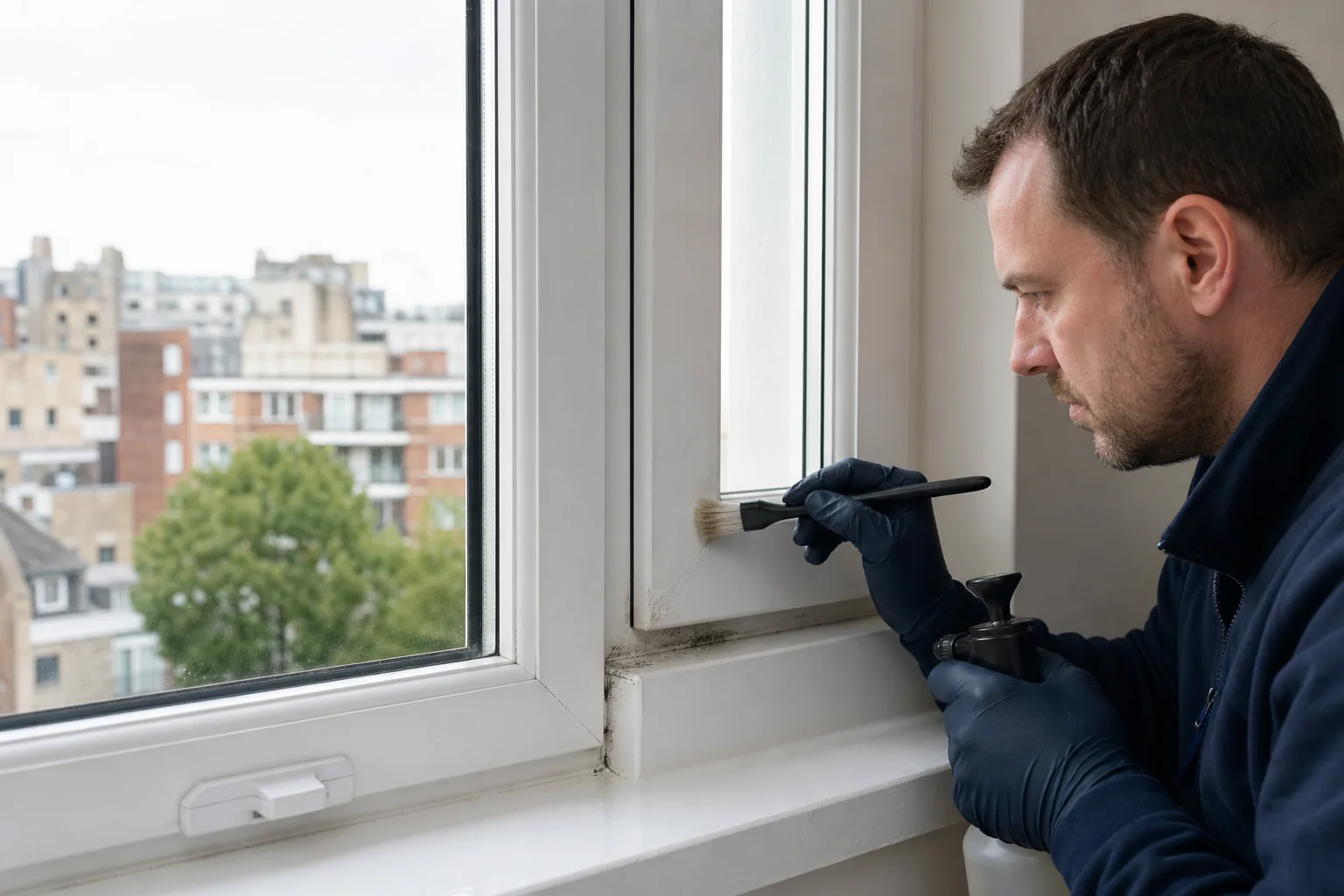
Why shaded frames turn green
North-facing elevations, dense planting and deep reveals stay damp for longer after rain. Pollen and airborne debris collect around seals and drainage details, giving algae a surface on which to establish. A nearby leaking gutter can make the pattern worse.
The growth is not always a sign that the frame itself has failed, but cracked seals, blocked drainage channels and flaking paint should be identified before cleaning.
A material-sensitive cleaning method
Compatible uPVC can often be brushed with a suitable solution and controlled rinse. Painted timber, powder-coated metal and aged finishes need gentler assessment because loose coatings or oxidation can be mistaken for dirt.
The aim is to remove surface growth without driving water through vents, disturbing seals or scouring the finish. Permanent yellowing and UV ageing will not disappear like loose organic film.
When professional help is useful
Upper-storey frames, extensive growth and delicate painted surfaces are poor candidates for improvised access or harsh chemicals. A technician can select the brush, contact time and rinse sequence while controlling water around openings.
If algae returns from a roofline leak or persistent drainage problem, that cause should be repaired. Cleaning alone cannot keep a continuously wet frame dry.
Reducing future build-up
Keep frame drainage points free from loose debris, trim dense vegetation where appropriate and maintain gutters above the window. Regular light cleaning is easier on the surface than occasional aggressive treatment.
Photograph repeat areas after rain; the pattern can reveal whether shade alone is responsible or water is entering from a defective joint.
Quick comparison
| Frame condition | Likely issue | Expectation |
|---|---|---|
| Loose green film | Surface algae | Usually responds to careful cleaning |
| Yellowed uPVC | Ageing or UV exposure | May remain after cleaning |
| Flaking paint | Coating failure | Needs repair before aggressive contact |
| Wet patch below roofline | Leak or overflow | Correct water source |
Practical points to remember
- Identify the frame material before treatment.
- Avoid strong bleach and abrasive pads near seals and coatings.
- Check gutters and drainage where growth returns quickly.
- Separate removable algae from permanent discolouration.
Frequently asked questions
Questions about Algae on Window Frames
Why does algae grow around window seals?
Moisture and trapped organic residue persist in sheltered corners.
Can you clean algae from uPVC?
Surface growth often responds well to a compatible brush-and-rinse process.
Will old uPVC become bright white again?
Cleaning removes dirt but cannot reverse permanent ageing or UV discolouration.
Is bleach safe on window frames?
Strong untested chemicals can affect seals, coatings and nearby materials.
Why does the algae return?
Shade, leaks and persistent damp can recreate the same conditions.
Should damaged paint be cleaned?
Unstable coatings need careful assessment and may require repair first.
Need property-specific advice?