

Window cleaning problem
Why Windows Stay Dirty
Dirty glass is rarely caused by one event. Traffic film, pollen, building residue, fingerprints and contamination from frames can overlap, so a lasting improvement starts by identifying what is actually on the pane.
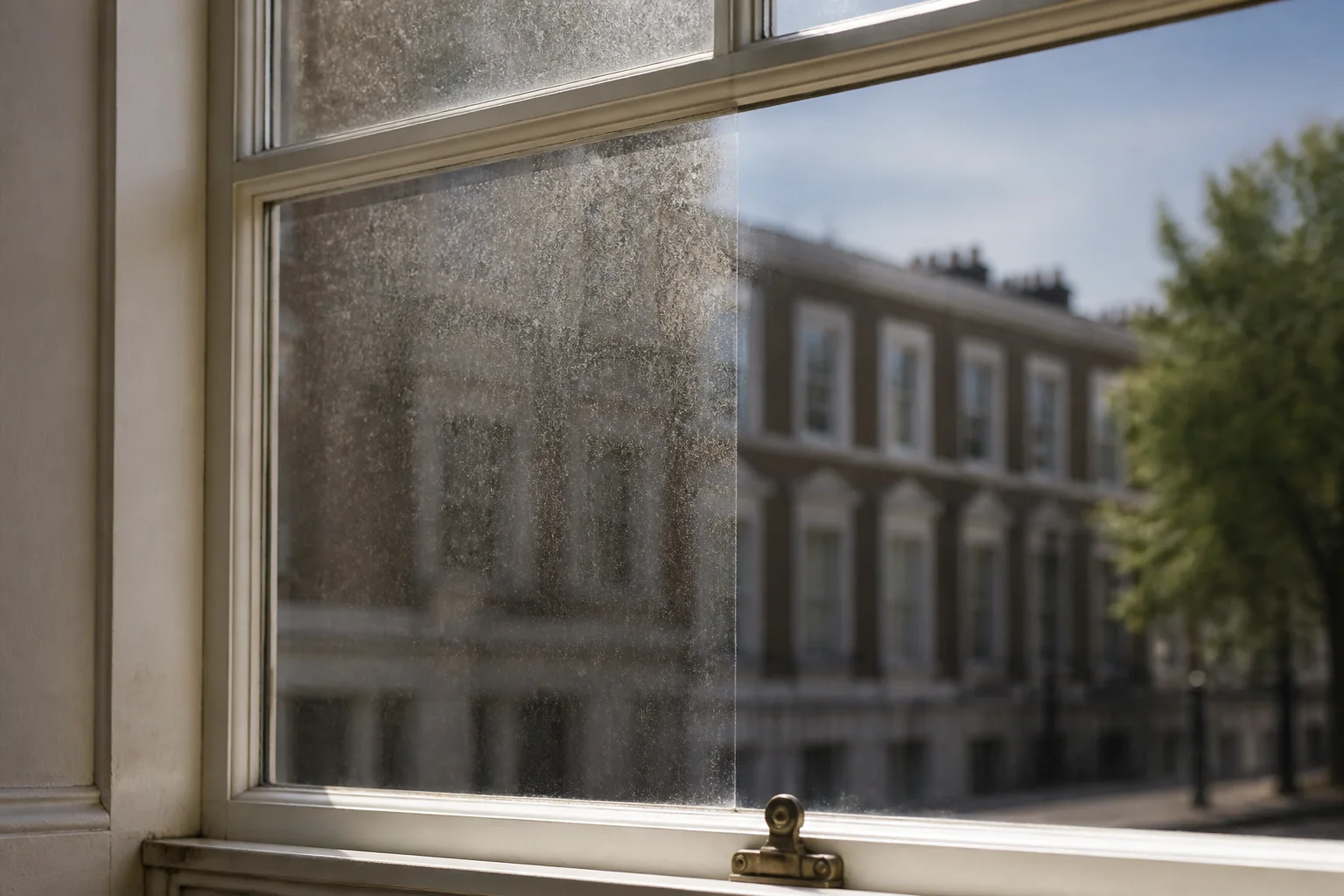
Reading the pattern on the glass
A uniform grey veil usually points to airborne pollution or fine construction dust. Runs below frame joints suggest dirt is being washed from surrounding surfaces, while isolated marks may be bird contamination, sap or fingerprints. The elevation and exposure help explain why one side of a property becomes visibly dull before another.
Rain is often blamed for the result, but rainfall commonly redistributes residue that was already present. A correctly cleaned and rinsed surface can remain clear through ordinary rain; a dirty frame or ledge can mark the pane again.
The professional cleaning response
Routine exterior work normally combines controlled agitation with a purified-water rinse. The brush loosens dirt on compatible glass and frame surfaces, and the low-mineral rinse is left to dry naturally. Internal glass is approached with controlled traditional tools to protect floors, furnishings and nearby finishes.
Paint, cement, adhesive, mineral deposits and deep scratches do not behave like everyday dirt. They may require a test treatment, specialist restoration or repair, and should not be scraped without confirming the glass type.
When to call for help
Professional cleaning is useful when upper windows cannot be accessed safely, a consistent finish matters across several elevations, or repeated DIY wiping leaves smears and edge residue. It is also sensible when a regular maintenance schedule would prevent heavy build-up.
Cleaning cannot resolve misting between sealed panes, leaking frames or permanent etching. A reputable assessment separates accessible surface contamination from glazing defects and sets realistic expectations before work starts.
Keeping windows clearer for longer
Keep sprinklers and hose spray away from glazing, maintain frames and sills, and address persistent indoor condensation through appropriate ventilation. Properties beside busy roads or mature trees generally benefit from shorter maintenance intervals than sheltered homes.
The best frequency is the one that prevents unacceptable build-up without booking unnecessary visits. Review the result after several cleans and adjust by elevation, season and presentation requirement.
Quick comparison
| Visible sign | Likely source | Useful action |
|---|---|---|
| Grey film | Traffic or construction particles | Regular exterior clean |
| Runs after rain | Dirty frames or ledges | Include compatible surrounds |
| White chalky spots | Mineral-bearing water | Assess for hard-water staining |
| Mist between panes | Failed sealed unit | Glazing repair, not cleaning |
Practical points to remember
- Describe where the marks appear and how quickly they return.
- Do not use untested blades or abrasive pads on glass.
- Include frames and sills where their condition is contributing.
- Treat recurring moisture or overspray at its source.
Frequently asked questions
Questions about Why Windows Stay Dirty
Why do my windows look dirty after rain?
Rain can redistribute pollution, pollen and residue already on the glass or surrounding frames.
Can pure water remove ordinary traffic film?
Yes, when the surface is correctly agitated and rinsed as part of routine exterior cleaning.
Why are only the roadside windows dirty?
Traffic and air movement expose those elevations to more fine particulate matter.
Can dirty windows damage glass?
Some deposits can become harder to remove over time, while ordinary dirt mainly affects clarity and presentation.
Will cleaning fix condensation between panes?
No. Internal misting in a sealed unit indicates a glazing defect.
How often should dirty windows be cleaned?
Exposure and presentation needs determine the interval; many homes use a four- to eight-week exterior schedule.
Need property-specific advice?